
Imagine the first schools in Halton Hills. Before the 1830s, education in the area was mostly provided at home. Most early schools were simple one-room log or frame buildings heated by wood stoves, with outdoor privies. By the 1870s, many had been replaced by more durable brick structures.
Log and frame schools existed in nearby hamlets such as Stewarttown (schooling from around 1836, with a frame school in the 1840s–1850s) and Glen Williams (first frame school in 1837). Township-wide school sections were organized by the 1840s — there were already 15 sections by 1842 — so informal classes were likely held in private homes, churches, or small log buildings in the Georgetown/Hungry Hollow area before the first dedicated school buildings appeared.
Chronological Overview of the Earliest Schools
- 1826 – Acton The first documented school in the area was opened by the wife of Rufus Adams on the site of what is now Knox Church (which also served as a Methodist chapel). Acton maintained its own independent school board outside the township sections.
- 1830–1836 – Stewarttown Informal teaching took place in Orange Hall (Orange Order premises). This was followed by a frame school on Lot 15, Concession 8, which was replaced by a brick school in 1853.
- 1837 – Glen Williams The first frame school (possibly the oldest in the township) was built east of 6 Prince Street. It was replaced in 1852 and again in 1873 by a two-room brick school on Prince Street.
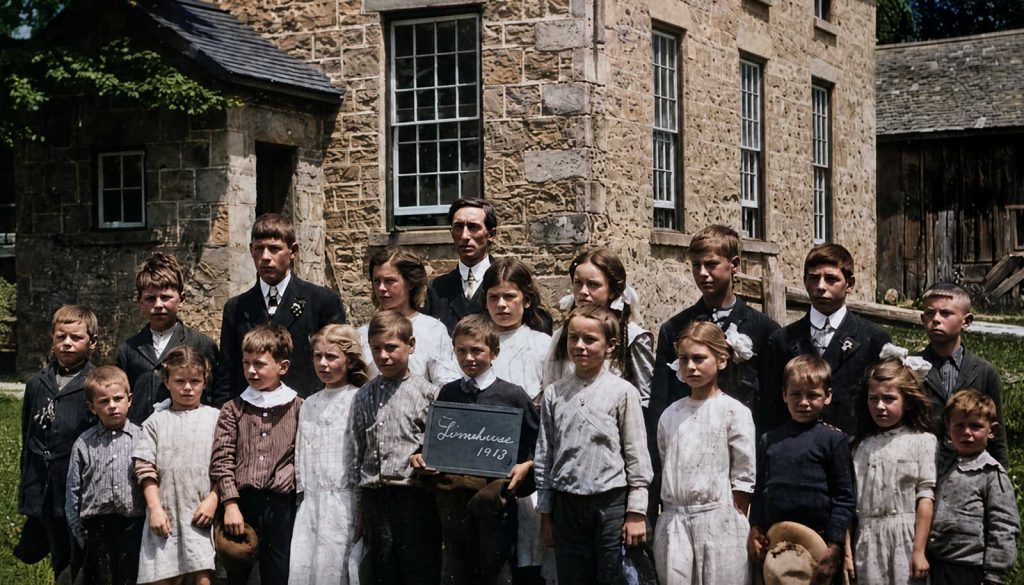
- 1845 – Limehouse (Gibraltar School) The first log school was built on Lot 20, Concession 6. It was later replaced by a brick building, which still stands today as a private residence.
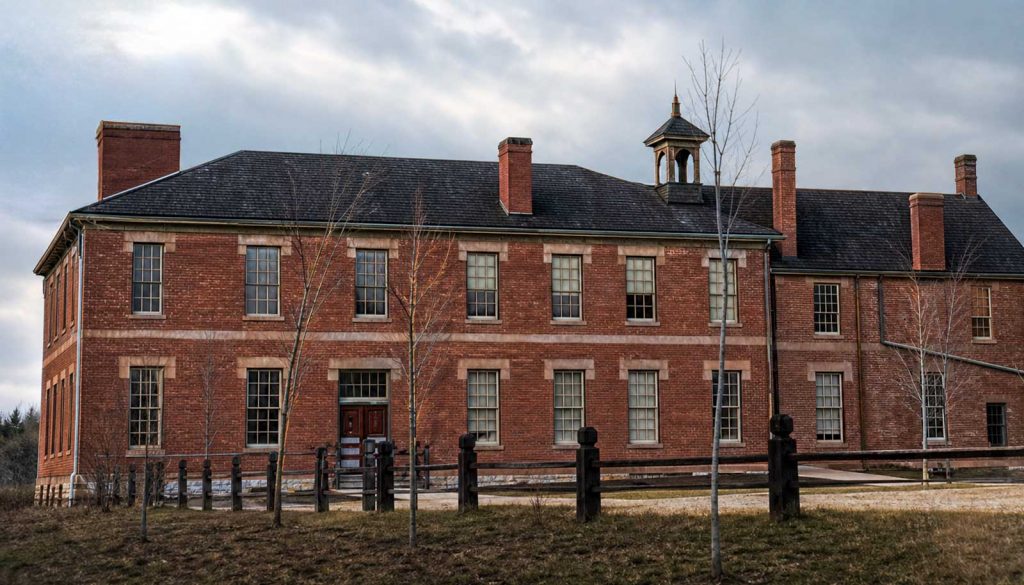
- 1869 – Georgetown (Chapel Street School) The first large public brick school (two-storey with a 1913 addition) served the community until the 1970s and was demolished in 1980.
Acton. First school
Rufus Adams’ wife opened a school as early as 1826 on the site of today’s Knox Church, which also functioned as a Methodist chapel. Acton had its own separate school board and later developed its own continuation and high schools in the early 20th century.
Georgetown (formerly Hungry Hollow) First school
Early education likely occurred informally, but the key milestone came in 1869 with the construction of Chapel Street School beside the Baptist church. This two-storey brick building served as the main public school until the 1970s.
Glen Williams. First school
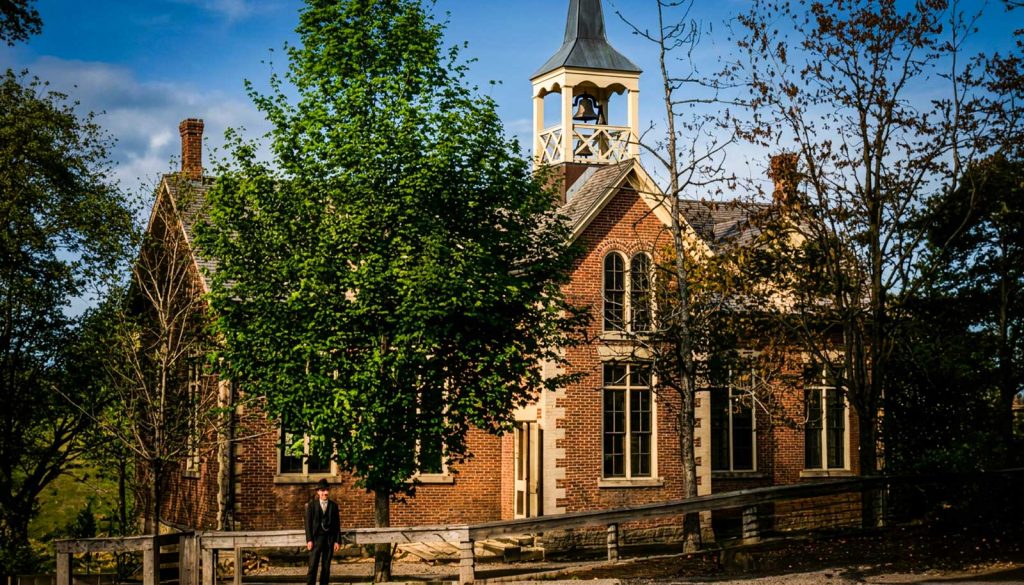
One of the earliest documented schools was a frame-and-plaster building erected in 1837 east of 6 Prince Street. Its foundations may survive in the barn on the Alexander House property. A larger one-room building replaced it in 1852, followed in 1873 by a two-room brick school on Prince Street, built on land donated (or sold) by mill owner Charles Williams. The school served the community until the mid-20th century and was later converted into a private home.
Notable teachers included John Colling (1840), William Ewart, and especially Theophilus Norton, who served as head teacher/principal from 1876 until around 1900 (with an annual salary of $500). Norton and his family, including daughters who became teachers, had deep ties to the school; the Norton House still stands at 9 Prince Street. The modern Glen Williams Public School opened around 1965 at 512 Main Street.
Stewarttown. First school
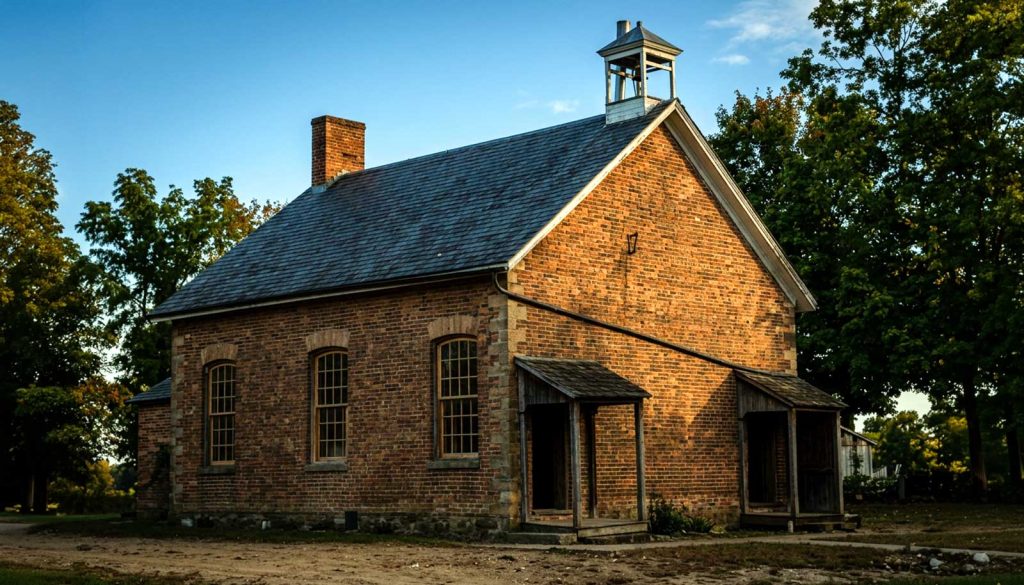
Teaching began around 1836 in Orange Hall. A log school was later built on Lot 15, Concession 8, and replaced by a brick school in 1853. In 1873, a larger two-storey brick school was constructed across the road. The new Stewarttown Public School (later Middle School) opened in 1958.
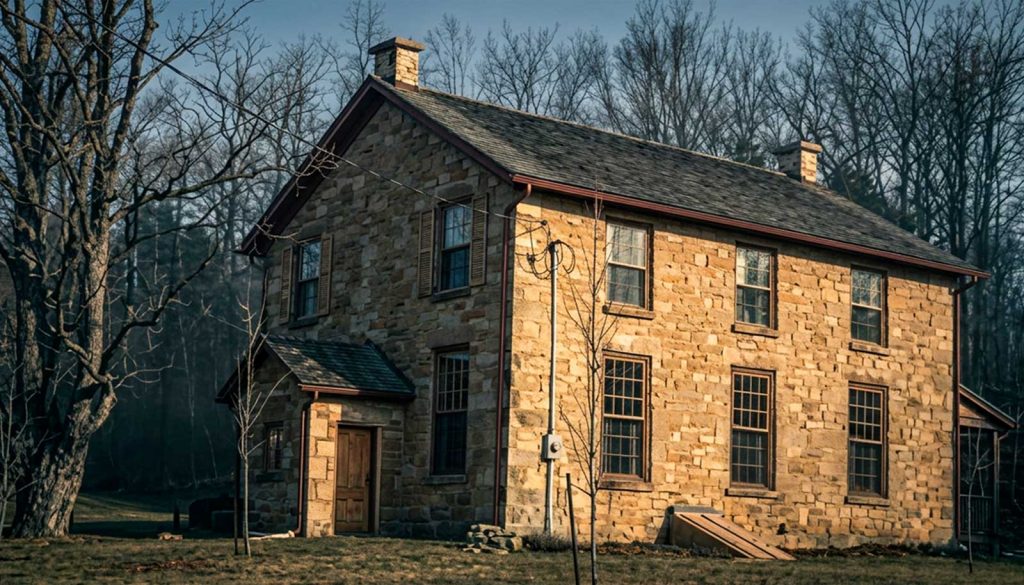
Limehouse (Gibraltar) First school
The first school was a log cabin built around 1845 on Lot 20, Concession 6 (5th Line, about a mile south of the village). It was succeeded by the brick Gibraltar School, which closed in 1962 when the current Limehouse Public School opened in the village centre. The old Gibraltar building still stands as a private residence.
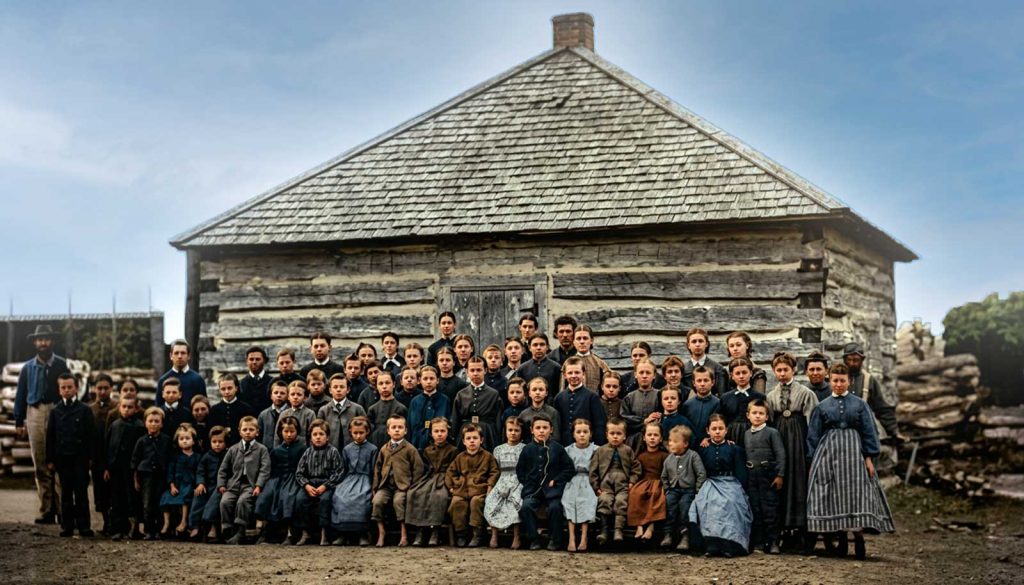
Silver Creek. First school
People built a brick school as early as 1871 at Lot 29, Concession 7, to replace the Ballinafad school that had closed in 1869. ln the meantime, SS#16 was created at 22 Sideroad in 1856. Many Silver Creek students attended this stone school until it closed in 1963.
Norval. First school
The first school was a frame building near the cemetery. By the 1860s a brick school had been built in the village, with a second room added in 1873. It closed in 1974.
Other school sections in Esquesing Township included Ligny, Quatre Bras, Ashgrove, Pinegrove, Waterloo, and more. One-room rural schools remained common until the major consolidation of the late 1950s and 1960s, which led to centralized schools such as Stewarttown, Glen Williams, Norval, Pineview, Speyside, and Limehouse.
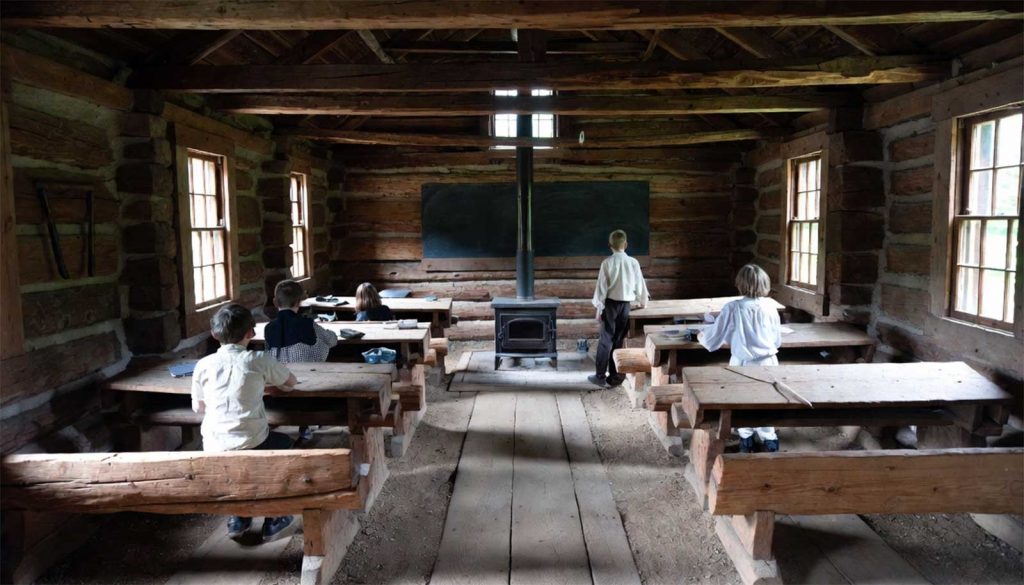
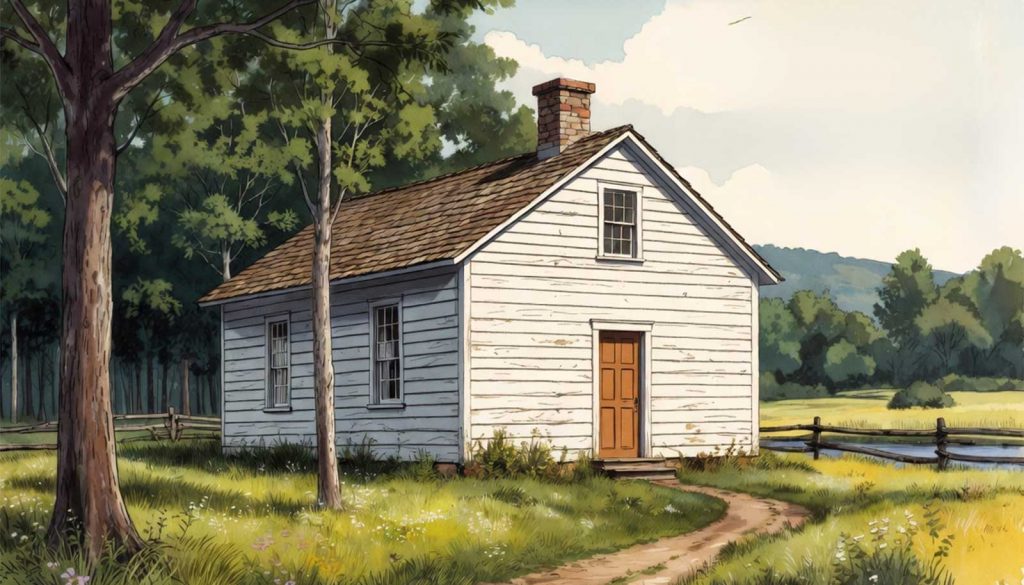
Visualizing the Past
Reconstructed images based on historical descriptions help us picture these modest early schools — simple log or frame buildings with wood stoves, basic furnishings, and a single teacher managing multiple grades.
Further reading and sources:
- Reconstruction of a one-room schoolhouse (1842 example): Glengarry Pioneer Museum virtual tour
- Esquesing Historical Society Newsletter (January 2026): EHS Newsletter
This article draws together the scattered early educational history of Halton Hills, highlighting the transition from home-based learning and makeshift log schools to the solid brick institutions that shaped generations of local children.