
Norval, Ontario. The first settlers arrived in the area in the early 19th century, and the village developed much like other communities of the period. But how did the people of 1926 view the Norval of their present day—and the history that had shaped it?
Mary Dawson Snider explored those questions in an article for The Evening Telegram, published on Friday, July 23, 1926.
It was a relatively warm summer. The day before the article appeared, the maximum temperature reached 26.7°C, and 5.1 mm of rain fell. On July 21, temperatures climbed to 32.2°C. It is interesting to see that, even a century later, summer temperatures can still be remarkably similar.
“Nothing could create excitement in Norval. It was always a lonesome spot that would give you the creeps to look at,” recalled engineers and brakemen who remembered the very early days.
C. W. Mullen, city freight agent in Toronto for the Canadian Pacific Railway for forty-three years and regarded by his contemporaries as one of Canada’s leading railway historians, described Norval in much the same way.
But rail workers knew only the little, lonely station and its surroundings, not the village itself or its history.
The McNab Settlement
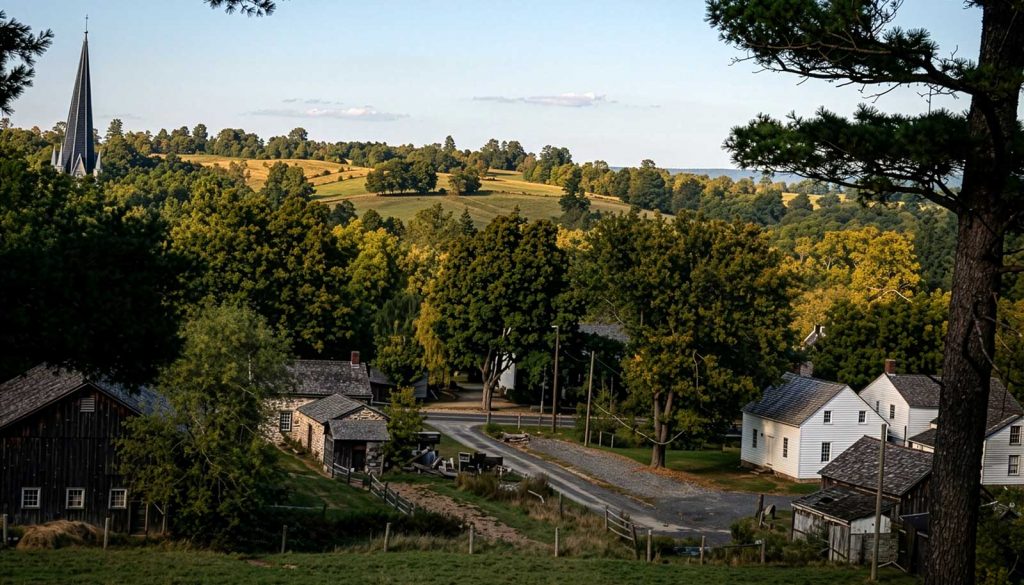
Norval was originally known as McNabsville or McNab’s Mill, after the McNab family, who settled along the Credit River in the early 1820s. James McNab, a veteran of the War of 1812, received a large land grant in the area and established a grist mill and sawmill on the Credit River.
[Historical note: Modern sources generally identify James McNab as the principal founder of the settlement and its early mills. Some older accounts give slightly different dates for the construction of the individual mills; the safest date is therefore “in the 1820s.”] (Upper Canada College)
The settlement that grew around the mills became known as McNabsville and McNab’s Mill. The post office was established in 1836, by which time the name Norval was in use.
[Historical note: Sources differ slightly on the exact transition from McNabsville to Norval. The post office’s establishment in 1836 is widely cited as the point at which the name Norval became established.] (GeorgetownOn Magazine)
The origin of the name Norval is traditionally associated with John Home’s Scottish play Douglas. In the play, the character Norval speaks of the “Grampian Hills,” and this literary connection appears to have influenced the naming of the Ontario settlement.
[Historical note: The connection with Douglas is well established in later historical accounts, although some sources have proposed other explanations for the name.] (Faded Page)
The Mills and Early Industries
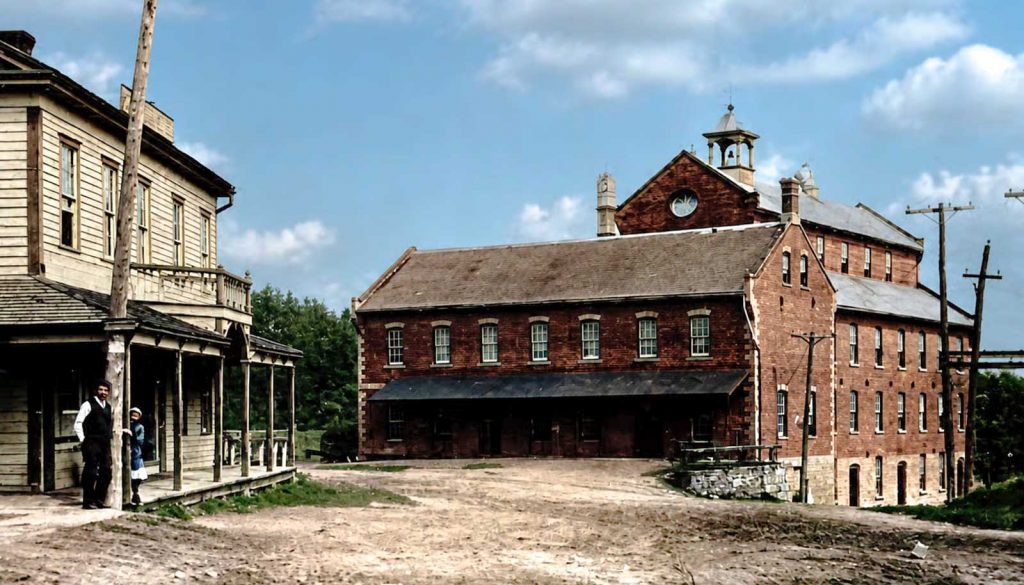
The mills became the centre of the growing pioneer settlement. Sawmills and other industries followed the original grist mill, and Norval also had an ashery, where wood ashes were processed to produce potash.
Making potash from wood ashes was an important pioneer industry. As settlers cleared their farms, they burned large quantities of hardwood, leaving ashes that could be processed and sold for soapmaking and other industries.
[Historical note: The ashery and potash industry are documented among Norval’s early industries. Norval later developed a surprisingly varied industrial economy, including woollen and flax mills, a broom factory, carriage works, a brass foundry, bakeries and other businesses.] (St. Paul’s Norval)
In 1838, General Peter Adamson bought the Norval mills. The property later passed through several owners, including the Toronto distillers Gooderham and Worts.
In 1868, Robert Noble purchased the mill property. Noble and his family subsequently developed the flour business into one of the most important milling operations in the district.
[Historical note: Robert Noble’s ownership and modernization of the Norval mills are particularly well documented. The Nobles became known for their “Norval” pastry flour and “King’s Choice” bread flour, which were marketed throughout Canada and beyond.] (Halton Hills Escribe Meetings)
The mills were rebuilt and modernized during the late 19th century. In 1880, Noble rebuilt the mills, and by 1899 the traditional millstones had been replaced by the newer roller system.
By 1909, the Grand Trunk Railway reported that an average of approximately 700 barrels of flour a day were being transported from Noble Mills to the railway station.
[Historical note: This figure comes from later historical research based on railway records and illustrates the scale of the Norval flour business at the beginning of the 20th century.] (HaltonHillsToday.ca)
Memories of Pioneer Days
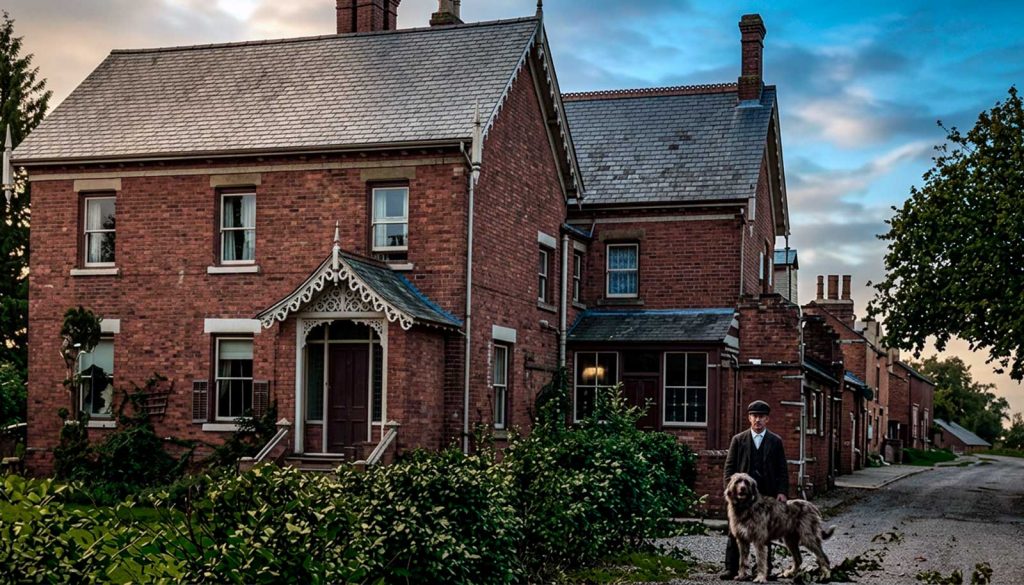
“When my father drew ashes to McNab’s village, whiskey was only 20 cents a gallon,” said Robert Leslie, one of those who remembered seeing Norval’s first train and being frightened by its whistle.
His father had settled about four miles from Norval in 1823.
“In those days you couldn’t have a logging or get a neighbour to come and kill a pig without having whiskey,” Leslie recalled.
[Editorial note: These passages are presented as recollections recorded by Mary Dawson Snider in 1926. They should be understood as oral history rather than independently verified statistical or economic evidence.]
“My father carried fiftyweight of flour on his back all the way from Streetsville,” Leslie remembered.
The story vividly illustrates the difficulties of transportation during the pioneer period, before the roads and railways of the 19th century transformed the district.
The Coming of the Railway
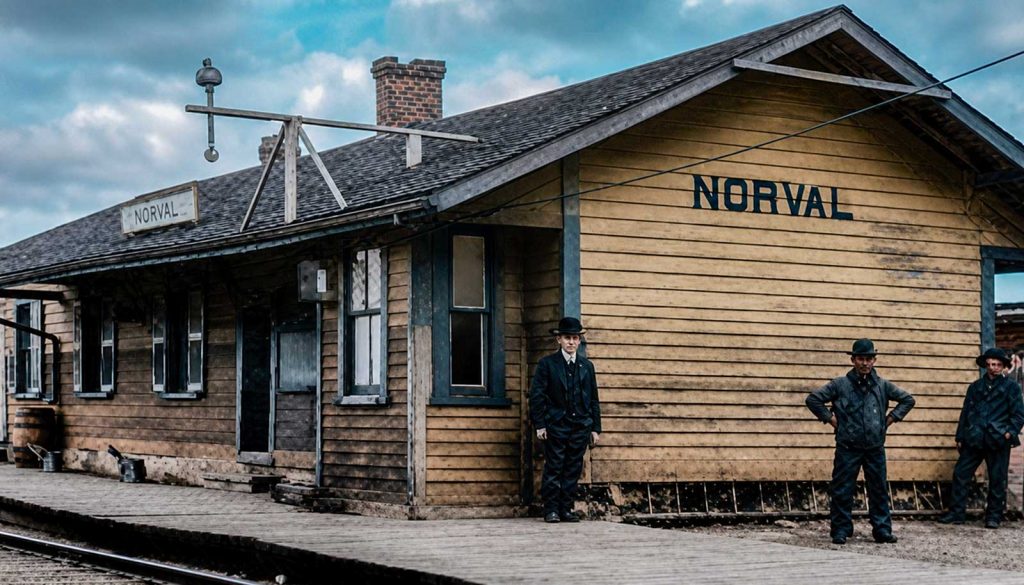
The railway’s arrival changed Norval considerably. The Grand Trunk Railway reached the area in 1856, becoming an important way to transport local products, especially flour.
The station, however, was located more than a mile north of the village itself.
[Historical note: This distance is significant. Norval Station was not located in the centre of the village, and its location may have limited the railway’s effect on the growth of the community.] (GeorgetownOn Magazine)
The railway also connected Norval with larger markets. By the early 20th century, the mills were shipping large quantities of flour by rail.
Norval also became an important stagecoach stop on the route between Toronto and Guelph, and the village developed many businesses and services.
Norval in 1926
By the time Mary Dawson Snider wrote her article in 1926, Norval was already looking back on the great industrial period of its history.
According to the original newspaper account, the railway station agency had recently been discontinued because of declining business. The article gave Norval’s population as approximately 250, compared with about 400 at an earlier period.
[Editorial note: The population figure and the 1926 closure of the station agency are retained from the original 1926 newspaper article. I have not found an independent contemporary source online that verifies these two specific figures.]
The old industrial village declined gradually. The large Noble flour mill operated until January 28, 1930, when a fire destroyed it. The grist mill survived the fire and continued operating for many years.
[Historical note: The flour mill fire is well documented. The remaining grist mill was later damaged during Hurricane Hazel in 1954 and was eventually demolished in 1961.] (HaltonHillsToday.ca)

A Village Built Around the Credit River
Norval’s history is inseparable from the Credit River.
What began in the 1820s with the McNab family’s settlement grew into a busy 19th-century village as a dam and a small group of mills developed. Its mills attracted farmers, tradesman, and manufacturers, while its roads, stagecoach routes, and railway connected the community with Toronto, Guelph, and markets farther afield.
By 1926, much of that industrial importance had already begun to disappear. Yet the mills, the railway and the people who worked around them had shaped Norval for more than a century.
The memories preserved by Mary Dawson Snider offer a glimpse of that earlier Norval—a small but remarkably industrious Ontario village whose story was written along the banks of the Credit River.
Sources and Further Reading
-
Upper Canada College — “History of Norval”
Provides background on James McNab, the early mills and Robert Noble’s acquisition of the mill property in 1868.
Upper Canada College – History of Norval (Upper Canada College) -
GeorgetownOn — “History of Norval: The earliest settler arrived about 1818”
Useful for the railway, the location of Norval Station, the early village and later development.
GeorgetownOn – History of Norval (GeorgetownOn Magazine) -
St. Paul’s Norval — History of the Parish
Includes historical information about the Norval mills, Peter Adamson, Gooderham and Worts, and Robert Noble.
St. Paul’s Norval – History (St. Paul’s Norval) -
Halton Hills Today — “Norval once known internationally for its production of flour”
Detailed account of the Noble mills, flour production, railway shipments, the 1930 fire and the later fate of the mill.
Halton Hills Today – Norval Flour Mills (HaltonHillsToday.ca) -
Town of Halton Hills / Heritage Research
Detailed heritage research concerning the Norval mills, Robert Noble, the railway and the development of the milling industry. (Halton Hills Escribe Meetings) -
St. Paul’s Norval — “We Love Norval”
Overview of Norval’s early industries, population and transportation history.
St. Paul’s Norval – We Love Norval (St. Paul’s Norval) -
G. H. Armstrong, The Origin and Meaning of Place Names in Canada
Published in 1926; particularly useful for the historical explanation of the name Norval and its connection with John Home’s Douglas.
The Origin and Meaning of Place Names in Canada – Faded Page (Faded Page)
Editorial note on historical accuracy
The original 1926 article is valuable as a primary historical source, especially for its recollections of early Norval. However, some statements reflect oral tradition or the historical knowledge available in 1926 and should not automatically be treated as fact.
The notes above distinguish those contemporary recollections from information later corroborated by historical and heritage research.