
Lucy Maud Montgomery, author of the worldwide bestseller Anne of Green Gables, kept journals for most of her life. The Norval years are no exception. The diaries from this period—especially The Selected Journals of L.M. Montgomery, Volume III, and L.M. Montgomery’s Complete Journals: The Ontario Years, 1926–1929—are a rich record of community life in a small village on the Credit River. Montgomery lived in Norval from 1926 to 1935.
Arrival in Norval 1926
The journals show that 14 February 1926 was their last night in Leaskdale. Montgomery wrote that the move would be finished the next day. They then attended to business and were collected in the evening by Mr. and Mrs. Barraclough of Glen Williams, with whom they stayed until Ewan’s induction into the Norval and Union congregations.
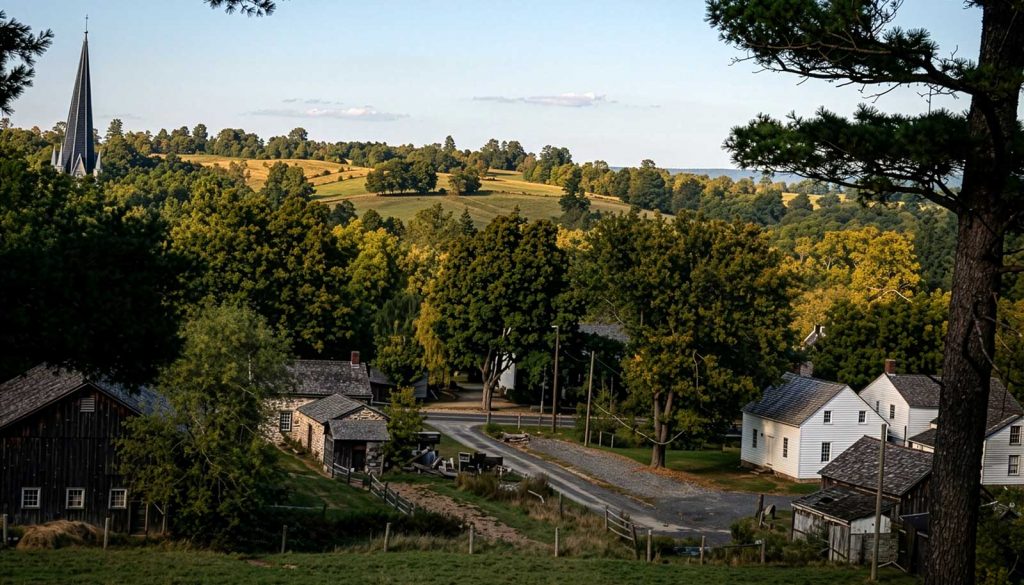
By 28 February 1926 she was writing from Norval as home: a tour of the red-brick manse, the church, and the pine hill behind the village. That is the first long, settled entry from the Norval manse.
“Norval is in Esquesing Township in the county of Halton. Across the river is Chinguacousy township in Peel County. In childhood days I had to learn all the counties of Ontario off by heart … I had no idea then that ‘Halton, Peel’ would ever mean anything to me but a name. And now I am living in one on the borders of the other.”
On 9 March 1926 she recorded her first quiet evening in the new house:
“Tonight for the first time in months I had a cosy, undisturbed evening of reading in one of my comfy new reed chairs in the library corner. It was delightful to have a ‘good read’ again, with that heavenly feeling of leisure and tranquility which has been lacking so long.”
The Norval journals are detailed. They describe the manse, the Credit River, the landscape, neighbours, church life, fatigue with parish work, her husband’s melancholy and mental illness, anxiety over her troubled older son Chester and her likable, sociable, capable younger son Stuart, the Depression, her writing, and her moods.
Community Life
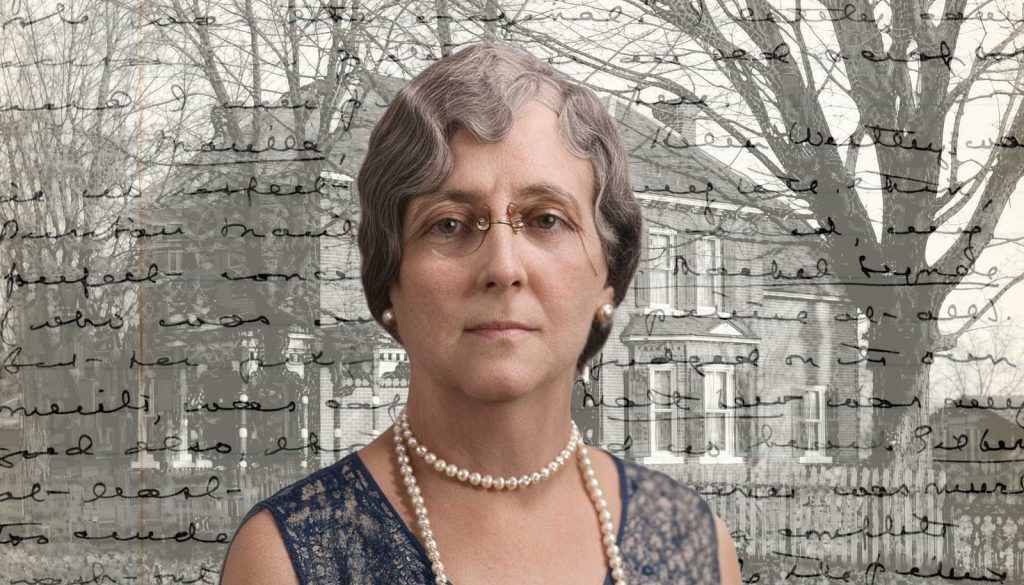
Soon after arriving she joined the Women’s Missionary Society. In December 1926 she became president and remained so until she left. She sometimes hosted Women’s Institute meetings at the manse. Of the Union congregation she wrote that it was an “ideal congregation”—loyal, well-educated people with whom she enjoyed evenings and W.M.S. afternoons.
She organized garden parties on the church lawn (the manse veranda served as a stage), picnics, swimming and skating on the river, concerts, Old Tyme Nights, and amateur plays. She often directed them herself.
Among her closest friends were the Barracloughs of Glen Williams, who owned woollen mills and were, in her view, the wealthiest and nicest people in the congregation. They went for drives, dinners, and performances together. Oliver and Margaret Hunter remained allies even in later conflicts. She also had a warm relationship with the Russell brothers, farmers; she called Jim one of her best friends.
Of the manse and church she wrote:
“Norval manse is well designed and situated. It is of red brick. The kitchen is much larger and more convenient than the Leaskdale one. We have the soft water pump in the kitchen which is a good item, and there is a back staircase.
… Our dining room here is large and light with a big bay window at the end and a door opening on to the veranda through which we can see the beautiful pine wood on the hill behind the village.
… Lying in bed I can see the hill of pines, dark against the dawn when the black night turns to silver, mysterious under the stars or weaving magic with moonlight.
… On the whole I am well satisfied with my new home and will be more and more so as days go by and it becomes home in reality.”
“The church is a large one of red brick. The caretaker, Mr. Williams, took us through it. It is a very nice church inside and the newly installed electric lights are beautiful.”
Novels Written in Norval
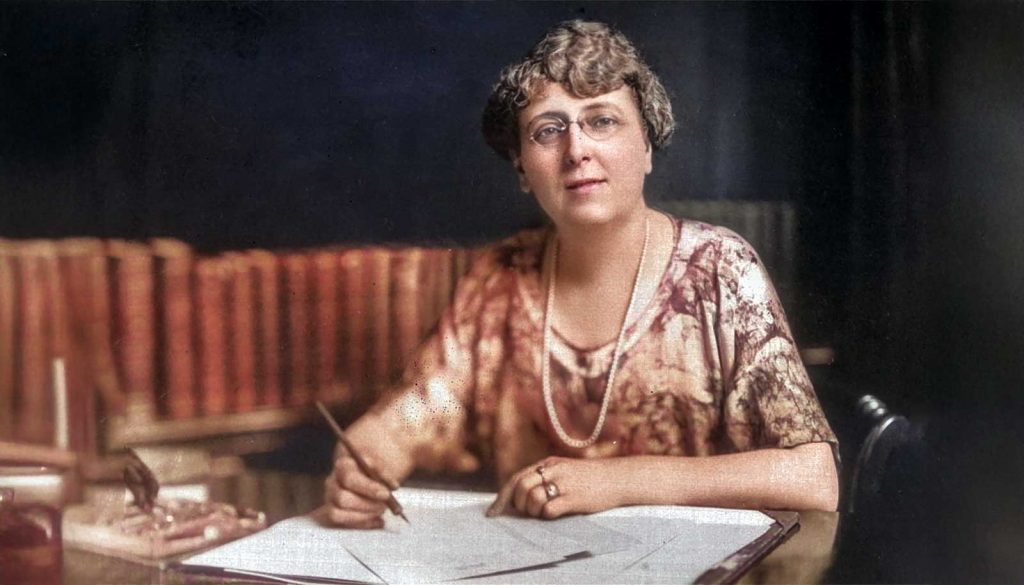
Between February 1926 and April 1935 Lucy Maud Montgomery wrote or finished these six novels:
- The Blue Castle (1926) — an adult novel set in Muskoka. Most of it was written in Leaskdale after a 1922 visit; it appeared in August 1926, just after the move.
- Emily’s Quest (1927) — the third and final book of the Emily Byrd Starr trilogy.
- Magic for Marigold (1929) — the story of a little girl named Marigold.
- A Tangled Web (1931; published in Britain as Aunt Becky Began It) — another adult novel, set on Prince Edward Island.
- Pat of Silver Bush (1933) — the first book about Pat Gardiner and her beloved home, Silver Bush.
- Mistress Pat (1935) — the sequel. It appeared in September 1935, shortly after she left Norval, but was written there.
She also produced many short stories and poems and co-wrote the biographical collection Courageous Women (1934). Later novels such as Anne of Windy Poplars and Jane of Lantern Hill were written in Toronto.
Her poetry collection The Watchman and Other Poems (1916) had appeared while she still lived in Leaskdale. In Norval she continued to write verse and send it to magazines, but she published no new book of poems. The Credit River, mills, bridges, and hills appear more often in the lyrical prose of the journals than in finished poems.
The closest thing to a “poem of Norval” are her own diary sentences:
“I love Norval as I have loved no other place since Cavendish.”
— 26 May 1927She called a spot by the river the “Garden of the Wild Gods.”
On 29 September 1926 she wrote that the Credit was
“really the most picturesque river I have ever seen.”
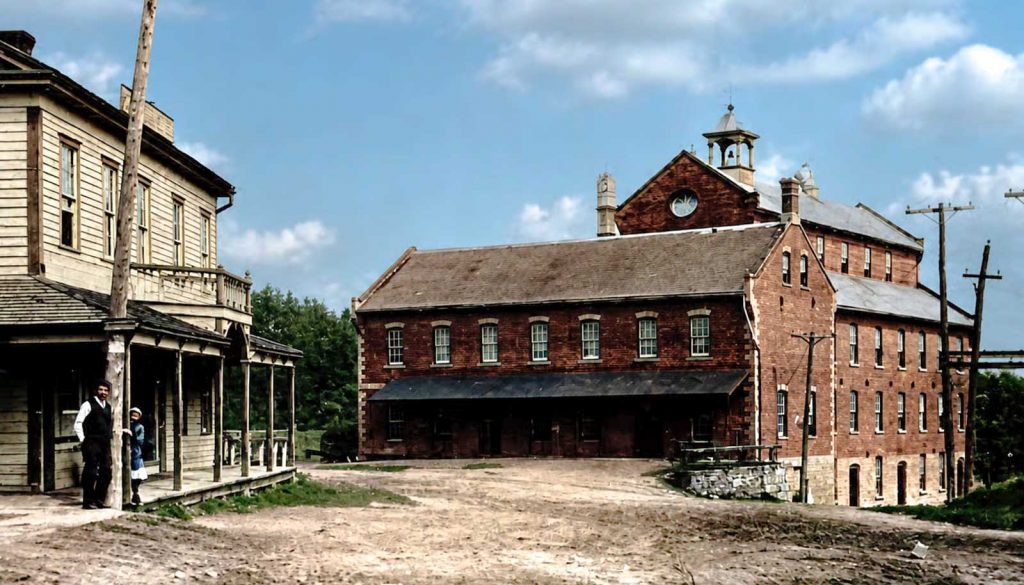
The Norval Flour Mill, built by James McNab in 1828 and later owned by Robert Noble from 1868 to 1920, had an excellent reputation for the quality of the flour that was produced. It was a very sad day for the whole community when the grand old Mill burned down in the winter of 1930
The Mill and Norval
The mill was the village’s only major employer. Her son Chester worked there in the summer of 1926. On 27 January 1930 it nearly burned down. The next day she wrote:
“it is a bad blow to Norval for it was the only industry the small village had and several families got their living in it.”
The mill chimneys with their weather vanes reminded her of fairy-tale dwarfs—“an old-world note in this little Canadian village”:
“On the roofs of the mill were three chimneys with large cowls on them. And fastened to the cowls three weather vanes, two large and one small, of a rather peculiar design. When these dark cowls and vanes came out against a sunset sky they had a most extraordinary resemblance to three little dwarfs, such as might have stepped out of some old Nordic fairy tale of gnome or kobold. They had a charm and mystery all their own – an old-world note in this little Canadian village that always gave me the keenest delight when I walked down main street or came over one of the bridges on a fine [evening].”
The Darker Side of Norval
Norval first brought relief and beauty. Family crises, financial pressure, and the need to keep up the public face of a minister’s household later made it a place she left with both relief and pain.
Her main worries were family, money, and the parish. She wrote about them sharply in the journals but had to hide them in public: a minister’s mental illness was socially unacceptable.
Her husband’s illness.
Ewan Macdonald suffered severe depression and religious melancholia—the conviction that he was eternally damned. Attacks had begun in 1919 and sometimes worsened in Norval. Montgomery wrote his sermons, invented physical ailments when he could not preach, and sometimes gave him wine so he could walk to church. In the journal she wrote that “any form of mental disorder makes a hell of life.”
In 1934 he spent nearly two months at Homewood Sanitarium in Guelph. Caring for him exhausted her and deepened her own depression.
Chester.
From childhood he was “difficult”—he lied, had behavior problems, and failed at school and university. In July 1928 she recorded “something nasty and worrying” that filled her with “deep-seated fear of his future.” In late 1932 or 1933 he secretly married a local girl, Luella Reid, who was pregnant. The family learned of it later. Montgomery saw it as a humiliation. Chester continued to lie, lived apart, and needed his mother’s financial help. These worries “darkened” their last years in Norval.
The Great Depression 1929 was a severe global economic downturn from 1929 to 1939.
After winning a long lawsuit against L. C. Page in 1928, she invested some of the money and lost a large part of her savings in October 1929. She then felt pressure to write faster to support the family (Chester at university, Stuart at boarding school). She complained that writing from necessity “discouraged her and made her nervous.”
Parish conflict and gossip.
After Church Union in 1925 the Norval Presbyterian congregation was divided and “touchy.” She noted neighbor quarrels (including a garden feud) and disputes over the minister’s salary. Later she tired of gossip and petty drama. In 1935 the congregation rejected Ewan, hastening his retirement. She was also pursued with passionate letters and gifts by a young woman.
Her own exhaustion.
Besides writing six novels she had to act as minister’s wife, lead societies, organize plays and concerts, and run the household. She took sleeping pills and bromides. She called her night-time anxiety “three o’clock in the mornings.”
Last Night in Norval, 24 April 1935
“Tonight I went down to the [post] office for the evening mail for the last time. It is a prosy little village street but I have always loved walking down it because of the enchanting bits of beauty visible in the distance – lovely hills everywhere and the river and the pines – the beautiful trees around the church.
… This time tomorrow night the cold windows will shine no more with welcoming lights. All will be dark and still. We shall be gone and the closed doors and empty rooms will be left to the ghosts of our pains and pleasures. I have written ‘The Manse, Norval’ at the head of an [journal] entry for the last time.
… At last, in this ‘writing up’ of my journal I have finished our life in Norval. … It will just be something over and finished with – a page turned – a book closed.”
The journal entries appear in The Selected Journals of L.M. Montgomery (Volumes III and IV cover the move from Leaskdale and the whole Norval period) and in the fuller L.M. Montgomery’s Complete Journals: The Ontario Years (1926–1929 and 1930–1933), which also include her photographs.
The original journals are held in Archival & Special Collections at the University of Guelph.
Lucy Maud Montgomery: The Norval Years, 1926 – 1935 by Deborah Quaile