
The story of Georgetown’s nickname “Papertown” is deeply tied to the rise and eventual decline of its once-thriving paper industry, centered around the Barber family and the Credit River.
It all began in 1837, when Irish immigrant brothers William and John Barber purchased land from a man named Kennedy in the area around Park Avenue and Mill Street, along the banks of Silver Creek. The arrival of the railway in the early 1850s proved to be the decisive factor that spurred development in the region.
Scottish entrepreneur David Forbes, who had a keen interest in papermaking, recognized the potential. He decided to establish a paper mill and negotiated with the Barber brothers, who constructed a building for him and leased him a prime riverside location along what is now River Drive (on the Credit River).
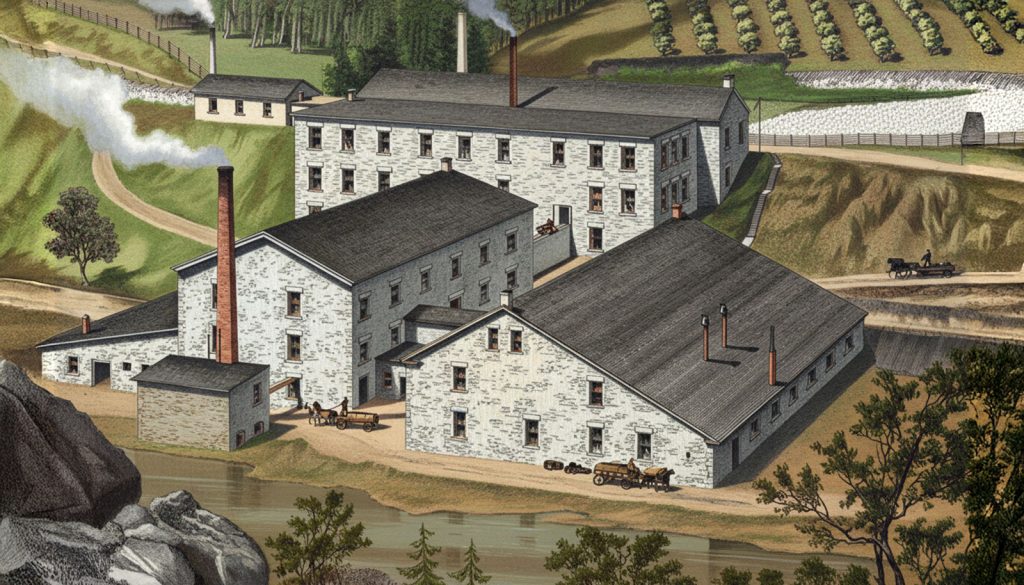
In 1854, Forbes transferred the operation to the Barbers.
Initially, they produced “rag paper” made from cotton and linen rags. For nearly a decade afterwards, the mill shifted to using oat, wheat, and rye straw as raw material. By 1869, wood pulp had largely replaced straw, marking a major shift in production methods.
Paper from the Barber Mill was used for books, newspapers, wallpaper, and even stationery products supplied by the Georgetown Envelope Company. At the height of its production, the mill churned out more than two and a half tons of paper per day — a volume that earned Georgetown the enduring nickname Papertown.
In 1888, needing more power to run the expanding machinery, mill owner John R. Barber commissioned the Cleveland Brush Company of Ohio to build a hydroelectric plant downstream from the mill. The facility delivered a 60-horsepower motor for lighting and a 100-horsepower generator for the machines. This marked the first long-distance transmission of hydroelectric power for industrial use anywhere in North America — a significant technological milestone.
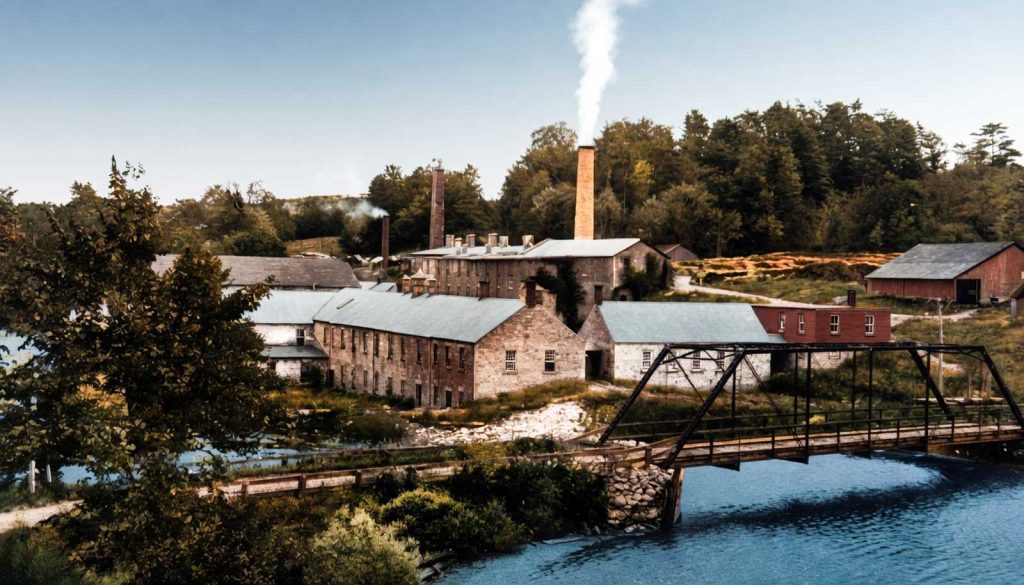
By 1905, the Barber Mill had begun producing coated (chalk-coated) paper. Located near the railway station at 1 Rosetta Street, the facility applied a smooth chalk layer to paper surfaces, making them ideal for writing and high-quality printing.
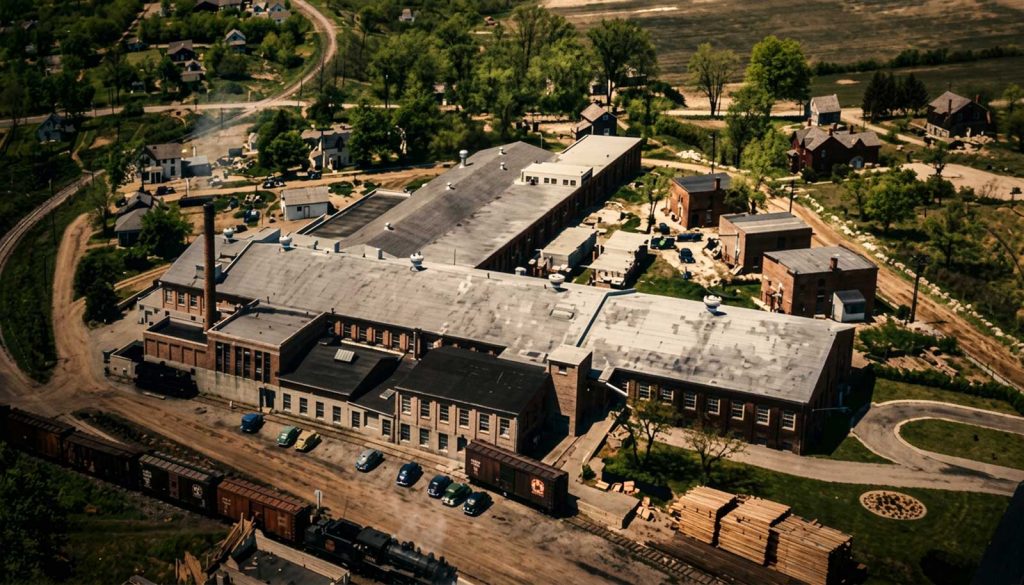
Edward Fleck served as the first manager of this coated-paper operation. Within five years, he established his own company, the Georgetown Coated Paper Mill. That facility later became part of Domtar and continued operating until its permanent closure in 1977.
The original Barber Mill was sold to Provincial Paper in 1911 and finally shut down in November 1948. The coated-paper plant at 1 Rosetta Street remained active much longer, closing only in March 1991.
That final closure in 1991 marked the definitive end of Georgetown’s “paper era”, an industrial legacy that once defined the town and gave it the proud (though now largely forgotten) title of Papertown.