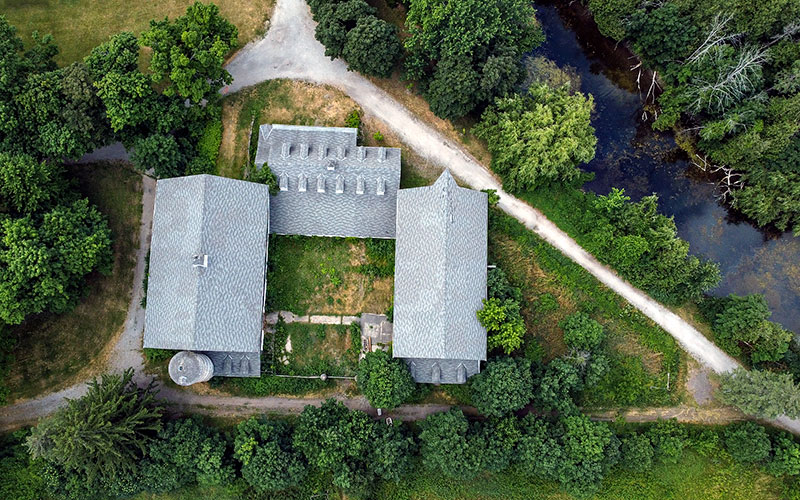
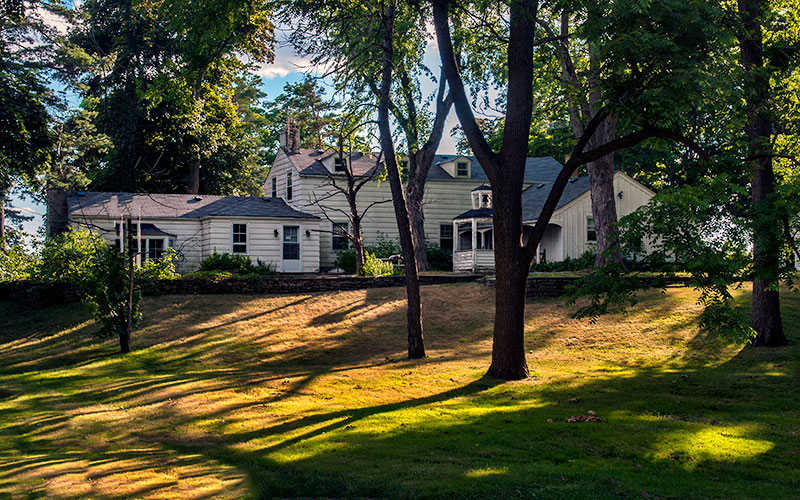
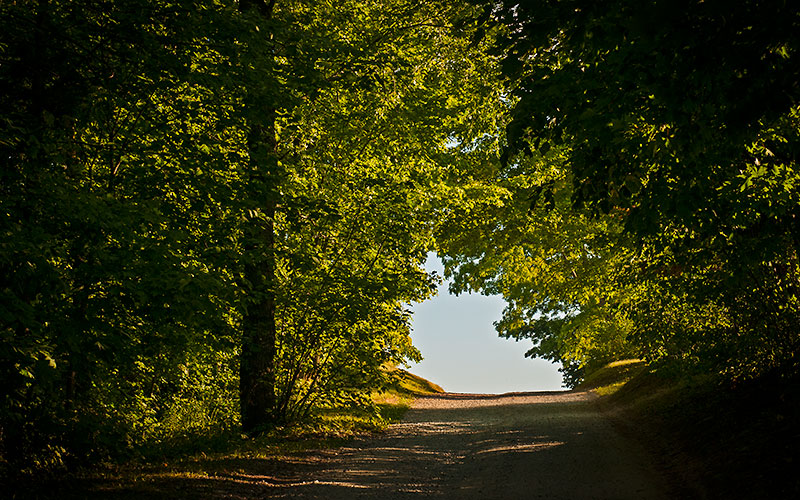
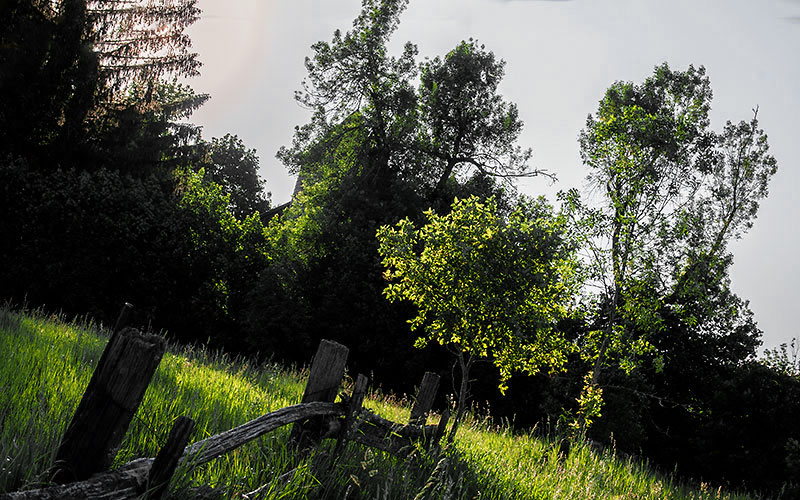
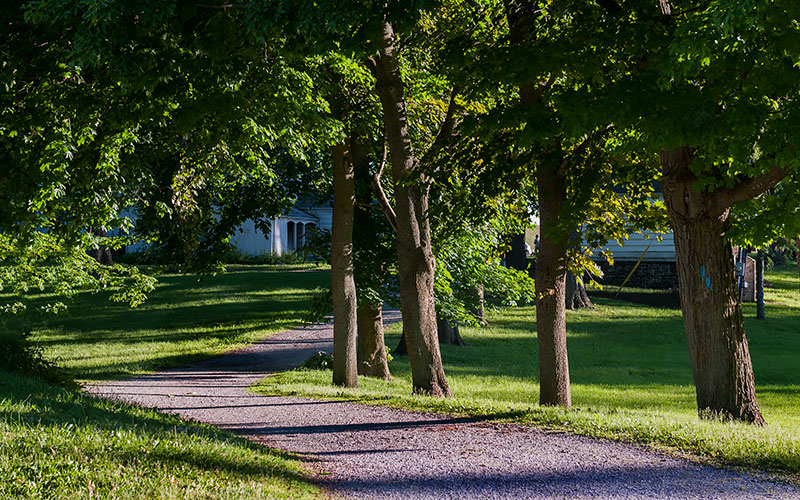
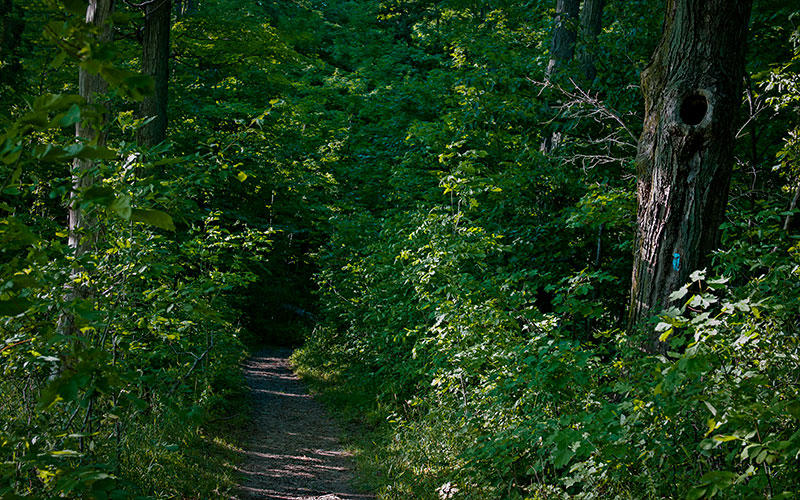
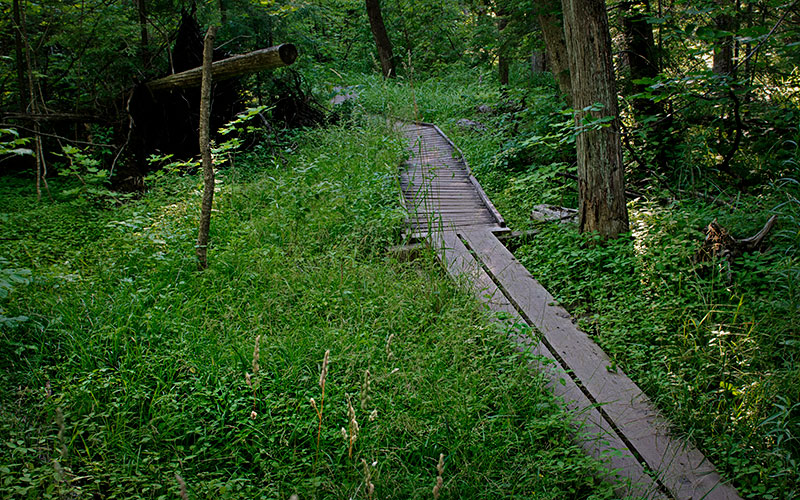
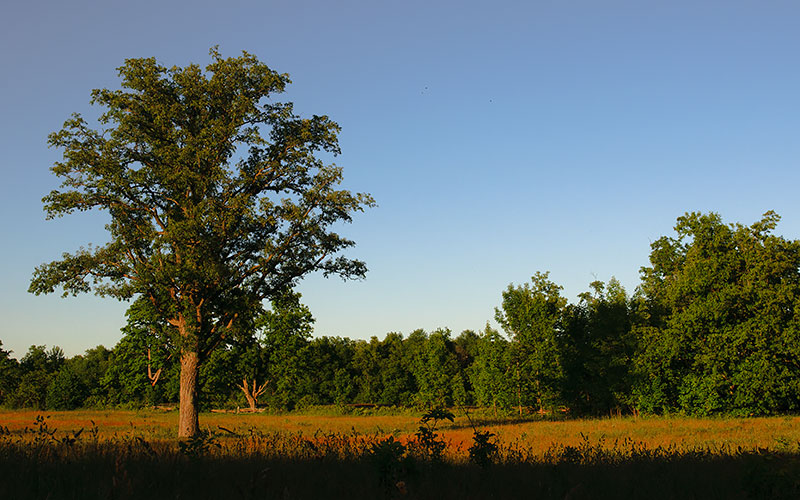
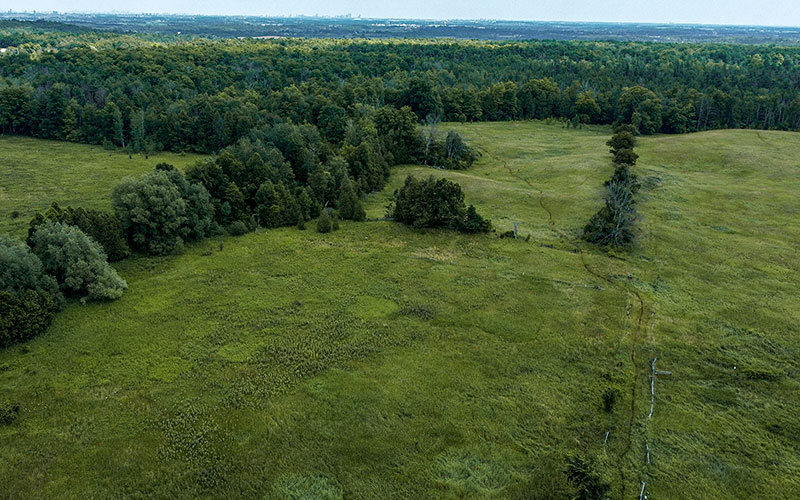
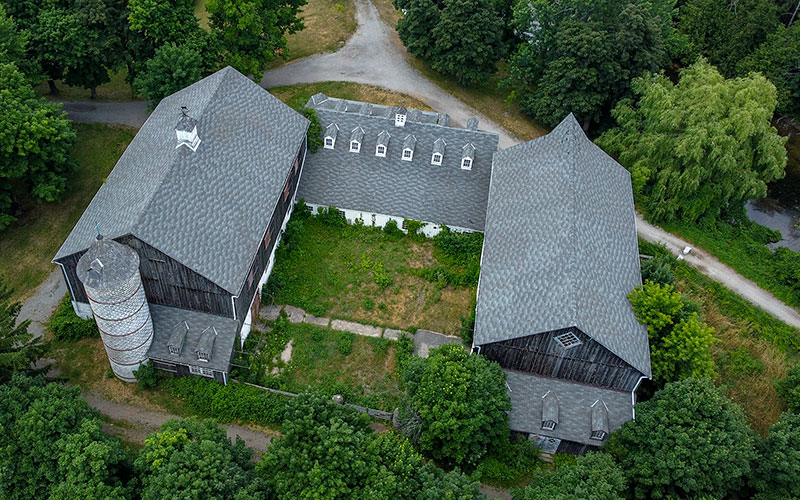
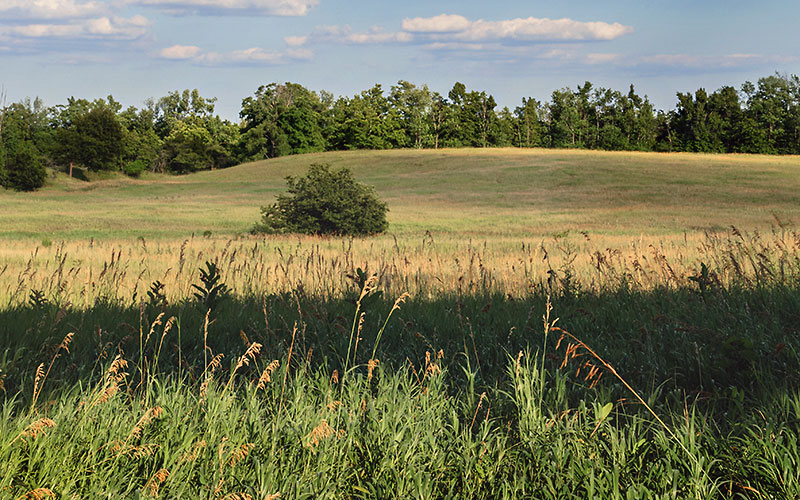
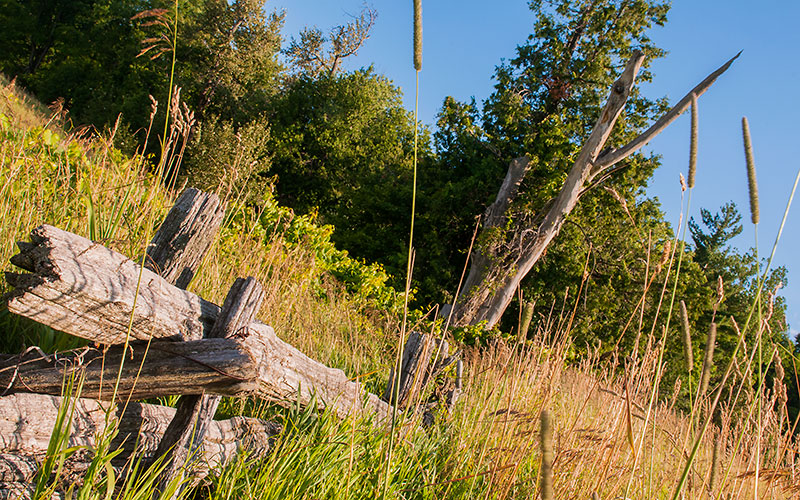
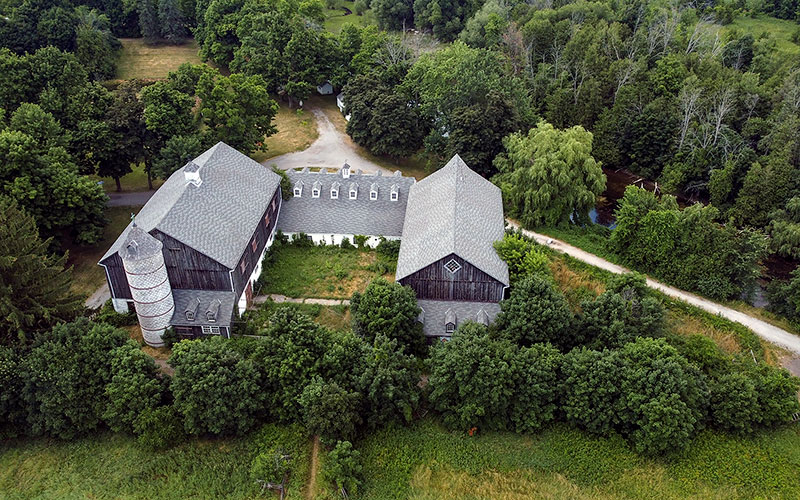
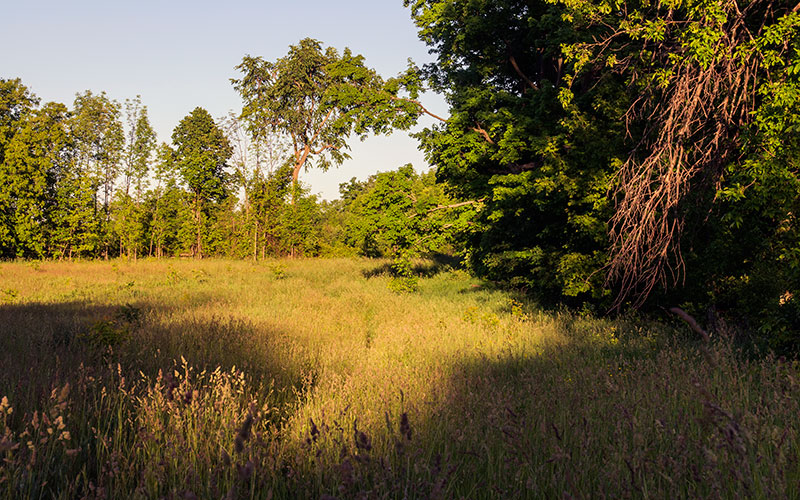
Scottsdale Farm sits north of Georgetown on Trafalgar Road. This 531-acre heritage property is a popular hiking spot. Scotsdale Farm does not contain the oldest trees in all of Ontario. The oldest known tree in Ontario is an eastern white cedar more than 1,330 years old.
Scotsdale, however, contains exceptionally old trees for southern Ontario and the Halton area, with documented specimens more than 250 years old.
Scottsdale Farm is part of Ontario’s Greenbelt.
The dominant species are Sugar Maple, eastern white cedar, and eastern hemlock.
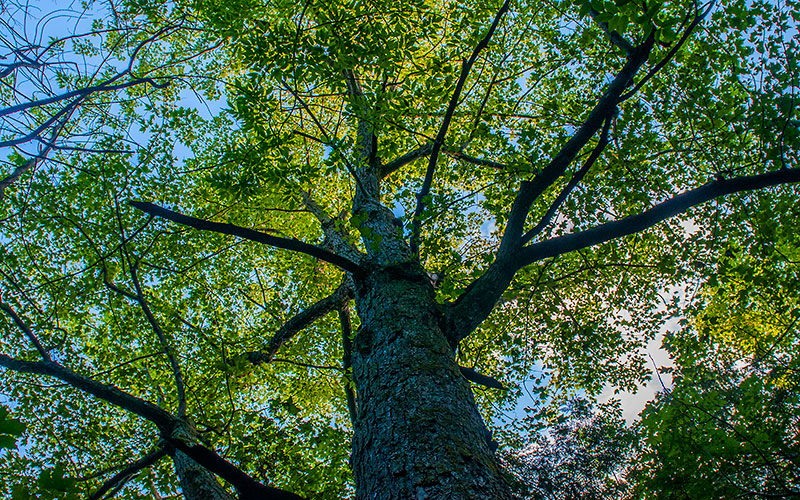
The trees in the old-growth sugar maple forest are estimated to be 150-200+ years old.
The extensive cedar-hemlock swamp (greater than 50 hectares in size) has trees with old age characteristics at numerous points.
We counted 198 rings on a hemlock log found Southwest of Trafalgar Road. Based on the ring count, the tree is estimated to be over 250 years old. Since ages of 250+ were obtained with little effort, and trees in the swamp have little commercial value, maximum ages could be even higher.
If a tree was, for example, 250 years old when it was measured, its life would have begun around the 1770s.
That means it was already growing before the founding of Georgetown, before the creation of the Gore District, and long before the establishment of Halton County in 1816.
Such a tree could have stood on this land through:
~1775 / original old-growth forest
1816 / creation of Halton County
1850s / development of Georgetown and arrival of the railway
1877 / publication of the Illustrated Historical Atlas of Halton County
1938 / establishment of Scotsdale Farm
1982 / donation of the farm to the Ontario Heritage Trust
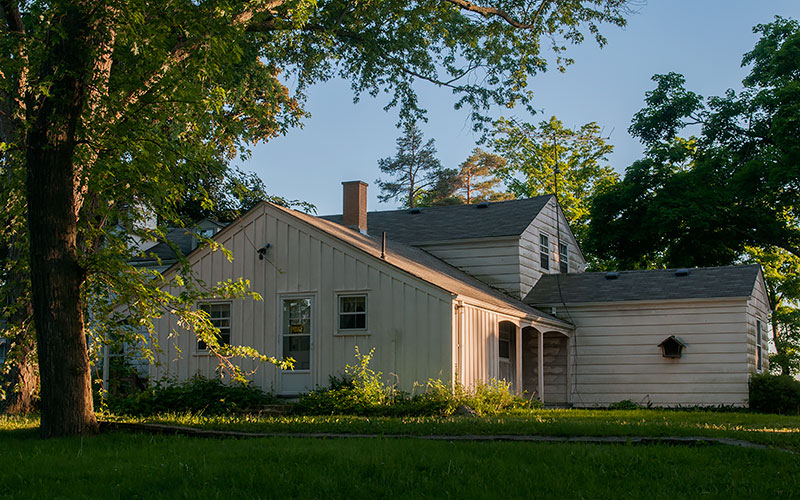
Scottsdale Farm once belonged to the Bennett family who farmed the land for over 40 years, raising Arabian horses and shorthorn cattle.
It was gifted to the Ontario Heritage Trust by Stewart and Violet (Letty) Bennett in 1982.
Interestingly, the site has an even older history: archaeological research has identified three archaeological sites on the grounds of Scotsdale Farm, associated with Iroquoian settlement dating to approximately the 16th century.
The Friends of Scotsdale Farm preserve all the buildingsm for the enjoyment of all.
How to Estimate a Tree’s Age Using a Simple Method
You can estimate a tree’s age without cutting it down by measuring its trunk circumference.
Simple method
-
Measure the circumference of the trunk at about 4.5 feet (1.37 m) above the ground.
-
Convert the circumference to diameter:
Diameter = circumference ÷ 3.14
-
Multiply the diameter by an approximate growth factor for the tree species.
Estimated age = trunk diameter × growth factor
For example, if a tree has a circumference of 102 inches:
-
102 ÷ 3.14 ≈ 32,5 inches diameter
-
If the species has a growth factor of 3:
-
32,5 × 3 ≈ 97-98 years old
TREE / GROWTH FACTOR
American beech / 6
American elm / 4
American sycamore / 4
Austrian pine / 4.5
Black cherry / 5
Black maple / 5
Black walnut / 4.5
Common horsechestnut / 8
Colorado blue spruce / 4.5
Cottonwood / 2
Douglas fir / 5
European beech / 4
European white birch / 5
Green ash / 4
Ironwood / 7
Kentucky coffee tree / 3
Littleleaf linden / 3
Northern red oak / 4
Norway maple / 4.5
Norway spruce / 5
Pin oak / 3
Redbud / 7
Red maple / 4.5
Red pine 5.5
River birch / 3.5
Scarlet oak / 4
Scotch pine / 3.5
Shagbark hickory / 7.5
Shingle oak / 6
Shumard oak / 3
Silver maple / 3
Sugar maple / 5.5
Sweet gum / 4
Tulip tree / 3
White ash / 5
White fir / 7.5
White oak / 5
White pine / 5
Yellow buckeye / 5
Important
This is only an approximate estimate. Growth rates vary considerably depending on species, soil, climate, competition, sunlight, and growing conditions.
For a more accurate estimate, you can use an increment borer to count growth rings without cutting down the tree.
If you give me the tree species and trunk circumference, I can calculate an approximate age for you.