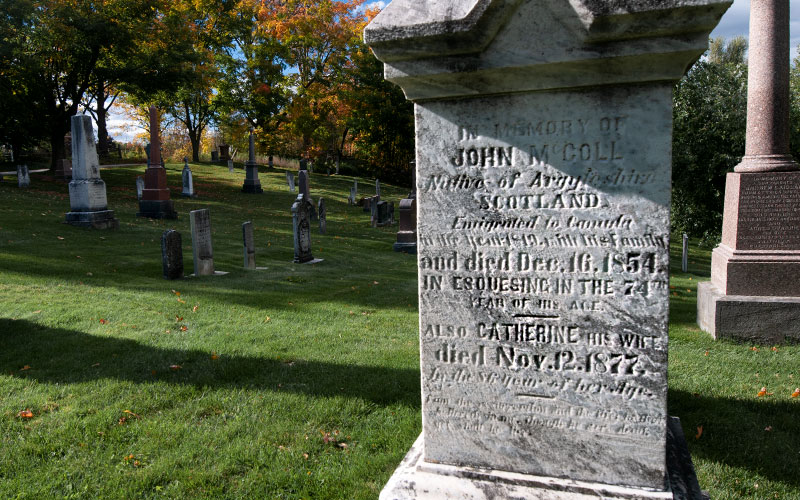
In 1781, the British government began purchasing land from the Mississauga Nation. In 1819, the government began offering free land grants, marking the start of colonization in the southwestern part of Esquesing Township (today Halon Hills), first known as “Scotch Settlement” and later as “Scotch Block.” As the name suggests, most settlers came from Scotland.
The Scotts brought their faith with them, and the Boston Presbyterian Church became the area’s first Presbyterian congregation.
The first service in the “Scotch Block” was conducted by the Reverend William Jenkins in June 1820.
He conducted the service on Andrew Laidlaw’s farm. A stump served as the pulpit, and the people sat on logs.
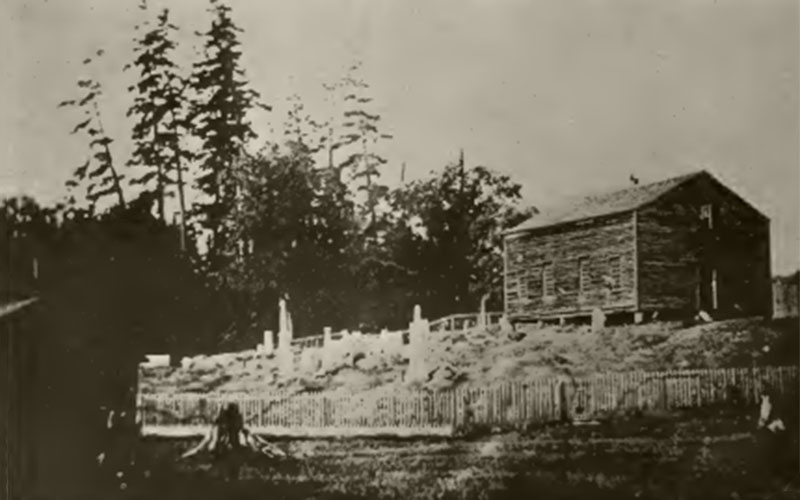

A short history of Boston Presbyterian Church.
The first house of prayer began construction in 1824, when land was purchased from Andrew Laidlaw for a cemetery and a wooden church, built eleven years later in 1835.
The first preacher, Rev. Peter Ferguson, was installed on April 11, 1832.
In 1844, the church was renamed “Boston Presbyterian” after Rev. Thomas Boston, a theologian from Ettrick, Scotland.
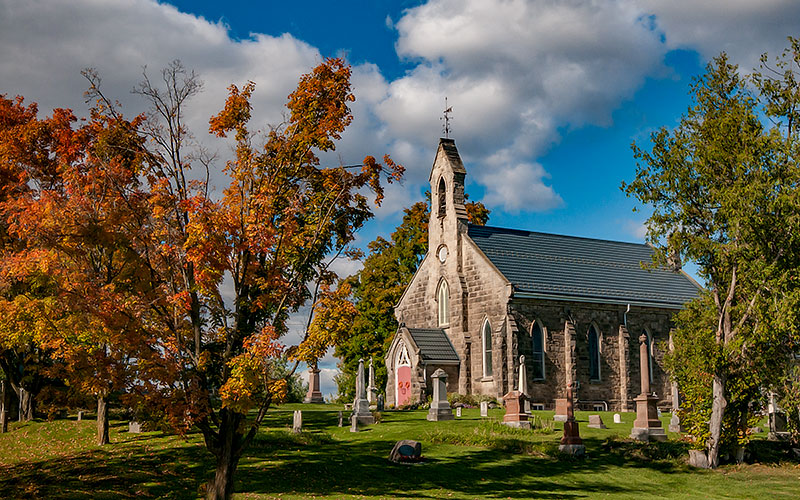
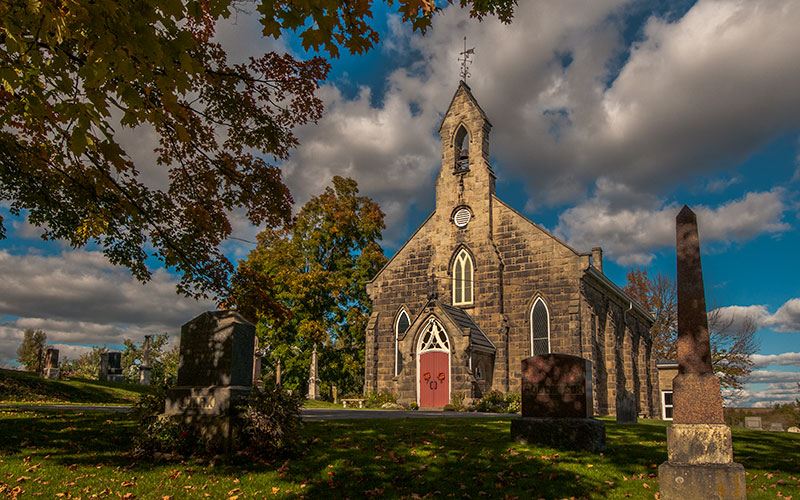
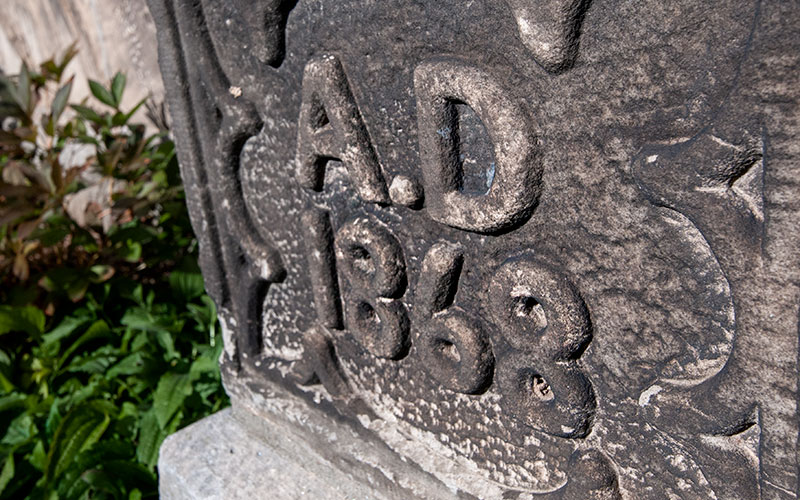
The present limestone church was begun in 1868.
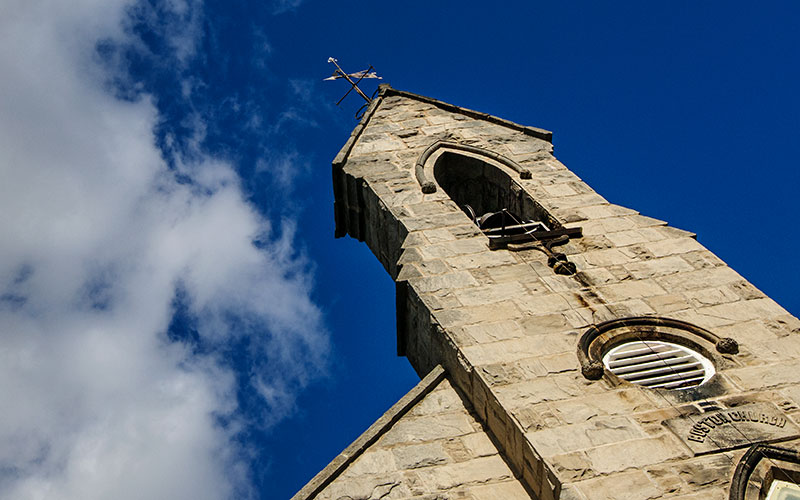
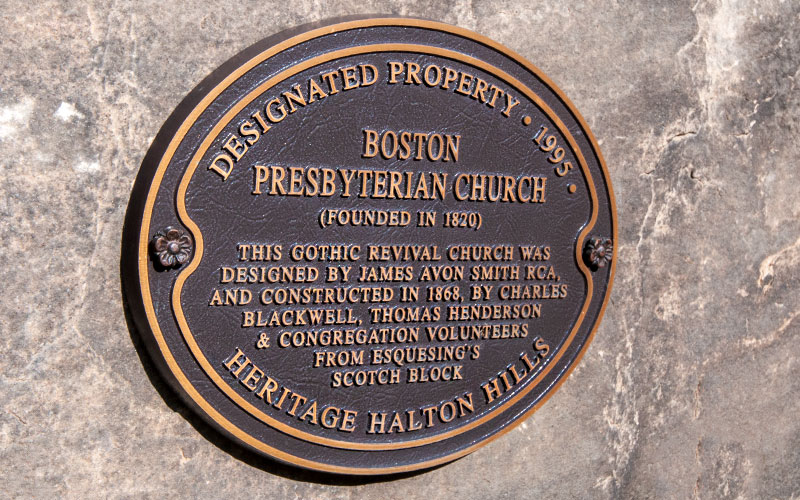
The church was designed by Toronto architect James Avon Smith in the Gothic Revival style and built with locally sourced stone and timber.
Thechurch’s history notes that the stone came from Hume Quarry, the sand from Thomas Duff’s farm, and the timber from James Lindsay’s farm.
The cornerstone was laid in 1868, and the first service in the new church was held in January 1870.
In 1960, the church was rebuilt.
They built a basement hall and added a church hall and classrooms at the rear of the church.
In June 1995, Boston was designated a historic preservation area.
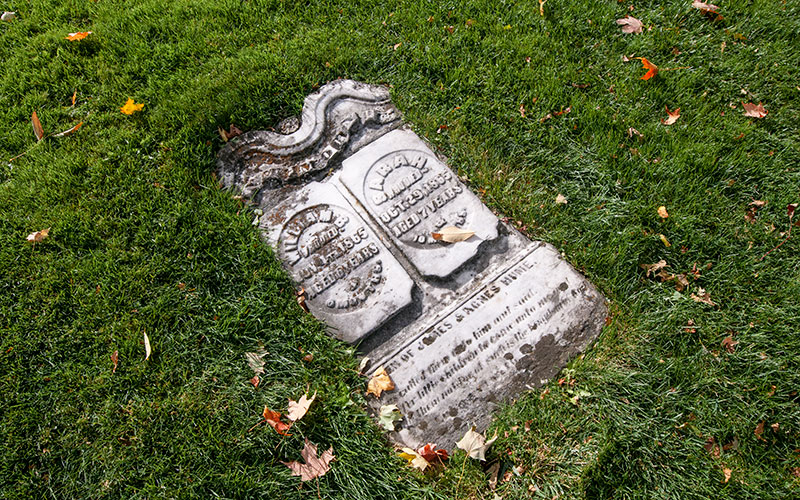
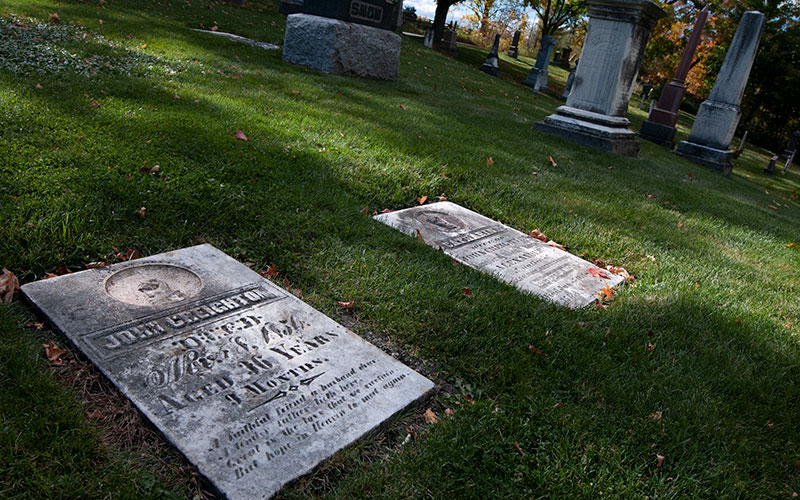
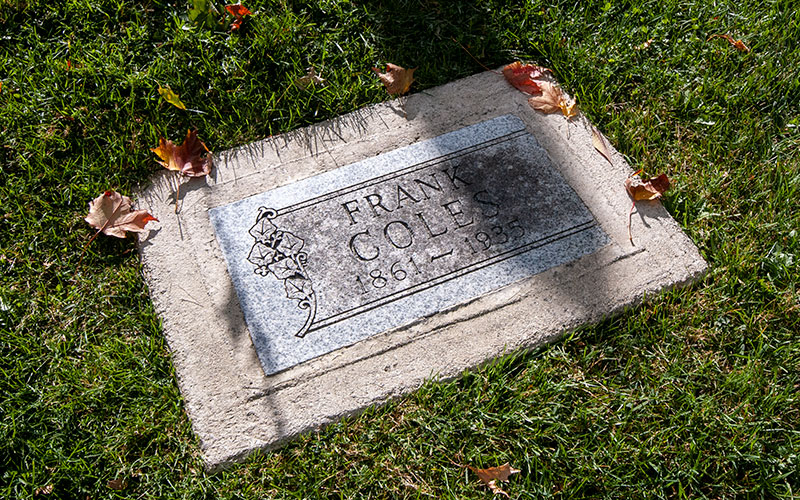
The cemetery was established in 1824!
The book:
Halon’s Scotch Block – The People and Their Stories by Gloria Brown and Jim Dills.
More: www.miltonhistoricalsociety.ca
The surviving historical records of the Boston Presbyterian Church have been deposited at the National Archives of the Presbyterian Church in Canada.