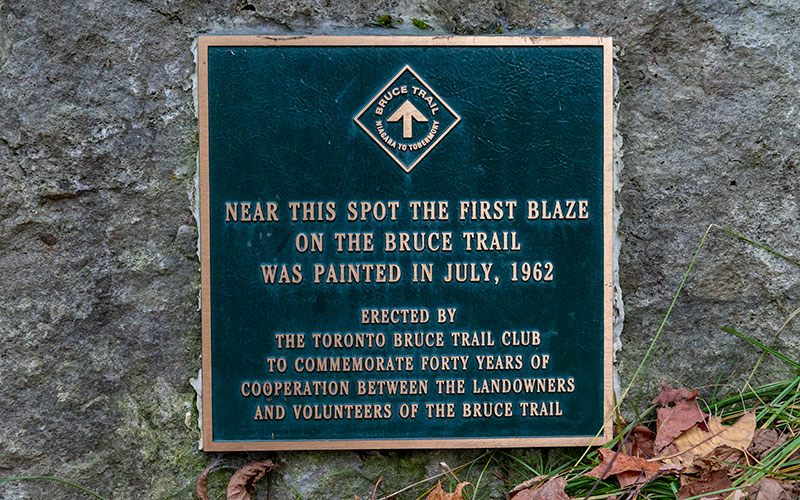
The use of blaze marks on the Bruce Trail dates back to 1962, when Philip Gosling, one of the four “founders” of the Bruce Trail, marked the first blaze marks in July 1962.
The plaque is on the trail just north of Campbellville Rd (near Appleby Line by Philip. Just north of the plaque at the 1 km mark, the Philip Gosling Side Trail begins, leading to Hilton Falls Conservation Area.
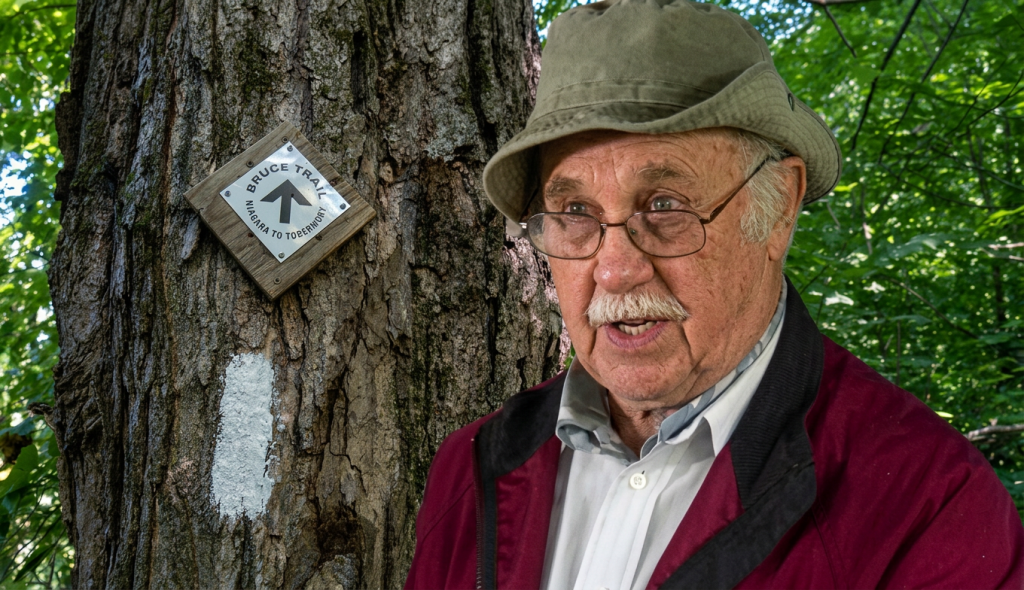
Philip Gosling (full name Dr. Philip R. Gosling) was a prominent Canadian conservationist, philanthropist, and one of the four founding members of the Bruce Trail in Ontario.
He is best known for his pivotal role in creating Canada’s longest footpath—the Bruce Trail, which runs along the Niagara Escarpment from Niagara to the Bruce Peninsula in southern Ontario. As the first Trail Director starting in the early 1960s, Gosling led volunteer efforts to secure landowner permissions, rally community support, and mark the route.
In July 1962, he personally painted the first blaze (the signature blue-and-white trail marker) on what would become the Bruce Trail, near what is now a commemorative plaque and the start of the Philip Gosling Side Trail (often near Hilton Falls Conservation Area in the Milton/Georgetown area).
“The Bruce Trail was a dream that came true and is a miracle of volunteerism. I never imagined the huge response and support from the public would translate into one of the biggest conservation success stories in Canada.”
Philip Gosling (co-founder), Bruce Trail Stories: 1962-1967 Memoirs
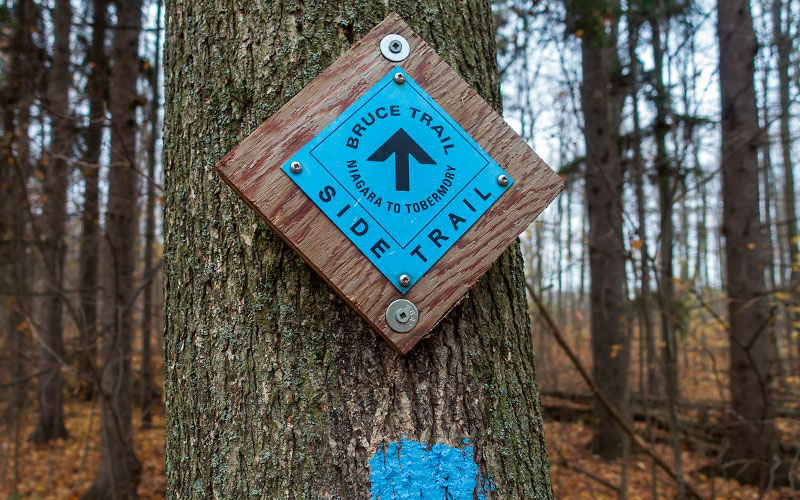
These blazes are the painted rectangular markers (typically blue with a white center for the main trail, or other variations for side trails) that hikers follow to stay on the path.
Gosling’s work earned him recognition, including honours from the Governor General of Canada for his contributions to the trail and nature conservation. He was also involved in other environmental efforts, plant conservation, and philanthropy in Ontario (including ties to Guelph, where he lived).
Sadly, Dr. Philip Gosling passed away on December 3, 2025, at age 97 in Guelph, Ontario.
He was remembered as the last surviving founder of the Bruce Trail, with tributes highlighting his lifelong dedication to protecting Ontario’s natural landscapes.
The query “Philip Gosling blaze Ontario” likely refers to this historic first blaze he marked on the trail, rather than any fire or wildfire incident.
“My hope is that by saving the Niagara Escarpment, we will permanently protect irreplaceable habitats and species… we will pass on the joys we have experienced to future generations. And, we will ensure this ribbon of wilderness is protected forever and available for all to enjoy.”
Dr. Philip R. Gosling, Honorary President & Co-Founder
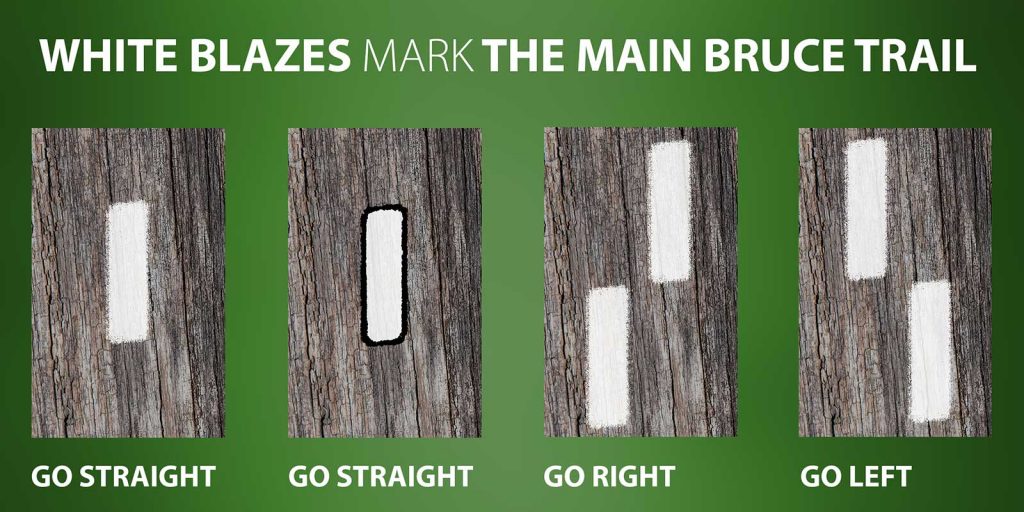
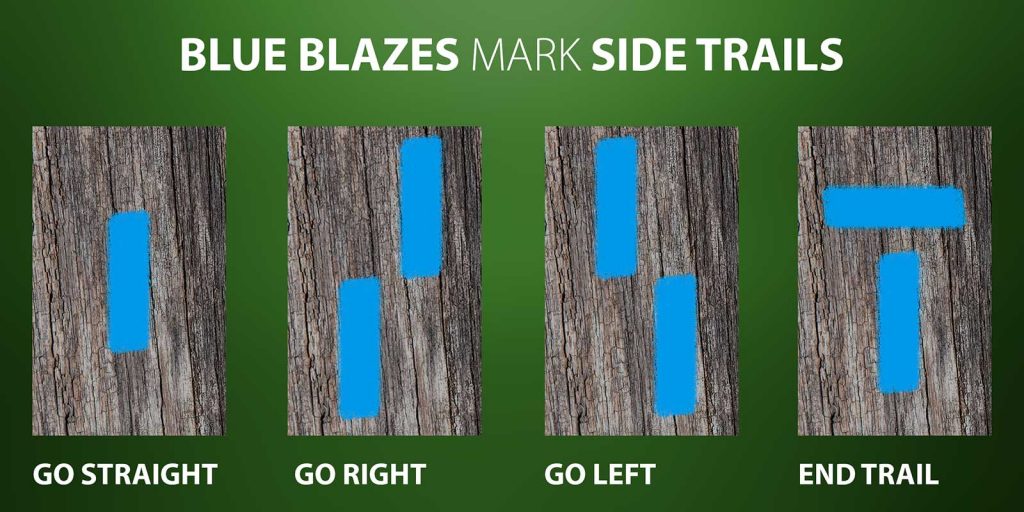
If you see no rectangular white or blue blaze, that trail is not part of the Bruce Trail system.
Bruce Trail history in brief:
1959: Ray Lowes dreams up a footpath along the Niagara Escarpment to protect it and connect people to nature.
Ray Lowes (the visionary, often called the “Father of the Bruce Trail”)
Philip Gosling (who became Trail Director)
Norman Pearson
Dr. Robert MacLaren (sometimes spelled McLaren)
1962–67: Volunteers secure landowner permission, build and blaze the trail.
1967: Officially opened at Tobermory for Canada’s Centennial.
The Bruce Trail is Canada’s oldest and longest marked footpath.
Bruce Trails is the only continuous public way to explore the breathtaking Niagara Escarpment, a UNESCO World Biosphere Reserve.
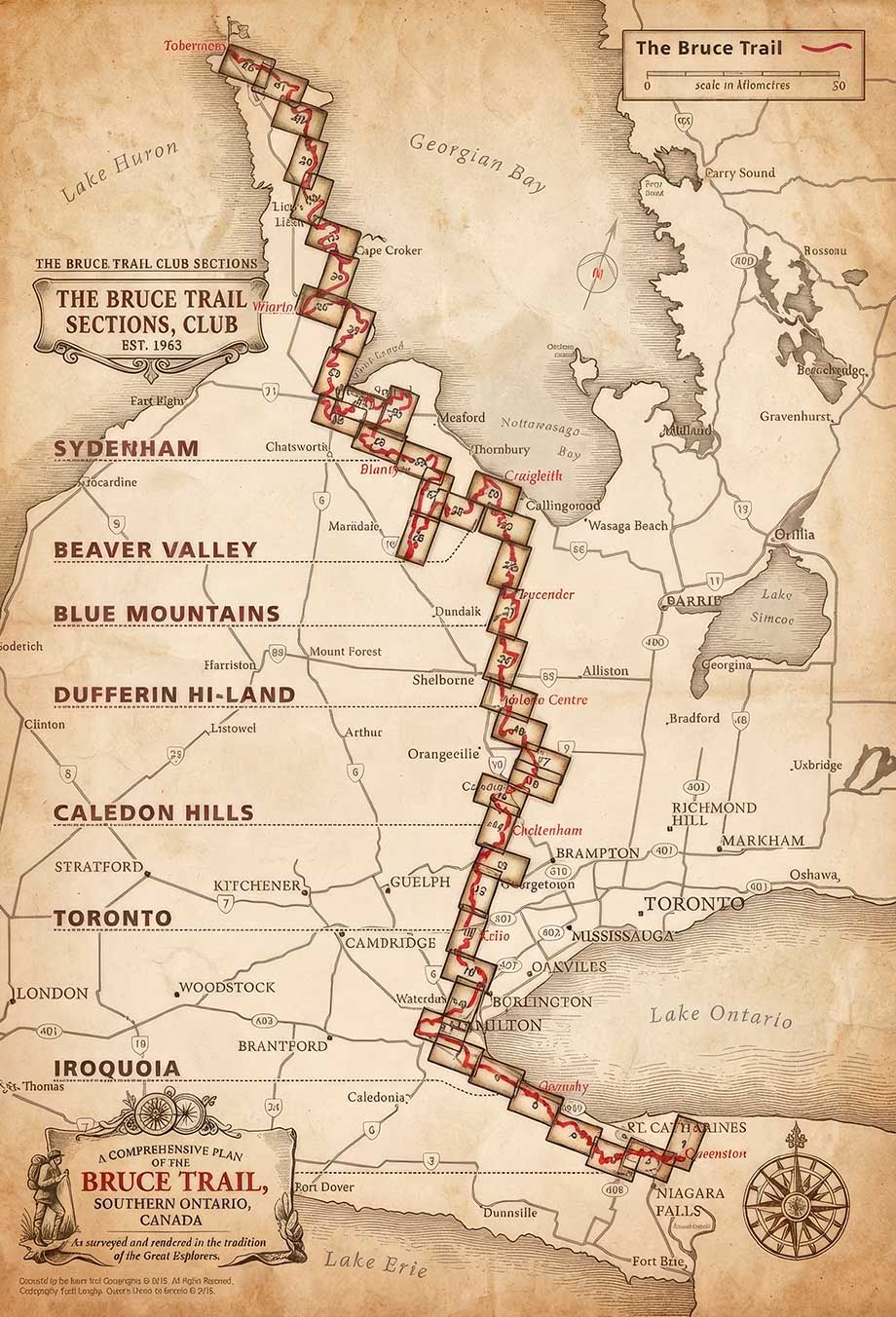
Winding along the Escarpment from Niagara all the way to Tobermory,
it offers more than 890 km of main trail plus over 400 km of side trails to discover.
Let’s hit the trail—adventure’s waiting.
Bruce Trails in Halton Hills
The Bruce Trail runs through the Toronto Section (managed by the Toronto Bruce Trail Club).
Length in Halton Hills: approximately 30 km of the main trail (plus side trails).
- Part of the ~50 km Toronto Section (Kelso/Milton to Cheltenham)
- Terrain: mixed forests, meadows, rocky crevasses, escarpment edge, some steep/uneven sections
- Difficulty: mostly moderate
- Key spots: Limehouse Conservation Area (“Hole in the Wall”), Silver Creek, Scotsdale Farm, Terra Cotta area, quarry views
- Marked with white blazes (main trail); blue blazes for side trails