
For nearly 200 years, this community has been known as Acton. In 1844, its first postmaster, Robert Swan, proposed the new name, replacing “Adamsville” chosen to honour the founding family and the earlier name, “Dansville.”
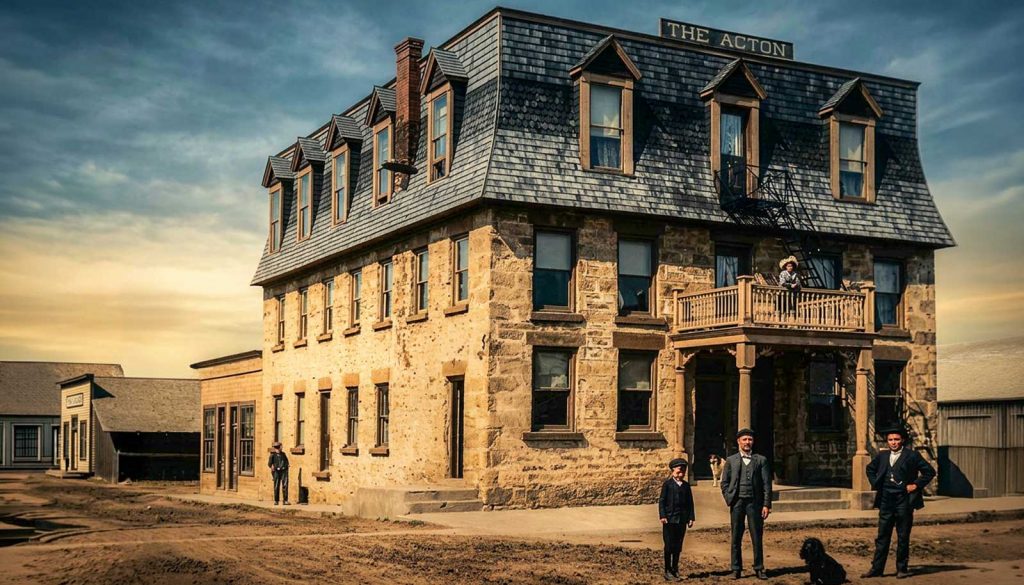
Early Settlement and the Adams Family
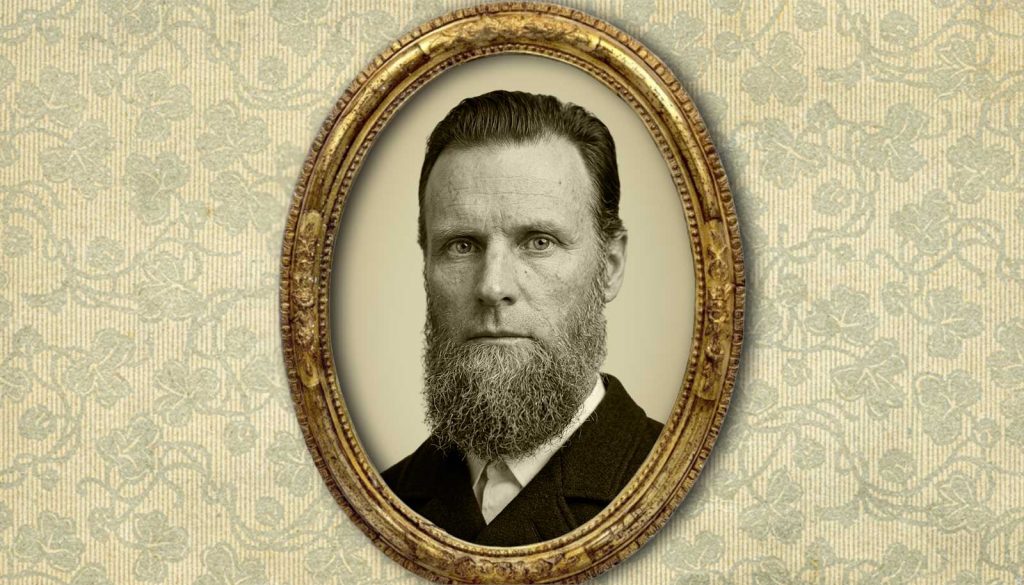
Acton was settled in 1825 by the Rev. Ezra Adams, the Rev. Zenas Adams, and Rufus Adams saddlebag Methodist preachers who retired here to farm and regain their strength before returning to the circuit in 1830. Zenas delivered the first sermon in the area just east of present-day Acton, opposite Worden’s farm, and later held services in his yellow pine home at the corner of Main and Church Streets, built about 1830 and still standing today. He died in 1847.
Ezra’s home stood near what is now Bower Avenue before he later moved to Drayton. In 1826, Rufus’ wife opened Acton School on the site where Knox Church now stands; it also served as a Methodist chapel. Rufus died in 1856, and his widow soon relocated to Dundas.
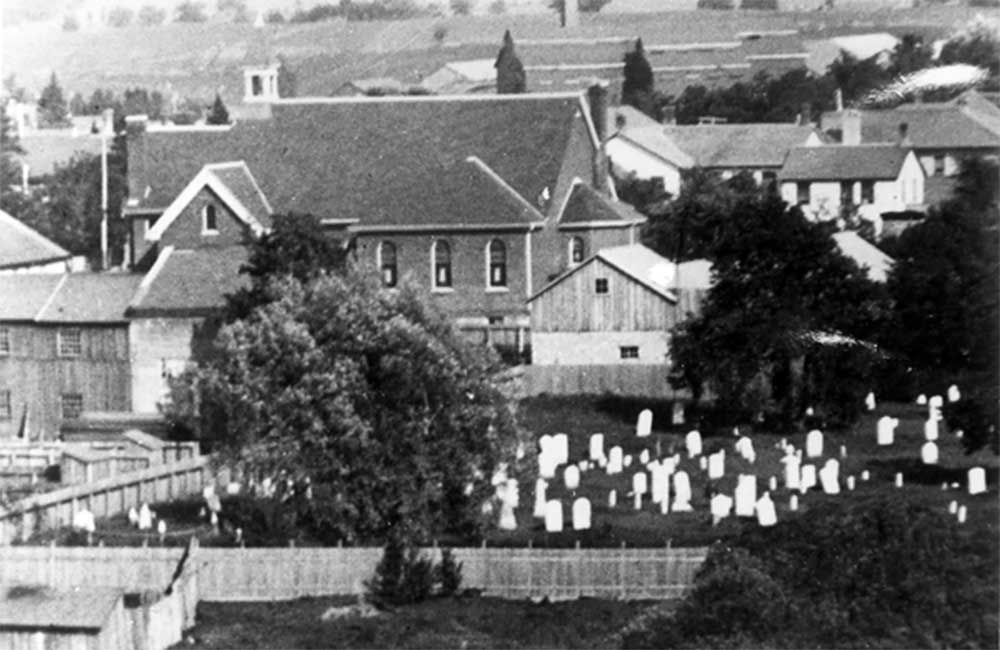
A fourth brother, Eliphalet Adams, later joined the family in Acton. His son Phineas, who died at age 31 in 1830, may have been the first person buried behind the chapel in what is now Pioneer Cemetery (behind Knox Church). Eliphalet died in 1844. His younger son, Ransom, a bachelor businessman, remained in Acton until his death in 1880—the last of the Adams family to reside in the village.
The brothers dammed the local creek to create a mill pond that powered their sawmill and later a flour mill, which still operates on the same site today. The pond, later named “Fairy Lake” by Sarah Secord, surrounds Prospect Park. The village purchased the 14-acre property in 1889 for $3,000, and it has since served as both parkland and fairgrounds. Stone pillars were erected in 1924 to mark the 50th anniversary of incorporation. An arena was built in 1929 on the site of an army drill shed, and an 1867 barn beside it continues to serve the Acton Agricultural Society as a poultry barn during fair time.
Growth and Transportation
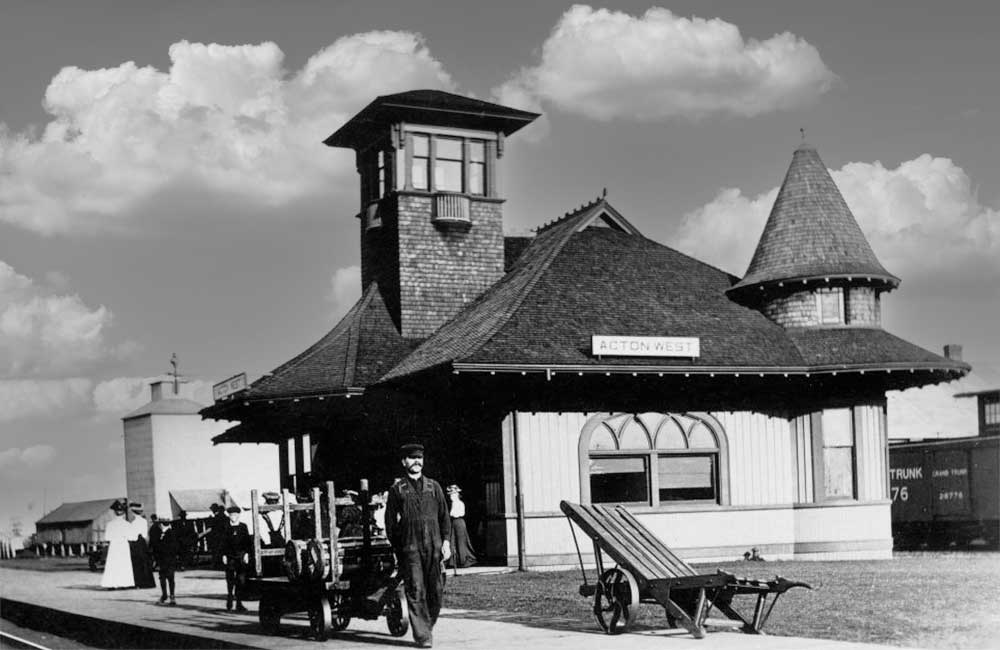
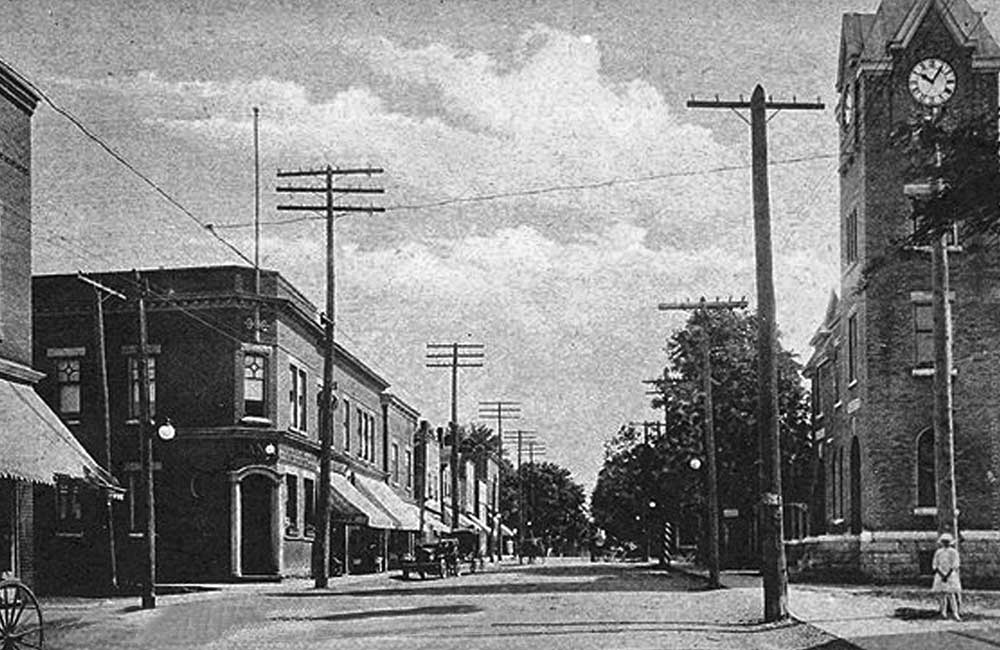
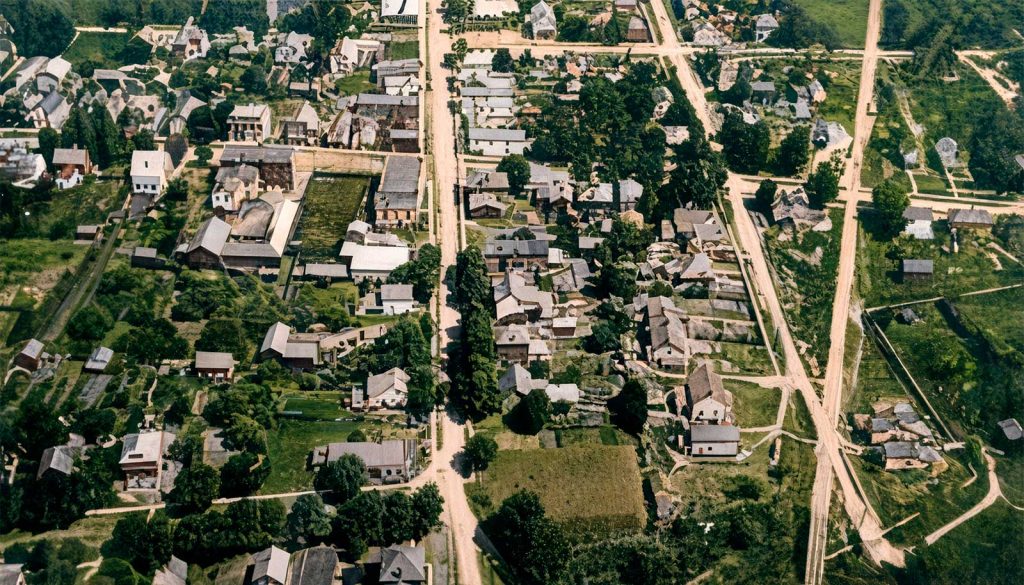
Main Street was Acton’s principal thoroughfare in its early years. The Adams family laid out the streets in a grid pattern, naming them after family members. A period of rapid growth followed the arrival of the railroad, with the first Grand Trunk train steaming through town in 1856. The Toronto-to-Guelph Road (now Highway 7), laid out in 1827, was another important route. As automobiles became dominant, Main Street became Highway 25, and passenger rail service declined until the Acton station closed in November 1967. Limited rail service returned in 1987, though the original station building has long since been removed.

“Leathertown” and Industrial Expansion
In recent decades, Acton adopted the theme “Leathertown”- a fitting tribute to its industrial heritage. The tanning industry began here in 1842 under Abraham Nelles. In 1865, the Beardmore Tanning Company of Hamilton purchased the business and became central to village life. The company built employee housing, tennis courts, a bowling green, a golf course, a boathouse, a co-operative store, and an outdoor arena on Frederick Street. At one time, the tannery claimed to be the largest in the British Empire. Canada Packers purchased it in 1944 and operated under the Beardmore name until its closure on September 12, 1986.
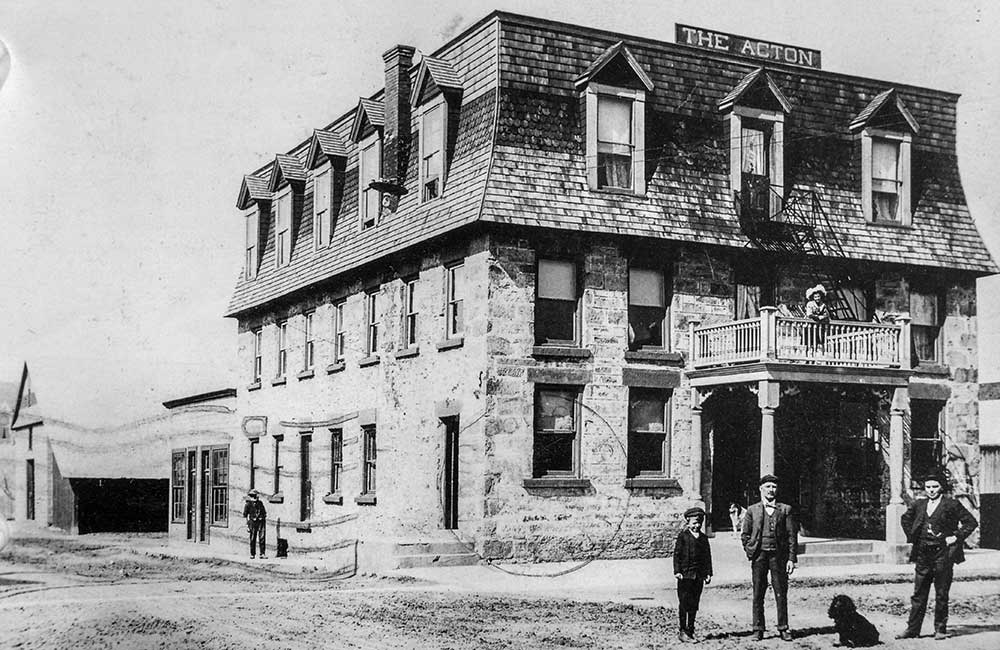
Many leather-related businesses flourished in Acton. The W. H. Storey glove factory on Bower Avenue, established in 1868, employed up to 250 people. In 1879, Storey built a grand family home at the corner of Mill and John Streets. After the First World War, the house became a veterans’ home under Wilfred Coles, later operating as a hotel until 1937 and then as a funeral home. Storey’s son sold the glove business in 1915 to H. T. Arnold of Georgetown, who ran it until 1954. The four-storey factory was demolished in 1962 to make way for a new post office.
Other tanneries supplied leather to companies such as Hewetson Shoe, Coronna Shoe, Superior Glove, Marzo Glove, and Frank Heller & Co., reinforcing Acton’s leather legacy. Heller and Dawkins were also instrumental in establishing the Old Hide House, a tourist attraction located in a Beardmore warehouse built in 1899.
Though leather dominated the local economy, many other industries provided employment over the years, including Acton Plow Co., Building Products, H. K. Porter (Disston Saws), A. P. Green, Ajax Engineering, Blow Press, Microplastics, Force Electric, Mason Knitting, Dills Printing, and Keates Organs.
“It’s worth the drive to Acton!”
The Old Hide House was touted as Canada’s largest leather store. Built in the actual old hide house of the Beardmore leather factory, the store was a landmark that drew 300,000 people to town every year. The famous slogan “It’s worth the drive to Acton!” was created by Steve Dawkins, whose family owned the store. That campaign put the town on the map in the 1980s. Local business partners converted part of a massive old leather tanning factory into a retail leather outlet selling furniture and clothing. Sadly, over the years, the store was getting smaller and smaller until it closed for good in 2025.
Civic Development
Acton was part of Esquesing Township until its incorporation as a village in 1874. The Town Hall, built in 1882, housed the municipal council, constabulary, and fire brigade.
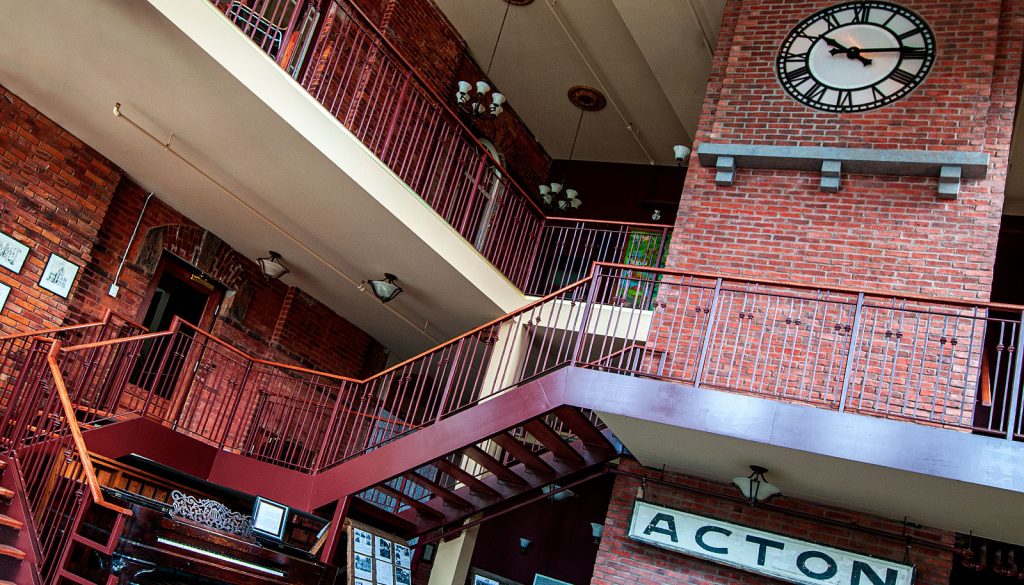
When Acton became part of Halton Hills in 1974, the hall was no longer required for municipal use. Designated a historic building in 1977, it was eventually sold to Heritage Acton for one dollar and is now undergoing restoration, complete with its nineteenth-century lockup. Other significant public buildings include the Hydro offices expanded in 1988–89, and the Public Library, set in park-like grounds featuring a small arched bridge popular with photographers.
As you pause to read the historical marker at this site, it is worth remembering that the modest stream flowing beneath the bridge once powered Acton’s mills—the very source of energy that first drew the Adams family here in the 1820s.
Sources:
Original post by John Mark Benbow Rowe for the Esquesing Historical Society.
The assistance of the Halton Hills Public Libraries and Hartley Coles is gratefully acknowledged.