
The Ontario provincial floral emblem is the white trillium (Trillium grandiflorum), a beautiful native wildflower that has become an iconic symbol of the province’s natural heritage.
Ontario is home to five native trillium species:
- White Trillium (Trillium grandiflorum)
- Red Trillium (Trillium erectum)
- Nodding Trillium (Trillium cernuum)
- Painted Trillium (Trillium undulatum)
- Drooping Trillium (Trillium flexipes)
- Trillium: Origins and Early Significance
The name “trillium” comes from the Latin tri, meaning “three,” reflecting the plant’s distinctive structure:
three petals, three sepals, and three leaves arranged in a whorl.
Also known as wake-robin or white lily, the trillium blooms in spring (April–May) in Ontario’s hardwood forests, often carpeting the forest floor with large, bright white flowers that gradually fade to pale pink.
Indigenous peoples in the region long recognized the plant’s value, using its roots in traditional medicine and viewing it as a symbol of the cycles of life, death, and rebirth.
European settlers also noted its presence early on; a 1760 British botanical text referred to it as “the herb True Love of Canada.”
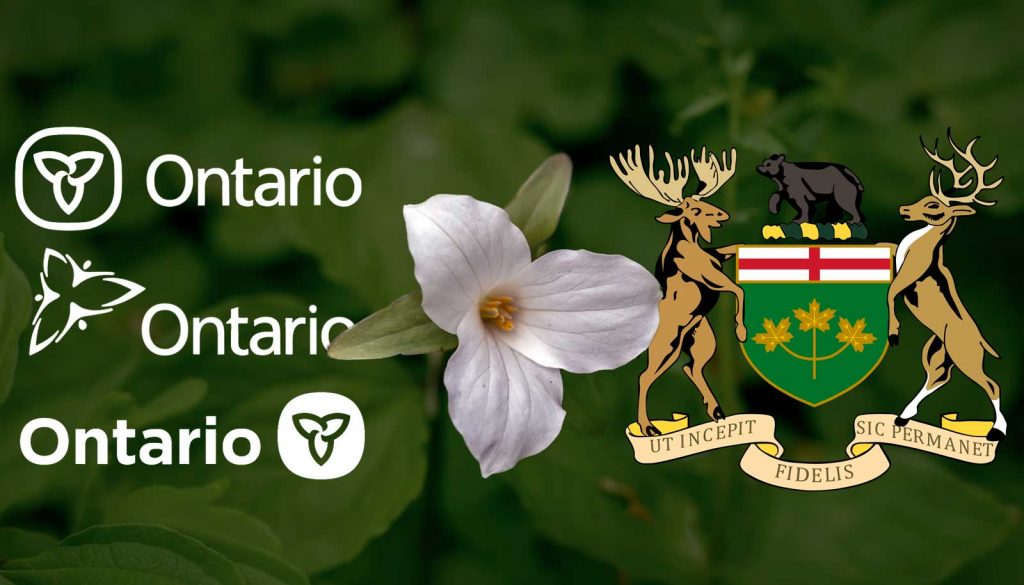
Adoption of White Trillium as Ontario’s official floral emblem
The movement to adopt an official floral emblem for Ontario emerged during and after World War I, when there was interest in selecting a national Canadian flower to place on the graves of fallen soldiers overseas. Although a national emblem was never chosen, the effort encouraged provinces to select their own.
In Ontario, a committee of botanists recommended the white trillium to the Ontario Horticultural Association, citing its abundance, beauty, and strong association with the province’s woodlands. On March 25, 1937, the Legislative Assembly of Ontario officially adopted the white trillium (Trillium grandiflorum) as the provincial floral emblem through the Floral Emblem Act.
Trillium’s modern role and cultural impact
Since its adoption, the trillium has become a widely recognized symbol of Ontario. It appears in the Government of Ontario’s logo—first introduced in 1964 and later redesigned in 2006—as well as on official documents such as health cards and driver’s licences. It is also featured on the Franco-Ontarian flag alongside the fleur-de-lis.
Although Ontario has five native trillium species, the white trillium remains the most iconic. It is protected under provincial law, and picking it is prohibited in many areas, particularly in provincial parks, as the plant is slow-growing and can be damaged or killed if disturbed.
Today, the trillium represents Ontario’s natural beauty, resilience, and deep connection to its forests. Each spring, the sight of white trilliums blanketing the forest floor remains a cherished and enduring symbol of the season across the province.
Trillium, often celebrated in classic literature for its delicate beauty and symbolism of purity and innocence, is a perennial wildflower that graces the forest floors of North America.
In The Wild Flowers of America by Edward J. McCaffrey,
the plant is described in rich detail, highlighting its distinctive three-petaled blossoms that bloom in shades of white, pink, and purple. These flowers evoke a sense of tranquility while reflecting the fleeting, ephemeral nature of life.
McCaffrey’s vivid prose captures the enchanting presence of the trillium, portraying it not only as a botanical marvel but also as an essential part of the delicate ecosystems in which it thrives.
More:
What wildflowers are in Canadian provincial and territorial symbols?


