
Limehouse is a historic village and today a well-loved conservation area in Halton Hills, Ontario, in what was once Esquesing Township. It lies midway between Acton and Georgetown, at the point where 22 Sideroad meets the 5th Line Esquesing and where Black Creek, a branch of the Credit River, cuts through the Niagara Escarpment. Once a booming lime-burning centre, its recorded history reaches back to 1805.
Early settlement and the first land grants
The Mississauga people last held the land on which Limehouse stands. As settlers arrived in growing numbers from the British Isles and the United States, the government of Upper Canada began purchasing land from them in 1805, in a parcel that came to be known as the Mississauga Tract. Esquesing Township was surveyed in 1818.
The first settler in the Limehouse area was Adam Stull, who obtained the Crown deed for Lot 22, Concession 6 (200 acres) in 1820. Two years later, John Meredith (also spelled Maradith) secured the patent for Lot 23, Concession 6. The northern part of the village would later be built on the western portion of Meredith’s 200 acres.
On July 5, 1832, Meredith sold two acres to the trustees of the Presbyterian congregation for two pounds and ten shillings, to serve as a burying ground and the site of a church. A single grave already lay on the land before that sale. The church itself was not built until 1861, when Presbyterians, Episcopalians, and Methodists joined forces to raise it. First known as Limehouse Union Church, it counted Rev. Ewing as its earliest minister; he is buried with his family in the Limehouse cemetery.
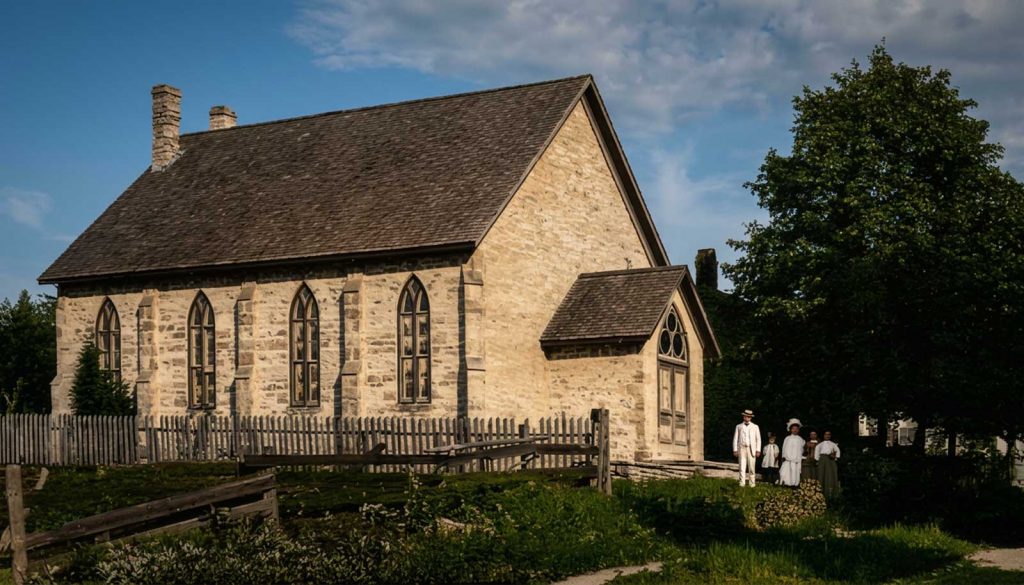
Limehouse Memorial Hall Celebrates 150Years!
In 1876, Mr. Gowdy Sr. donated land to the local Methodists, and a fine stone church was built on it. The church closed in the 1930s, but through the efforts of the local Women’s Institute, the building was reopened as Limehouse Memorial Hall. More about the hall can be found at limehousemh.wixsite.com/hall.
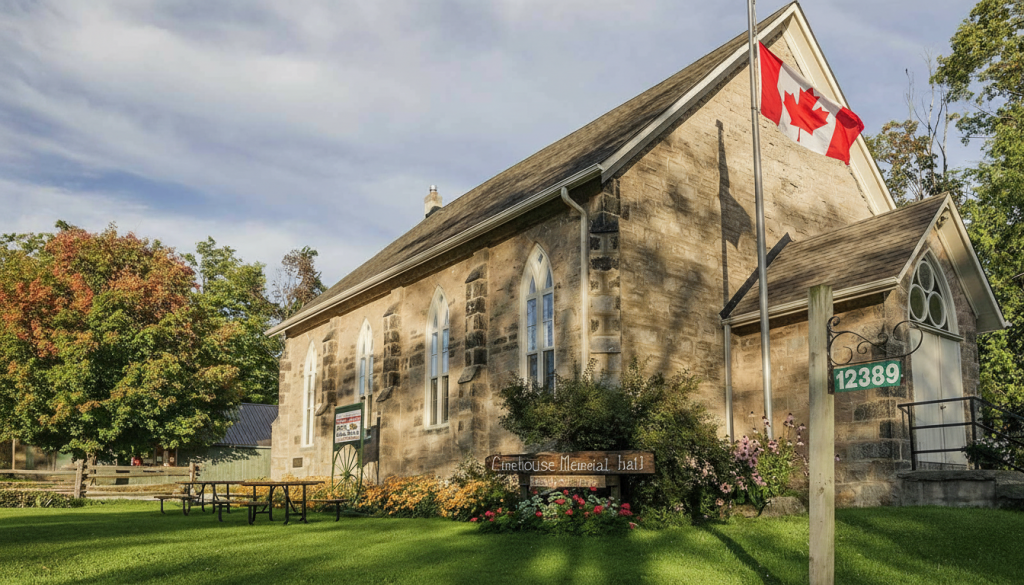
How Limehouse got its name: the lime industry
Around 1840, the Stull property was sold to Mr. Clendenning, who named the community Fountain Green. It was Ninian Lindsay, however, who set the village’s future in motion. After buying the property along with some of the Meredith land, he started the lime industry that would eventually give Limehouse its name. Before long, two firms were burning lime in large quantities: Lindsay and Farquhar and Bescoby and Worthington. Mr. Farquhar also ran a freestone quarry.
Growth came slowly, and the village lots were not surveyed until 1856. Ownership of the kilns changed hands repeatedly over the years. Farquhar bought out Lindsay and ran four kilns of his own, and in 1856, Gowdy and Moore bought the Bescoby kilns, eventually operating six kilns along with a water lime mill and a sawmill. The kilns kept changing owners until 1917, when lime production ceased altogether; blasting for the quarries was given up at about the same time.
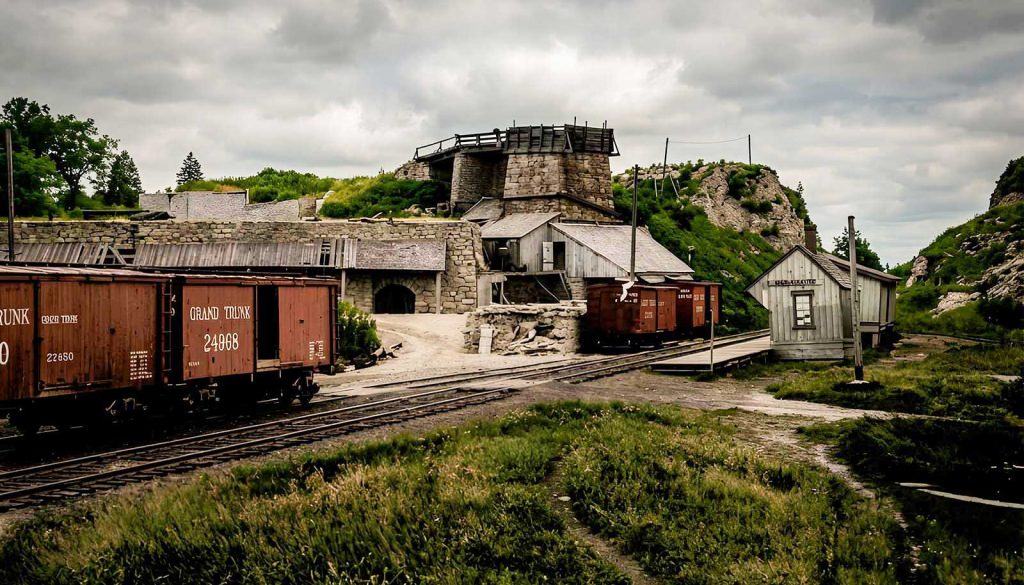
The Grand Trunk Railway and “The Rock”
The Grand Trunk Railway, today part of Canadian National Railways, was built through Limehouse in 1856. Pushing the line through meant blasting a long cut through solid rock, which earned the village its affectionate nickname, “The Rock.” While the work was underway, a temporary settlement of some two hundred workers and their families sprang up in the village.
Mr. John Newton built a mill that ground all the water lime used in constructing the railway’s main line. In the water lime mill, lumps of burnt lime were ground fine and “slaked” with water, then either mixed with sand and cow hair to make mortar or mixed with water alone to make a “putty coat” for finishing interior walls.
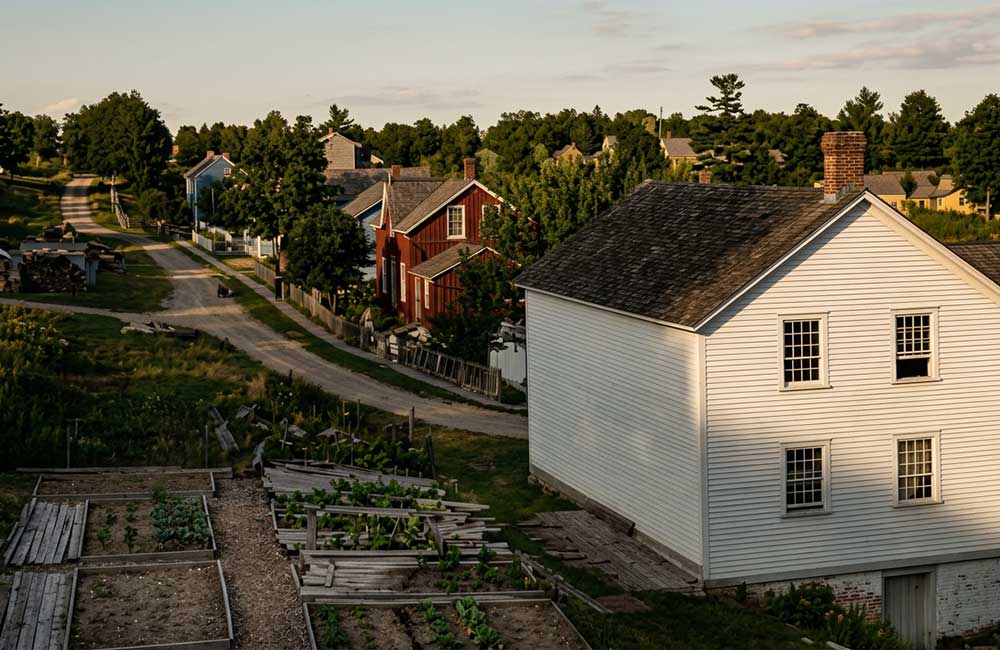
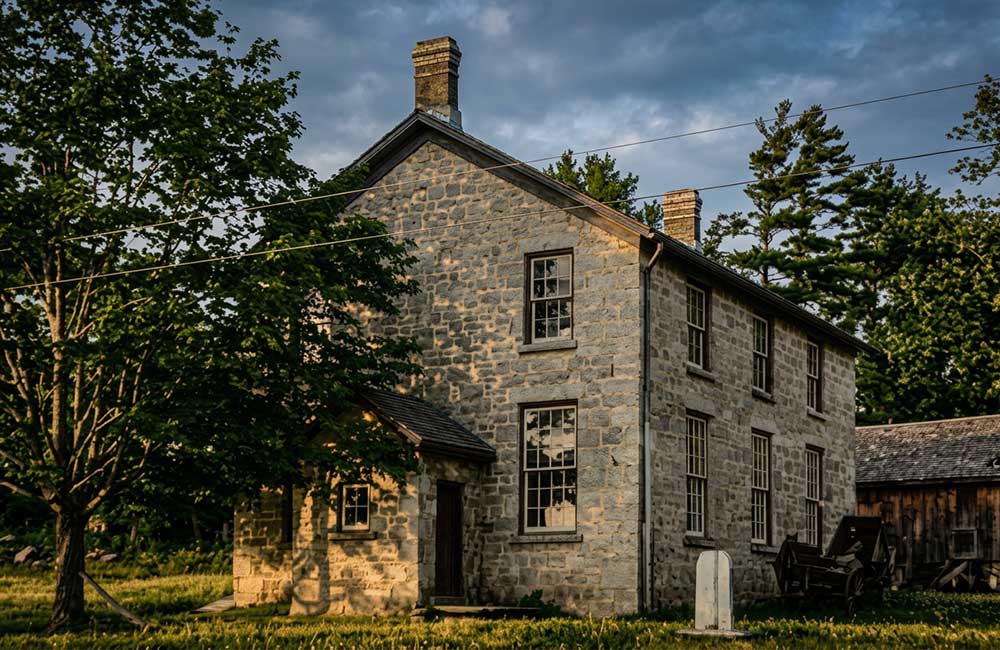
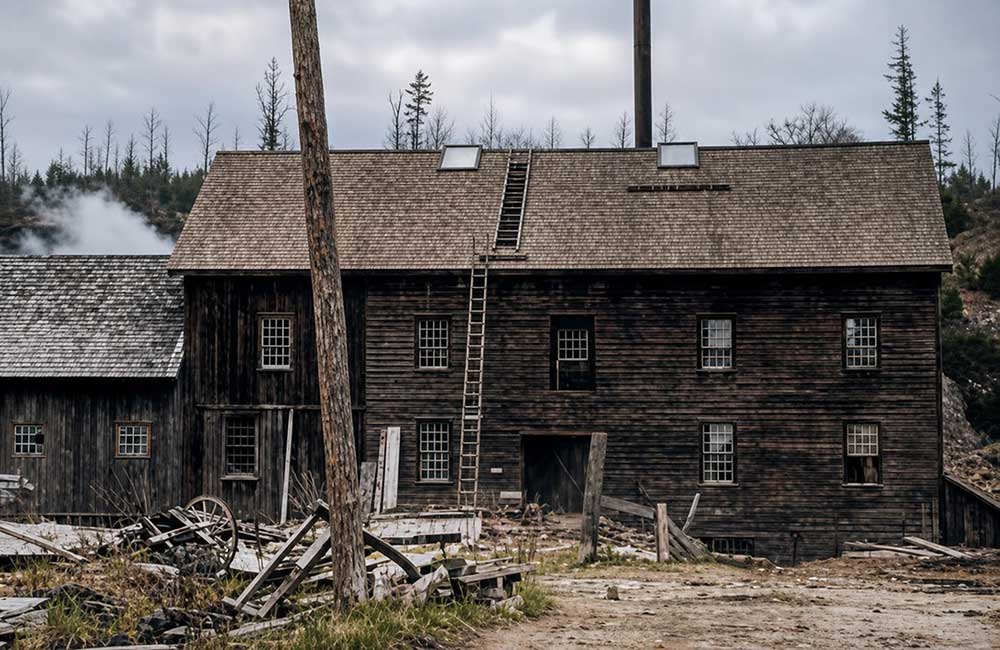
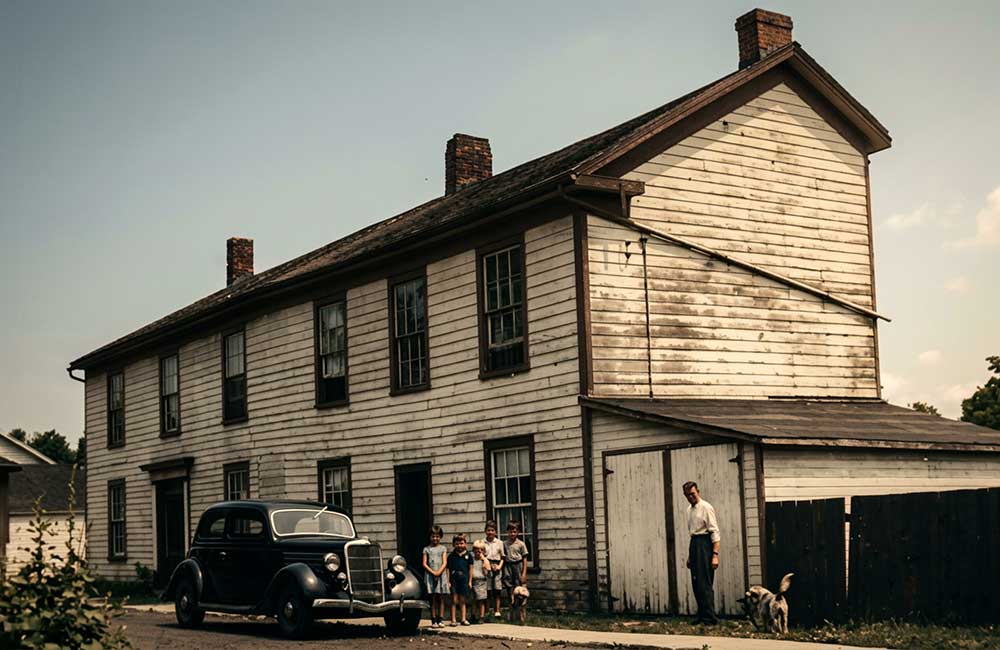
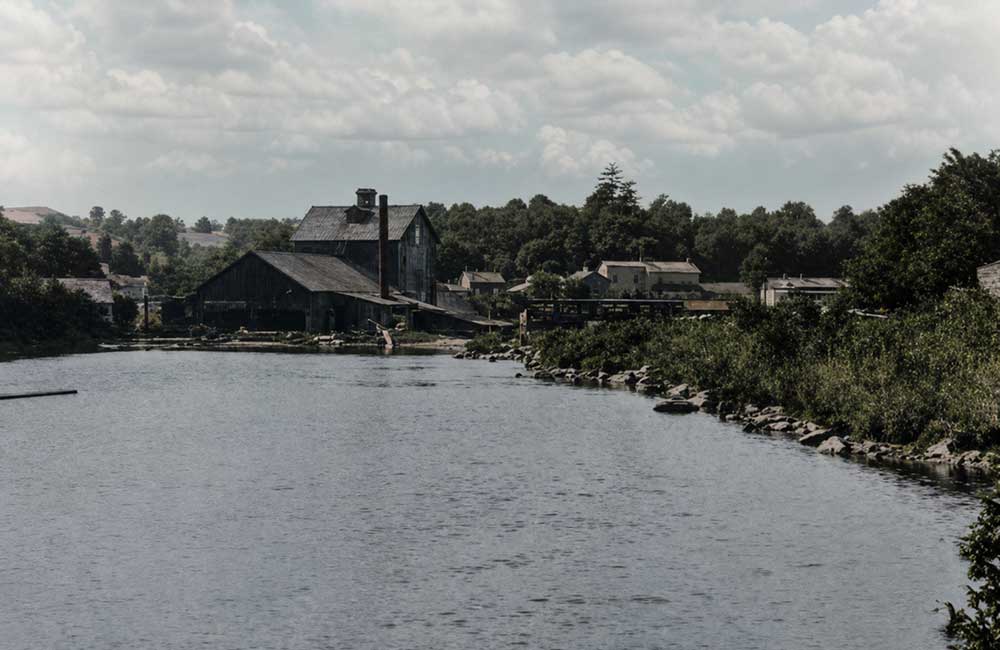
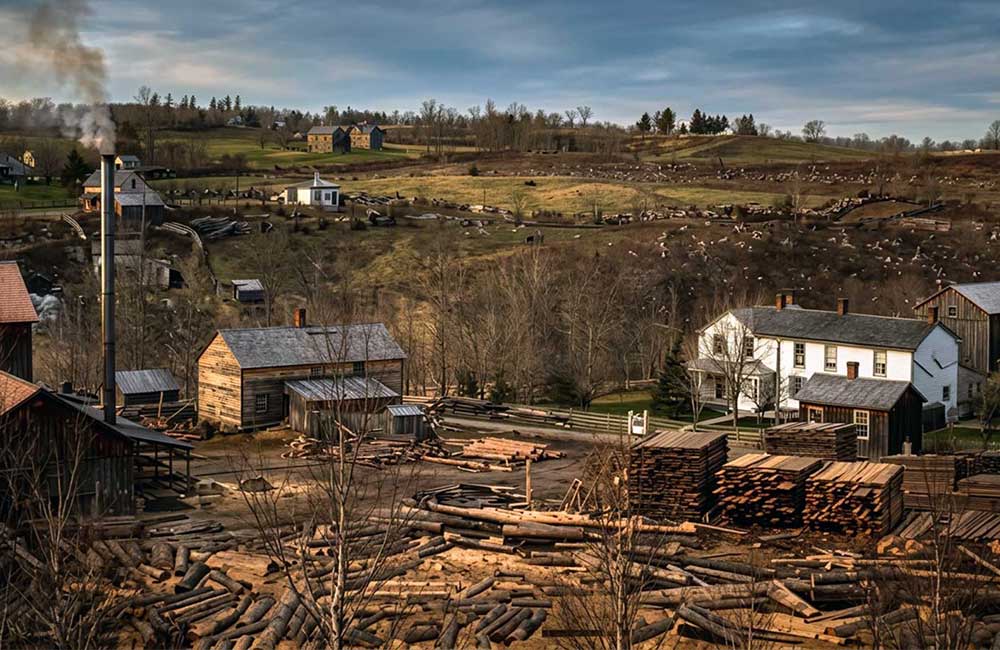
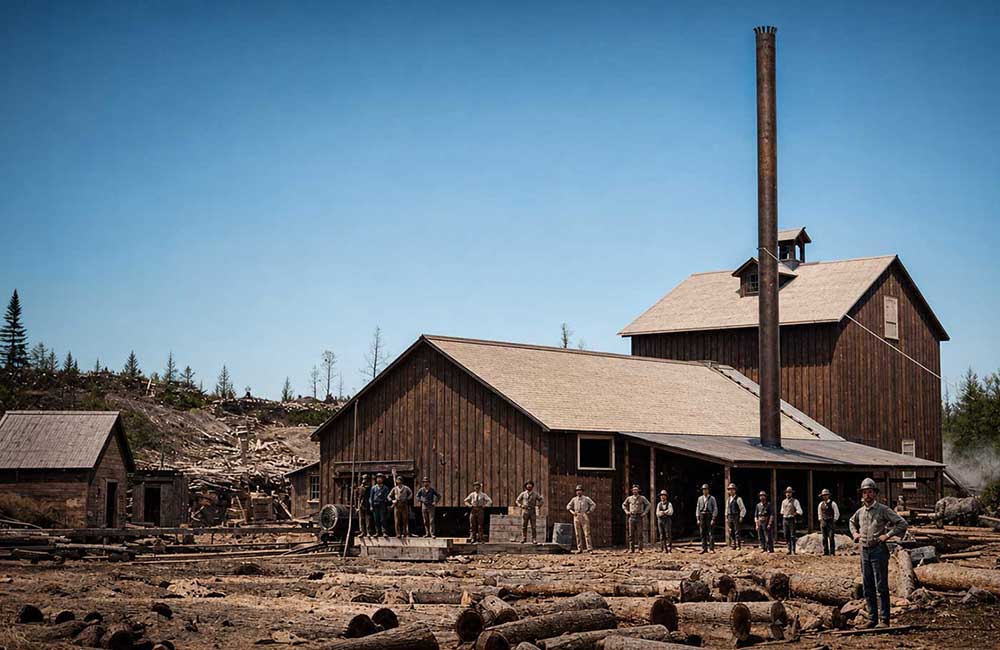
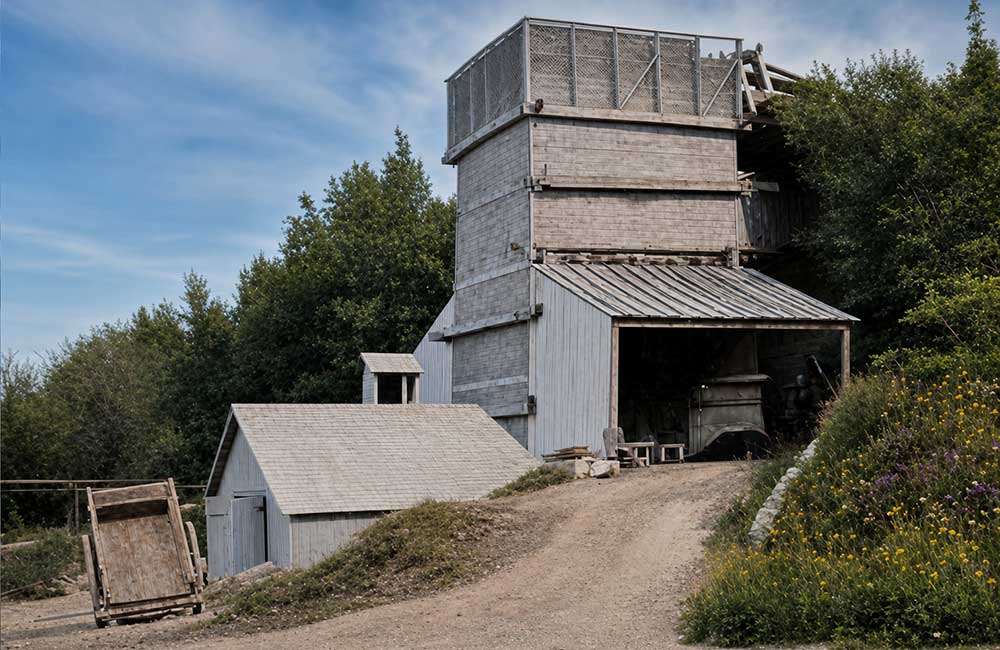
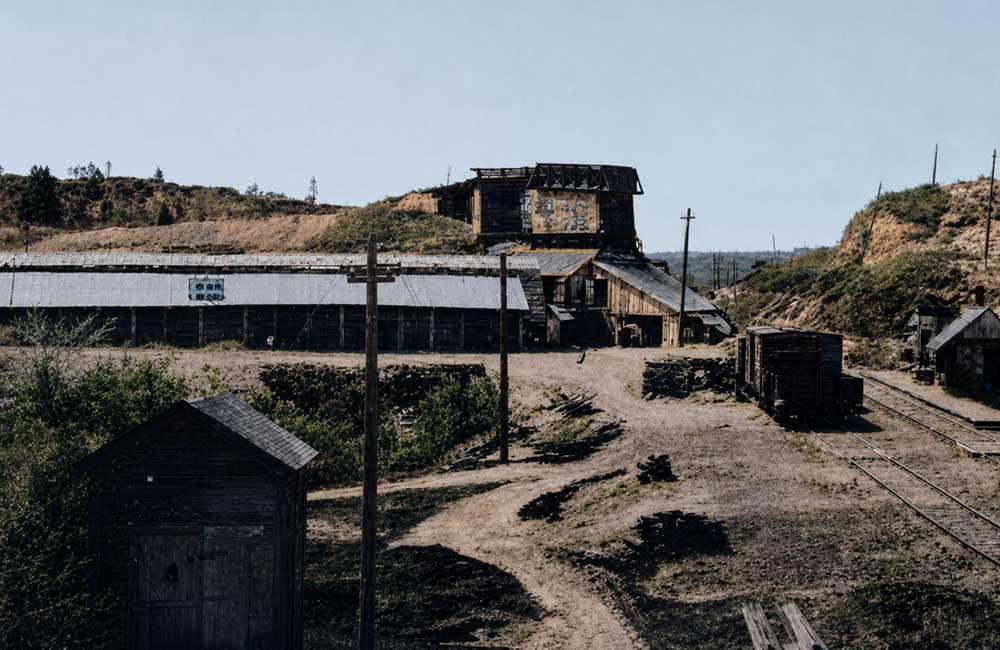
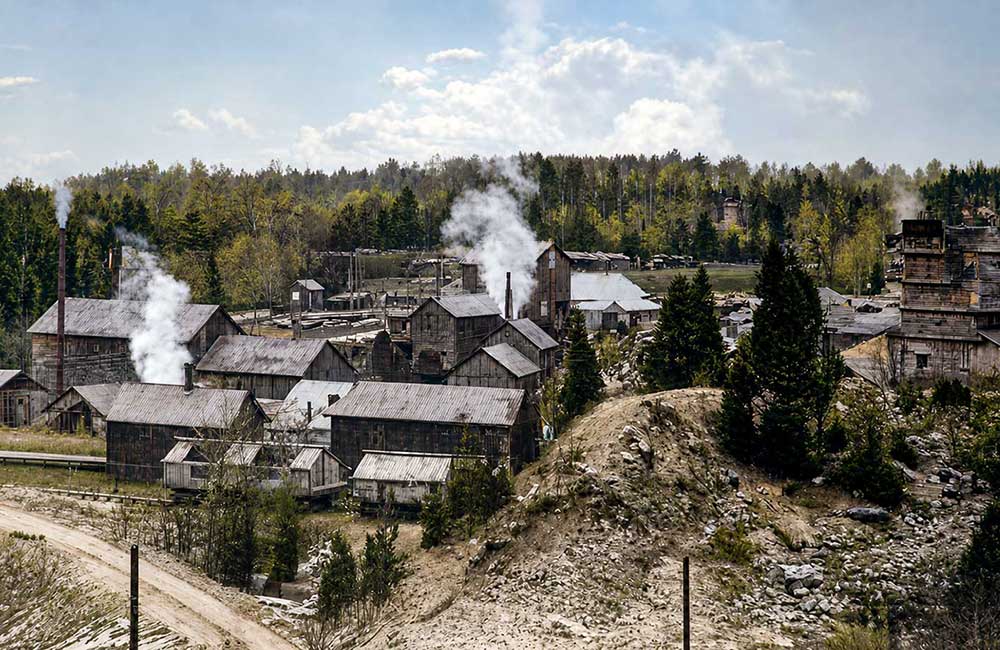
Mills, the post office, and the paint works.
When the post office opened in 1857, Newton became its first postmaster, and it was then that Fountain Green was renamed Limehouse. The post office would serve the community until it closed in 1988. Newton kept busy in other trades as well: in 1852, he started a woollen mill known as the Empire Blanket Company, and he ran a sawmill as well.
Another local enterprise, Messrs. Melkie, Newton and Company, opened a fireproof paint factory. The blue and red clays used to make the paint were dug from Lot 22, Concession 7, and the company produced six colours in all. Its paints won several awards at exhibitions; they were cheaper than the competition, lead-free, and durable, and were exported to the United States, Great Britain, and Australia.
Caves, bootleggers, and a booming village
Over the years, rainwater reacting with the limestone hollowed out numerous caves and tunnels. These made ideal hiding places for rustlers, thieves, smugglers, and bootleggers, and tales of whisky stills and even murder lent the area a certain mystique. At its height, Limehouse was a bustling community with three hotels, three stores, several mills, and a prosperous lime industry. In 1876 alone, 4,130 tons of lime and lumber were shipped from the station.
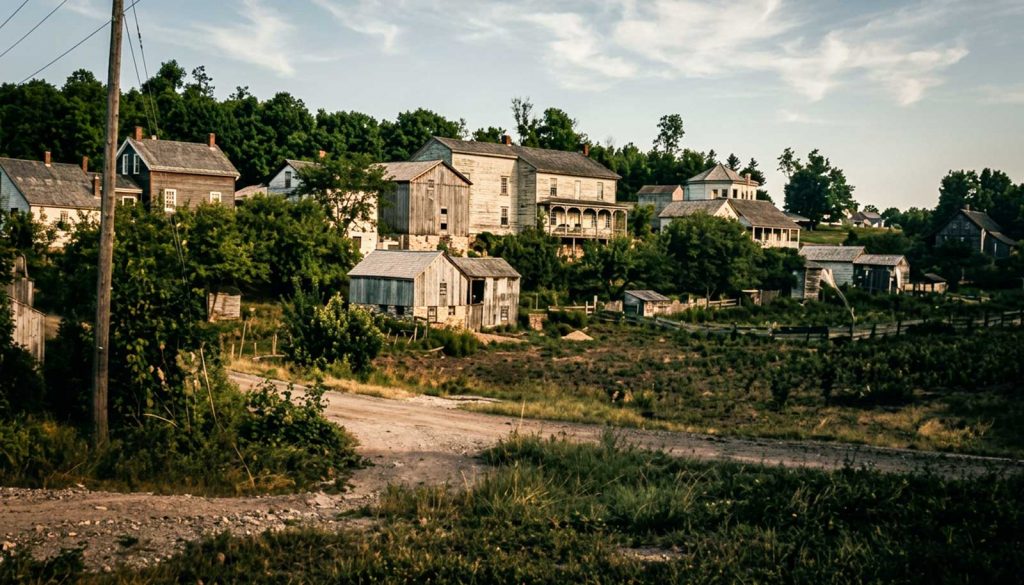
The Great Fire of 1893
Disaster struck on October 12, 1893, when fire broke out in the woollen mill. The blaze consumed the mill, the paint factory, the lumber mill, and 100 cords of wood belonging to the water lime mill. For a time, it seemed the whole village might be lost, but the horse-drawn fire engine arrived quickly from Georgetown and saved the day. Even so, the fire dealt a severe blow to the local economy, since there had not been enough insurance to rebuild.
The Radial railway
In 1917, the Toronto Suburban Electric Railway, known as “the Radial,” opened a station on the 5th Line at the foot of Gibraltar Hill. It let villagers travel to work and school and ship and receive goods at stops all along the line between Toronto and Guelph. The company ran into financial trouble, however, and the Radial stopped running in 1931.
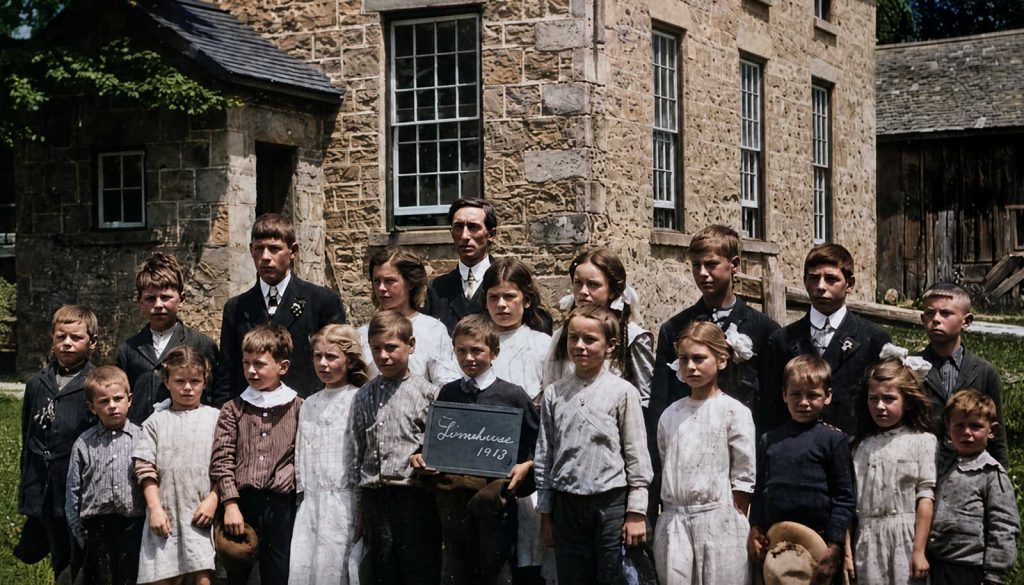
Limehouse village school
Education was not neglected. The first Limehouse school, a log building, was put up around 1845 on Lot 20, Concession 6, on the 5th Line about a mile south of Limehouse. It was replaced by a one-room stone building in 1862, to which an upper room was added in 1875 during the prosperous years. That upper room was closed in 1890 but reopened in 1954: the school, SS. No. 9, Esquesing, also known as “Gibraltar School,” closed in 1962, when the present Limehouse School opened in the centre of the community.
With the mills lost to fire and the lime kilns and quarries shut down, most of Limehouse’s industry came to an end. The village settled back into the pleasant, quiet, and friendly place it had been before, no longer, as it were, in the “limelight.”
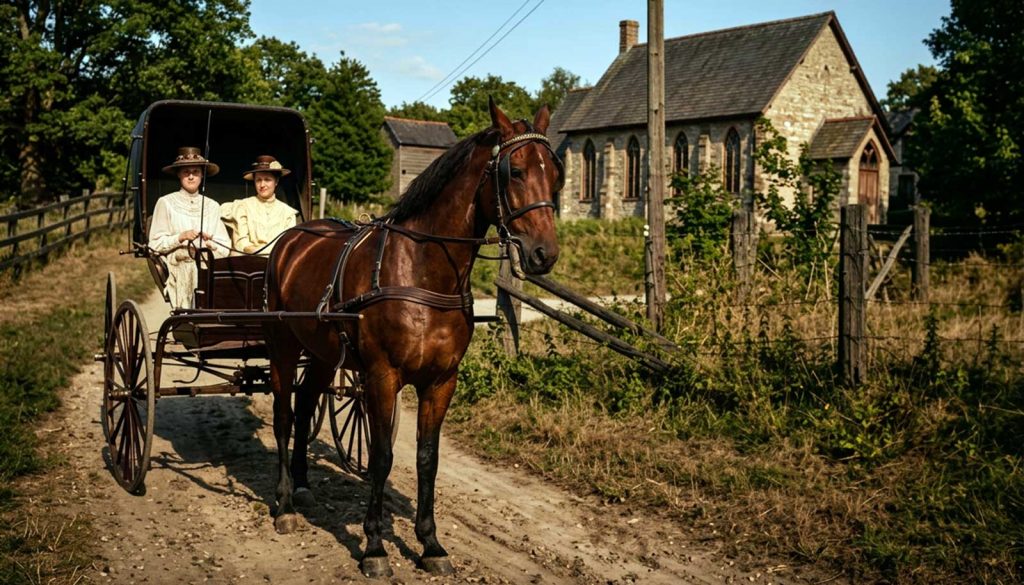
Visiting Limehouse Conservation Area today
The industry is long gone, but its stone bones remain. Much of the old village site is now the Limehouse Conservation Area, managed by Credit Valley Conservation and located roughly an hour’s drive from Toronto. It has become one of the most popular short hikes in the Halton Hills area, prized for its blend of local history and dramatic escarpment scenery.
The main Bruce Trail runs straight through the property, leading past a series of rock fissures before dropping through the “Hole in the Wall,” where a ladder lets visitors climb down into the cracks in the escarpment. Along the trails, you can still see the towering lime kiln ruins, the 1850 powder house that once stored the blasting powder for the quarries, the remains of an old mill, and a much-photographed stone bridge over Black Creek. A short Radial Rail Trail even follows the original route of the Toronto Suburban “Radial” Railway, tying the walk directly back to the village’s past.
Entry is free, with a donation box at the trailhead, and parking is available off the 5th Line. The terrain is uneven, with ladders, crevices, and steep sections, so sturdy footwear is recommended, and children and dogs should be kept close.
The original black-and-white photographs have now been digitally restored and colorized.
Frequently asked questions about Limehouse.
Where is Limehouse, Ontario?
Limehouse is a small historic village in Halton Hills, Ontario, about midway between Acton and Georgetown, where 22 Sideroad meets the 5th Line Esquesing. It sits on the Niagara Escarpment where Black Creek, a branch of the Credit River, passes through.
Why is it called Limehouse?
The village was originally called Fountain Green. It was renamed Limehouse in 1857 after the lime-burning industry that dominated the local economy, in which limestone was fired in kilns to produce lime for mortar, plaster, and other uses.
What is there to see in Limehouse today?
The Limehouse Conservation Area preserves the 19th-century lime kiln ruins, an 1850 powder house, mill ruins, and a stone bridge over Black Creek. Its best-known feature is the “Hole in the Wall,” a fissure in the escarpment that visitors climb into by ladder along the Bruce Trail.
What was Limehouse’s nickname?
“The Rock.” The name came from the long cut that had to be blasted through solid rock to run the Grand Trunk Railway through the village in 1856.