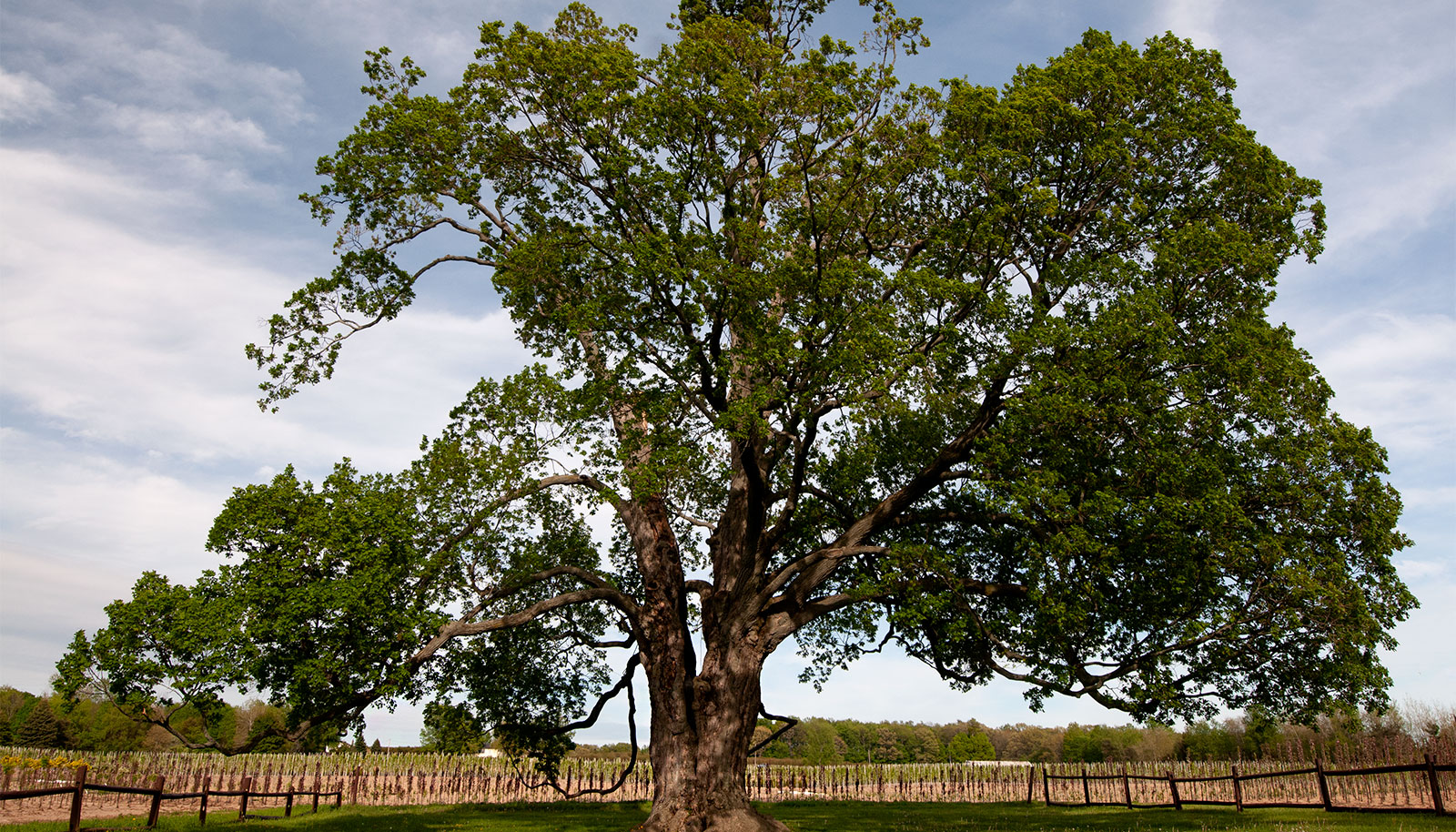
Maple syrup is produced almost exclusively in the northeastern region of North America. The tree most commonly used for this purpose is the sugar maple (Acer saccharum), whose sap contains the high sugar content needed to produce syrup.
First Nations and maple syrup
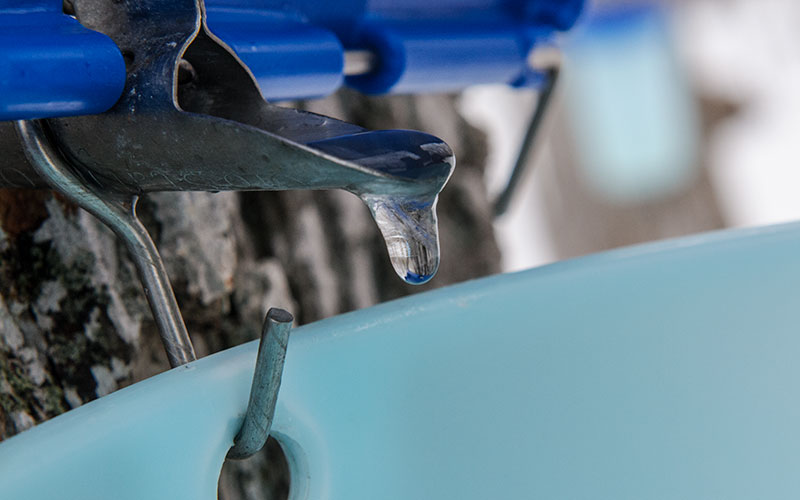
When the first Indigenous peoples – such as the Anishinaabe (Ojibwe/Algonquin), Haudenosaunee (Iroquois), Abenaki, and Mi’kmaq—settled in regions where sugar maples grew thousands of years ago, they soon discovered the trees’ sweet sap. They may have first noticed it when cutting trees or by finding frozen drops of sap hanging like sweet icicles, sometimes called “sapsicles.”
Over time, through experimentation, they learned how to collect and process the sap. This knowledge spread among different nations and became an important seasonal tradition. Many stories and legends exist about how people first began making maple products, though some of these accounts are myths that developed later.
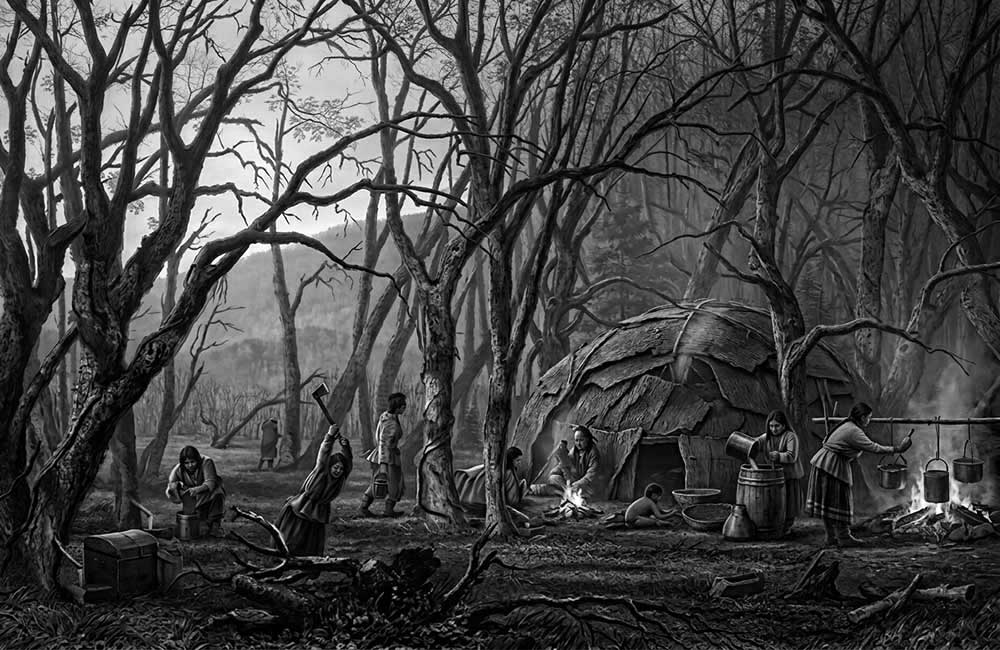
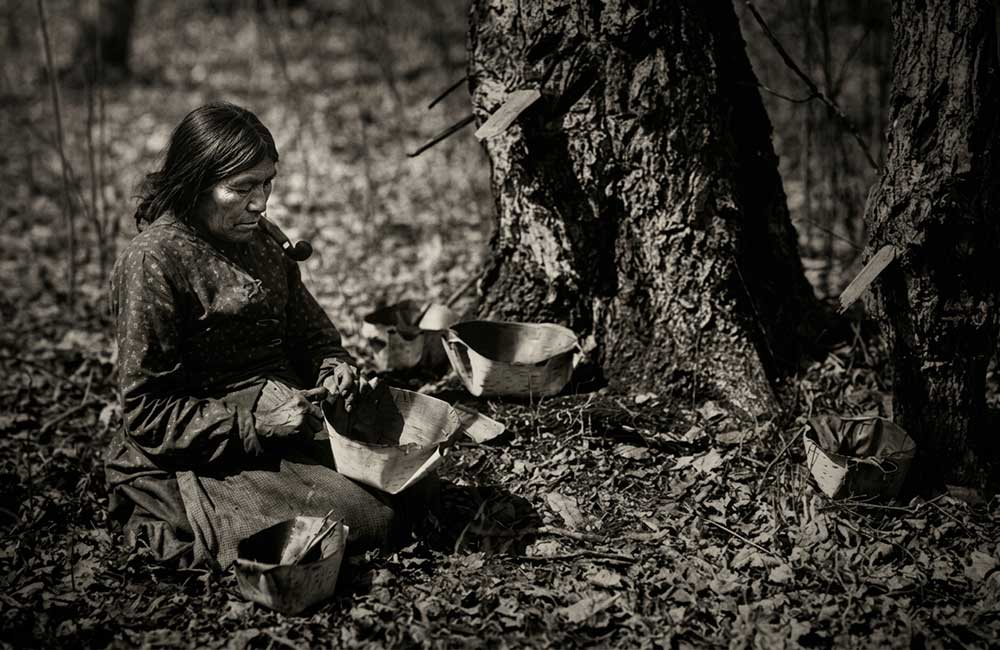
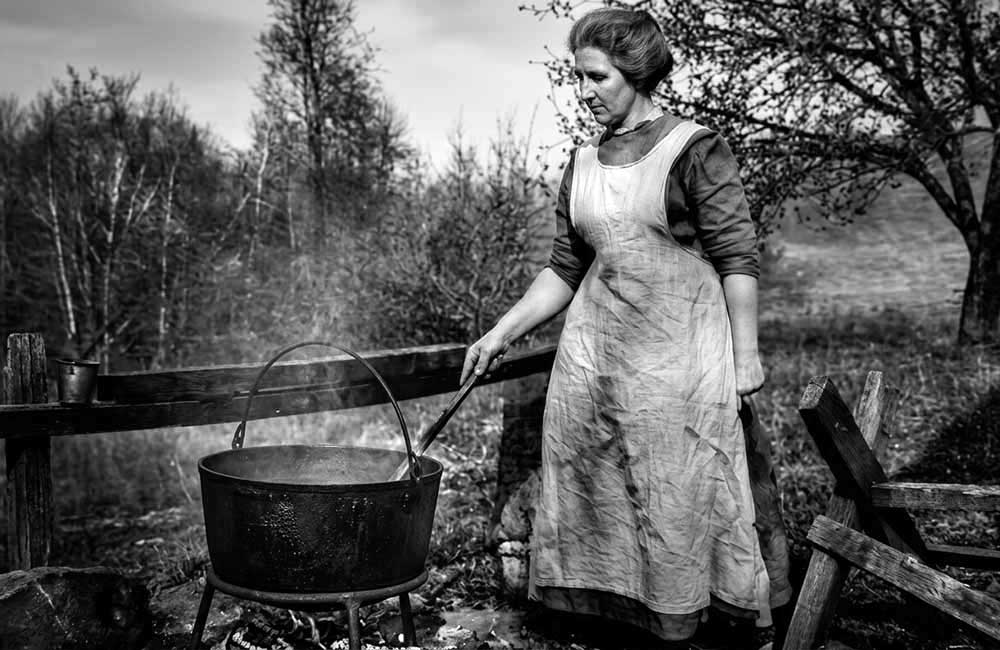
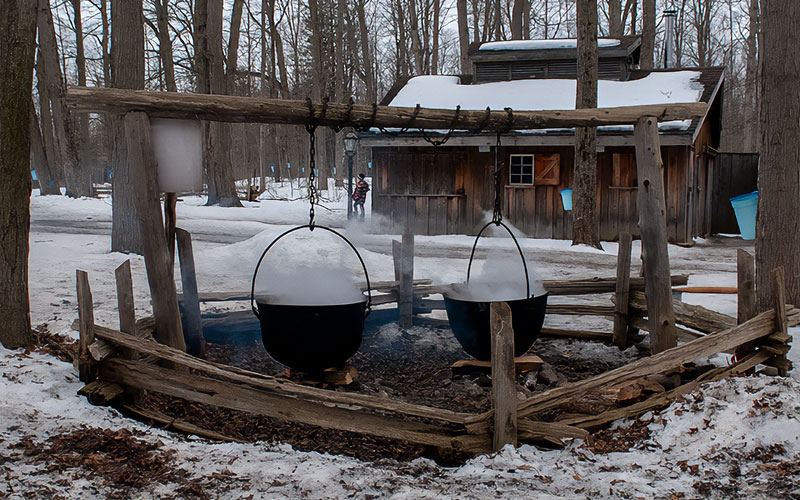
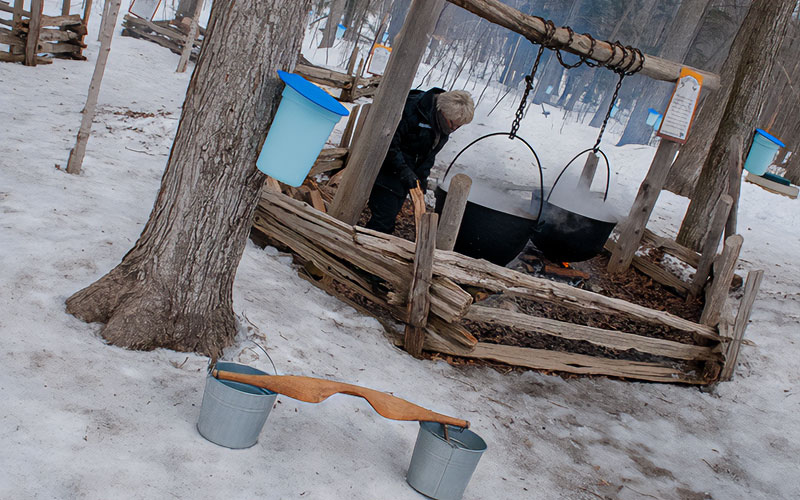
Indigenous communities established seasonal sugar camps in maple forests. There, they tapped the trees and collected the sap in containers. The sap was then heated—often by placing hot stones into wooden vessels—to evaporate water and concentrate the sugar.
Ways maple sap was used
Maple sap can be used in three basic forms:
-
Fresh sap as a drink – Maple sap contains about 2% sugar and can be consumed as a lightly sweet spring beverage.
-
Maple syrup – Boiling the sap concentrates the sugar into syrup. However, widespread use of syrup came later, once methods for storing it were improved.
-
Maple sugar – By boiling the sap further until it crystallized, people produced maple sugar, which could be stored for longer periods.
For many Indigenous communities, maple sugar was the most practical form because it kept well and could be easily transported.
They produced several varieties of maple sugar, including:
-
Granulated (grain) sugar, made of small crystals similar to the brown sugar used today.
-
Cake sugar, formed into solid blocks by pouring thick syrup into wooden molds.
-
Wax sugar, created by pouring hot syrup over snow, where it quickly thickened into a chewy treat.
These techniques formed the foundation of the maple sugaring traditions that continue across northeastern North America today.
History of Sugar Maple
After the arrival of the first European explorers and settlers in North America, they soon noticed the remarkable properties of the sugar maple. During his expeditions in 1536 and 1542, the French explorer Jacques Cartier recorded observations about the sweet sap obtained from maple trees.
In 1606, the lawyer, traveller, and writer Marc Lescarbot described the harvesting of maple sap, referring to the process as a kind of distillation. In the years that followed, many missionaries and settlers learned maple sugaring techniques from Indigenous peoples who had long practiced the craft.
By around 1676, iron cauldrons began to replace earlier methods of heating sap with hot stones, making the boiling process more efficient.
In the early 18th century, Paul Dudley published one of the first scientific descriptions of maple sugar production, explaining how what he called “maple sugar juice” could be concentrated into sugar. Interest in the process spread widely among European scholars. Naturalists such as Pehr Kalm and Henri-Louis Duhamel du Monceau wrote about maple sugaring in scientific works, while Denis Diderot included descriptions of the practice in the famous Encyclopédie ou dictionnaire raisonné des sciences, des arts et des métiers published beginning in 1751.
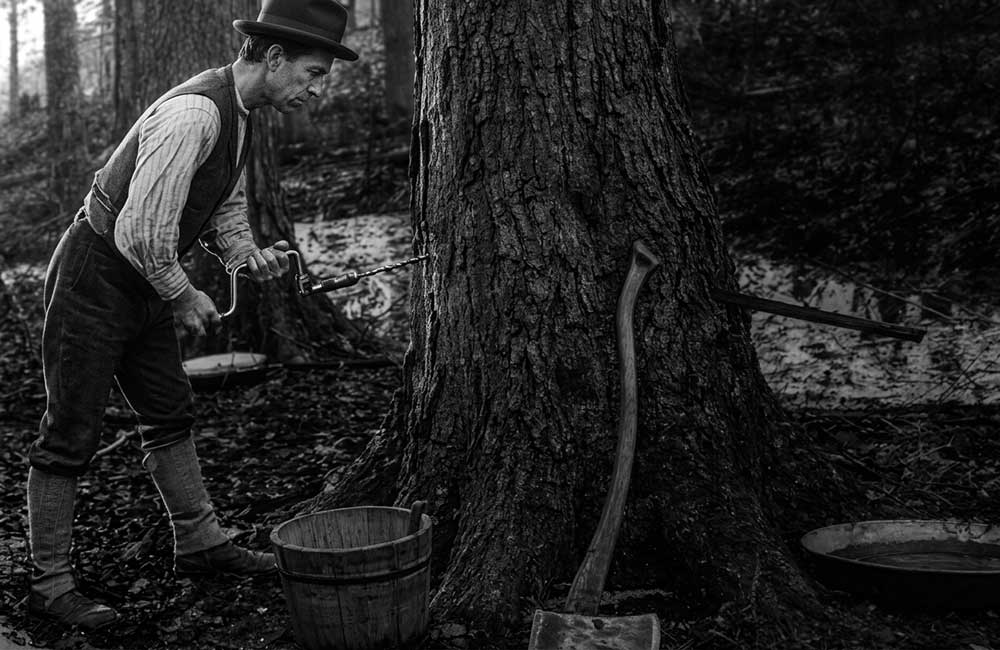
Around 1790, a new technique became common: drilling holes into maple trees and inserting spouts to channel sap into large containers. This allowed producers to collect much larger quantities of sap, and as boiling techniques improved, maple sugar production began to develop into a significant industry.
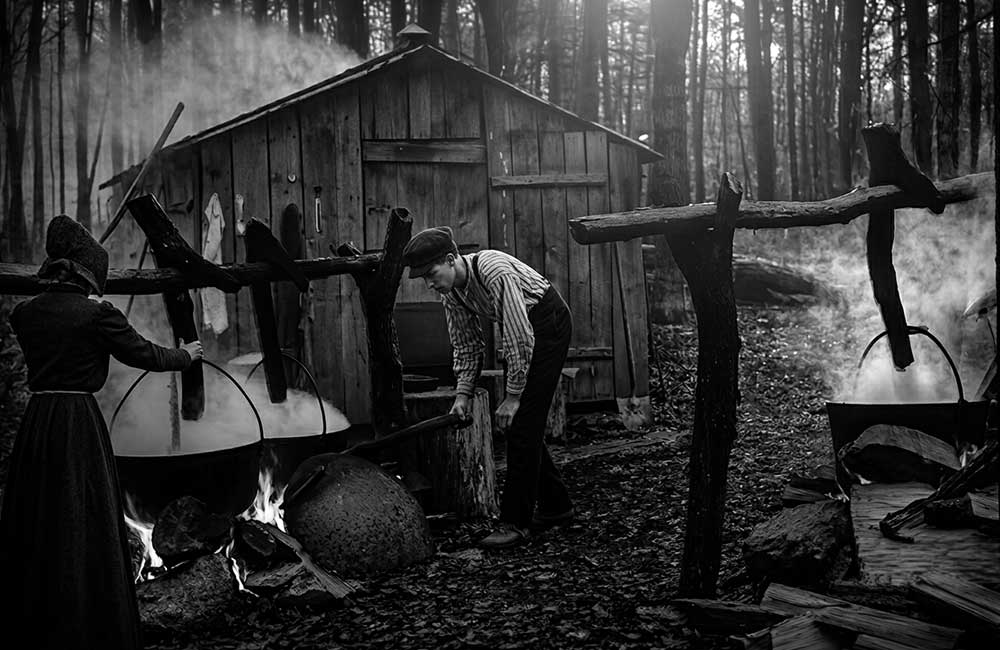
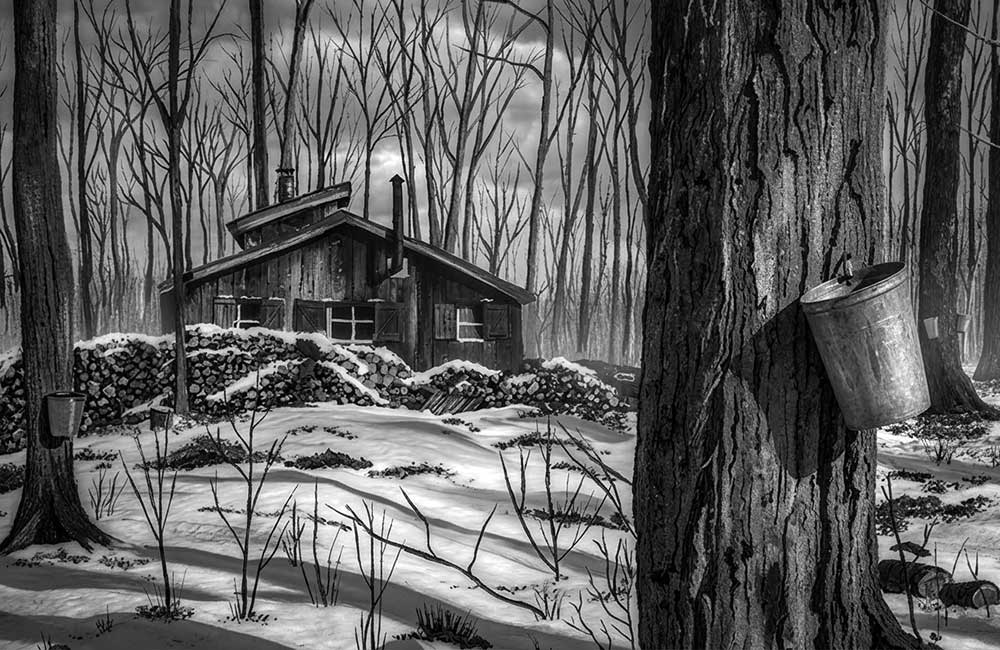
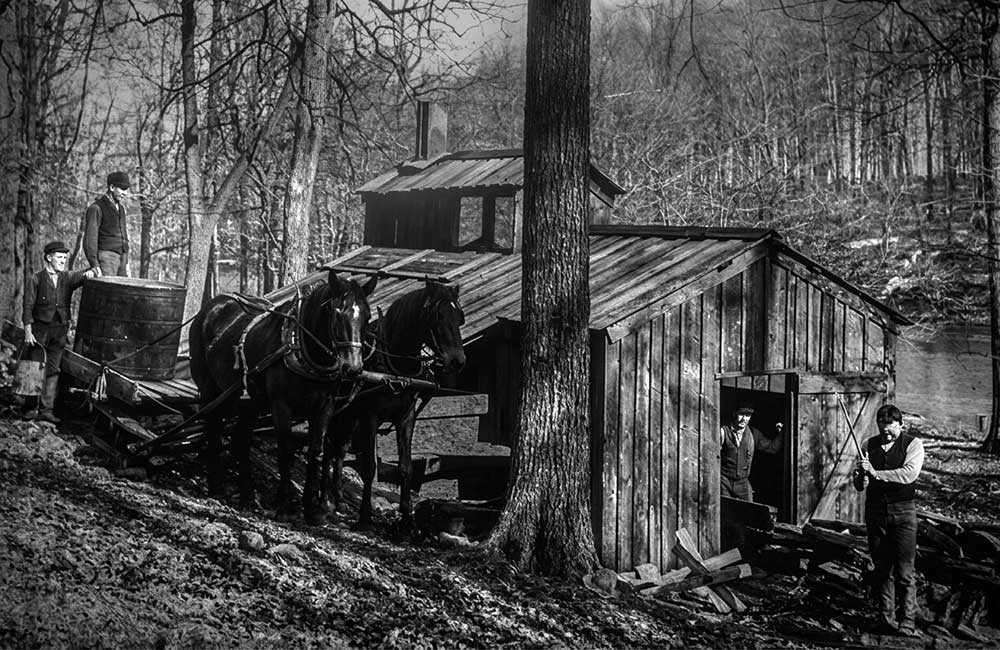
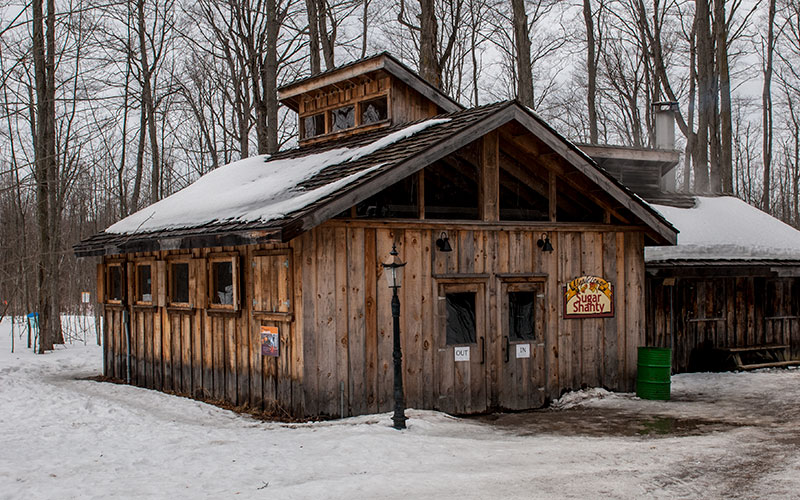
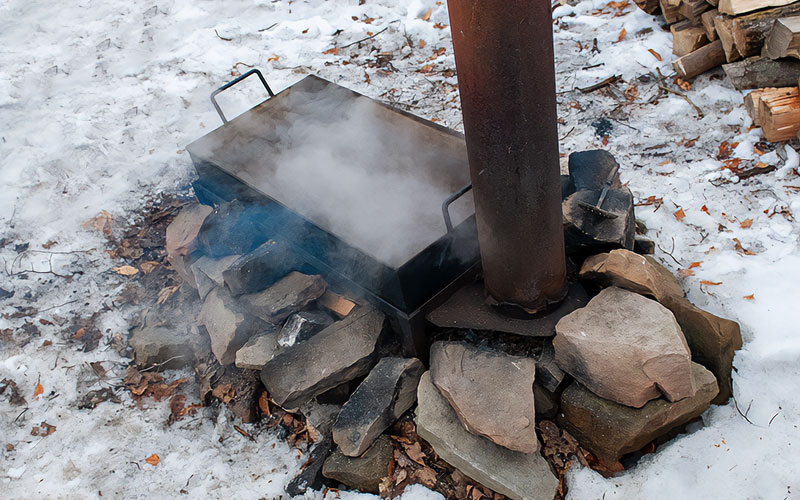
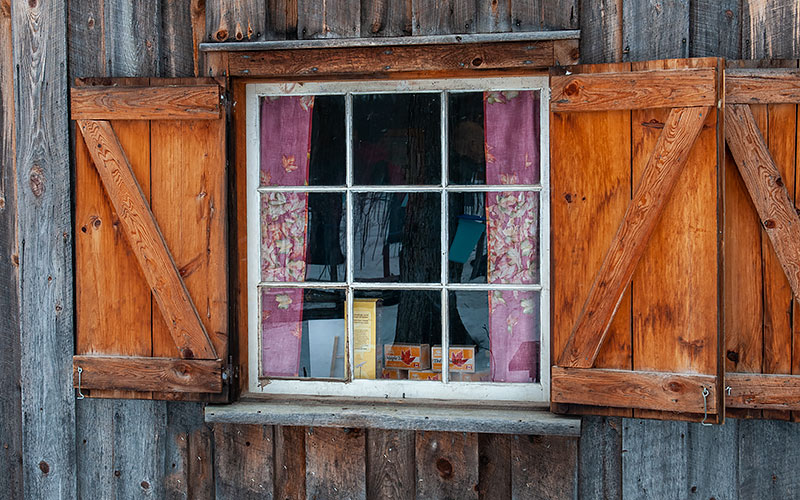
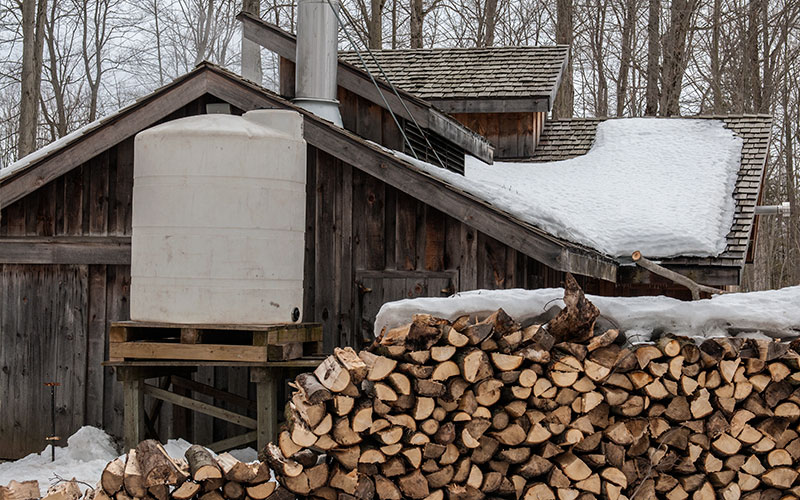
By about 1850, large flat metal pans were introduced. Their wider surface area allowed sap to evaporate more quickly than in the iron kettles previously used. During this period, specialized evaporator buildings, often called sugar shacks, also began to appear.
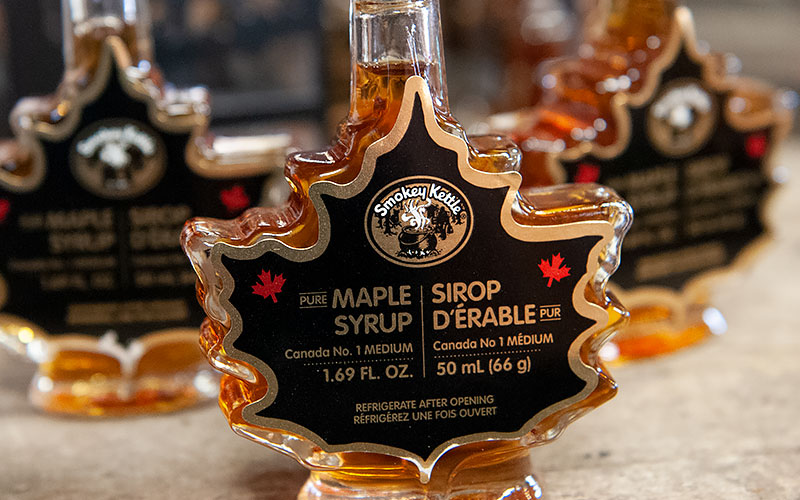
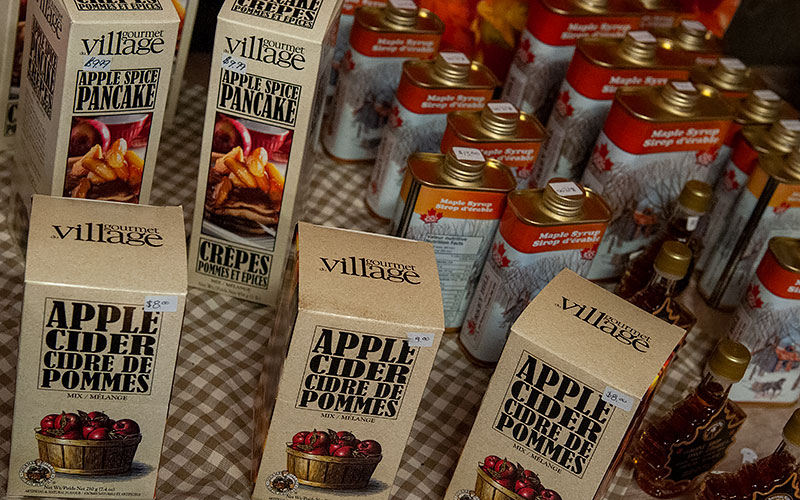
In the early 1950s, producers solved the challenge of safely storing maple syrup for long periods. This led to the widespread use of the familiar 540-ml metal tin, which became a standard container for maple syrup in Canada.
Why does Sugar Maple sap flow?
Sap flow in maple trees is driven by a cycle of freezing nights and warmer daytime temperatures. When temperatures drop below freezing at night and rise to about 4–7°C during the day, pressure builds inside the tree. This pressure forces sap to flow out through the tap holes.
How is Maple Syrup produced?
-
Tapping the tree
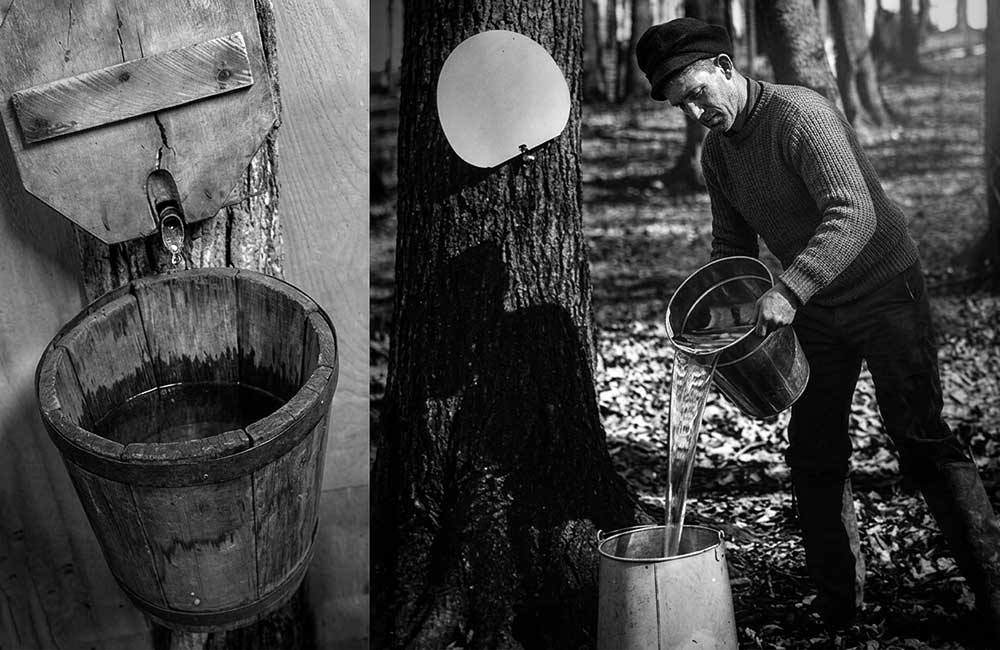
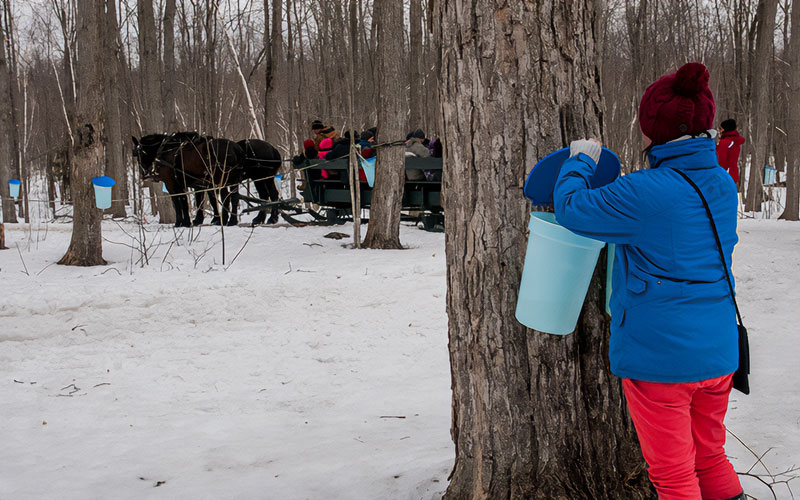
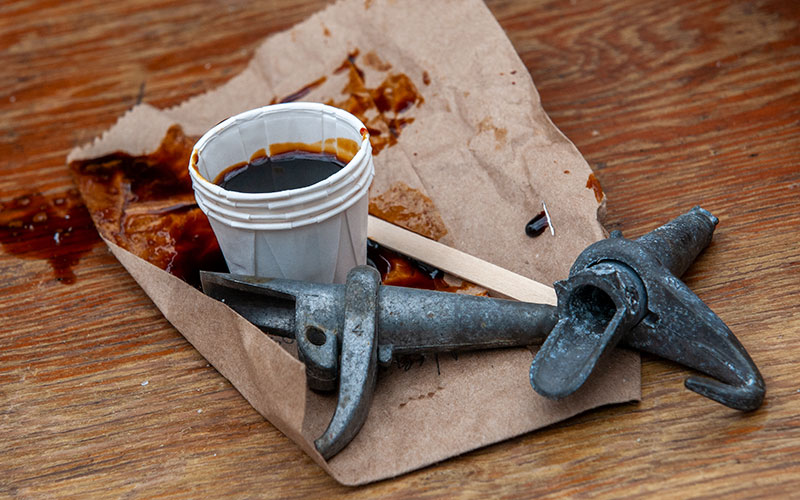
A small hole is drilled into a sugar maple tree (usually at least 40 years old). A spout, or spile, is inserted to direct the sap into a bucket or a network of collection tubes. -
Boiling the sap
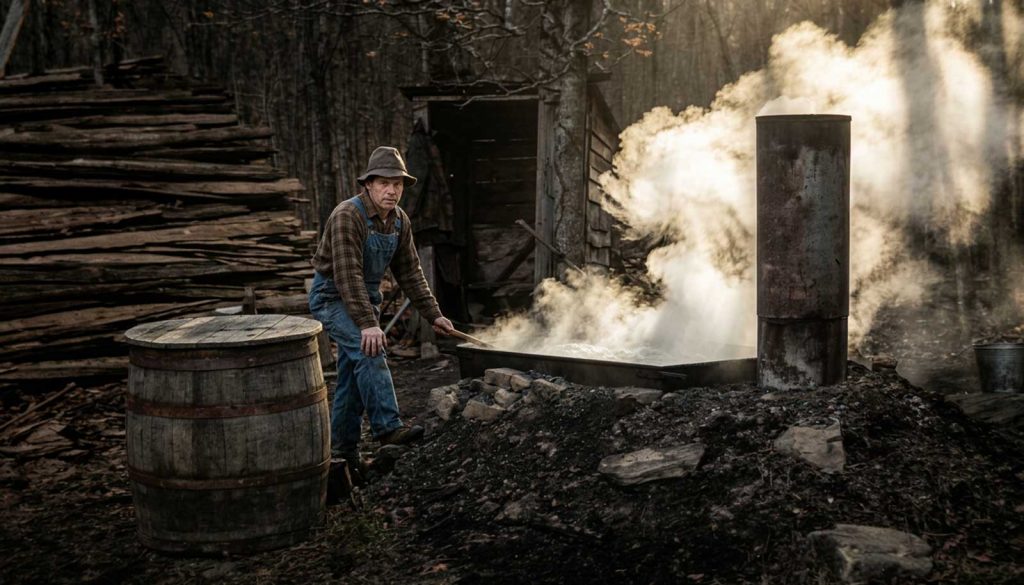
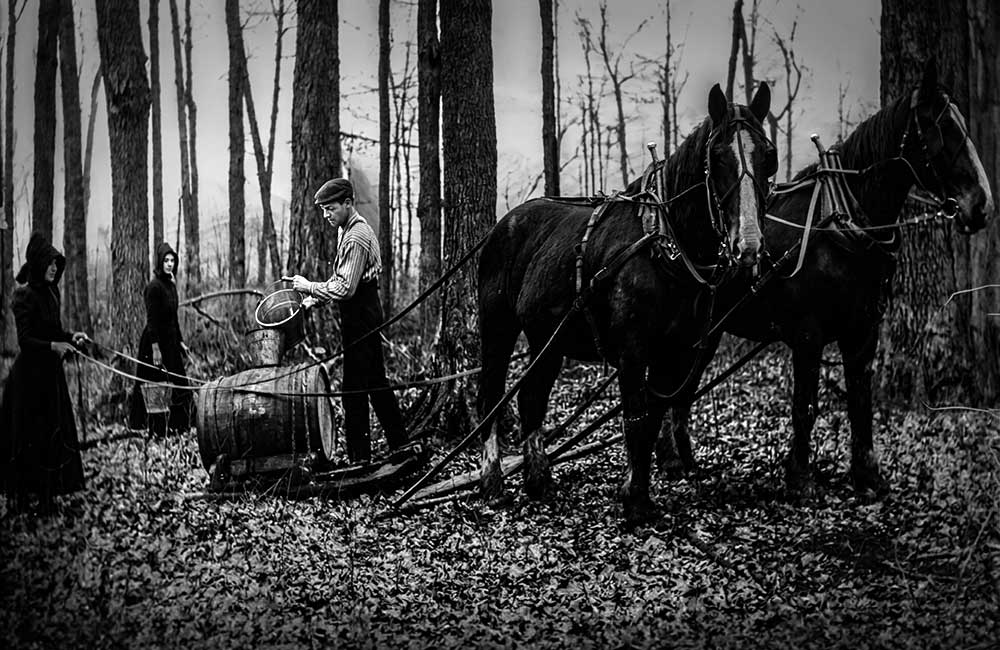
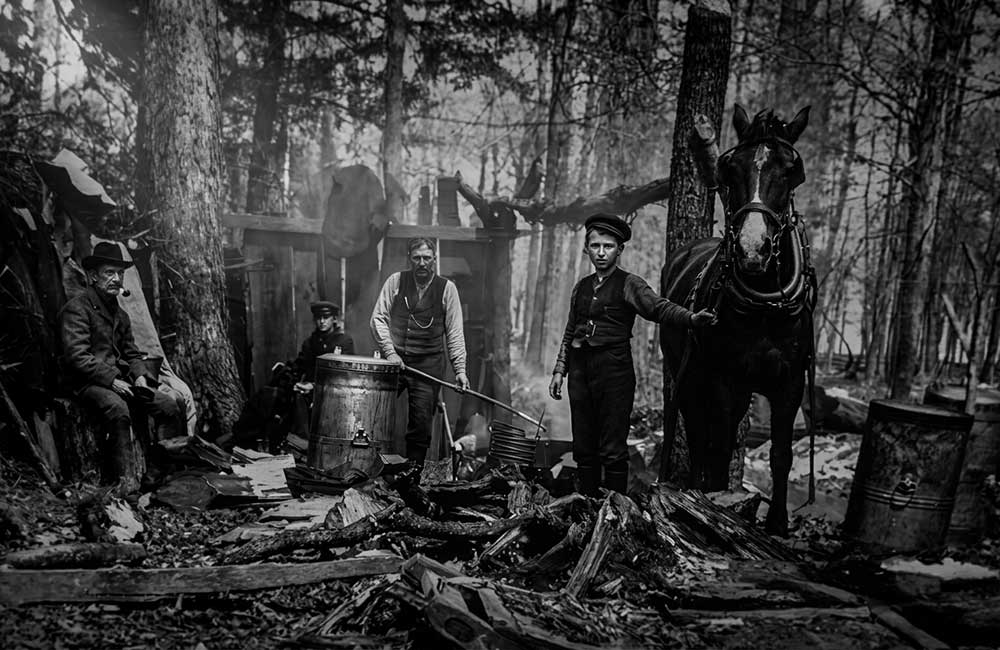
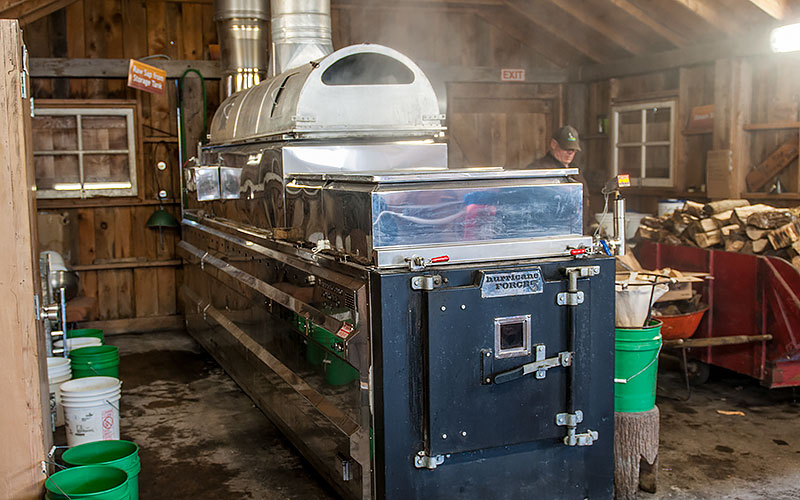
The collected sap is transported to storage tanks and then to an evaporator. As the sap boils, water evaporates and a large amount of sweet steam rises. The liquid gradually thickens as the sugar becomes more concentrated. -
Finishing the syrup
When the boiling liquid reaches about 219°F (104°C), it has the proper concentration to become maple syrup. The syrup is then filtered, adjusted for density, and graded according to flavour and colour. Maple syrup is considered finished when it reaches about 66% sugar content.
Producing maple syrup requires a large amount of sap—about 40 gallons of sap are needed to make one gallon of syrup.
Today, maple syrup is classified primarily according to its colour and flavour profile, which range from light and delicate to dark and robust.
Sugar Maple tree
The Sugar Maple (Acer saccharum) is native to the hardwood forests of eastern Canada and the eastern United States. It is best known as the primary source of maple syrup and for its brilliant fall foliage, which turns vibrant shades of yellow, orange, and red each autumn.
Sugar maple is a deciduous tree that typically grows to a height of 25–35 metres (80–115 feet). Under ideal conditions, some trees can grow even taller, occasionally reaching up to 45 metres (150 feet).
Highly valued for both its sap and its strong hardwood, the sugar maple plays an important ecological and cultural role in the forests of northeastern North America. Its sap is collected in early spring and boiled down to produce maple syrup and maple sugar—traditions that date back centuries.More >>
Did you know?
Comfort Maple, one of the oldest sugar maple trees in Canada